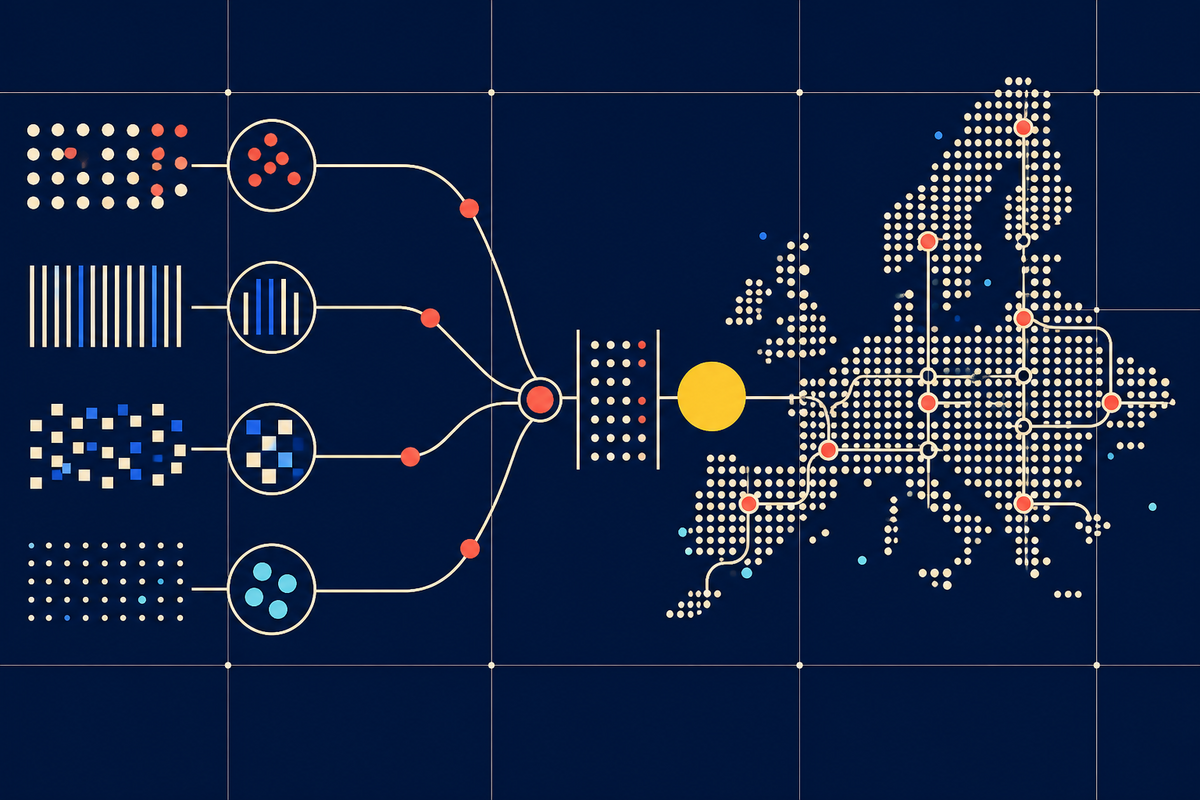
The easiest way to buy the wrong sales-data platform is to ask which one has the most data. The useful question is less cinematic: where will your reps sell, by which channel, and what work must happen before a record can be used? Put Europe at the center of that test and the usual leaderboard changes. ZoomInfo’s breadth becomes less decisive. Clay’s flexibility becomes a governance job. Lusha’s speed remains attractive. Cognism’s obsession with the operational details of European data starts to look like the product.
This does not mean ZoomInfo is reckless or Lusha is outside the rules. Both publish privacy programs, and Cognism itself says both it and ZoomInfo operate in line with GDPR and CCPA requirements. The sharper distinction is how each vendor turns compliance from a policy page into a rep’s daily workflow. Cognism says it notifies data subjects when required, screens its phone database against do-not-call registers in multiple territories and adds human verification to a premium set of mobile numbers. For a legal or revenue-operations team, those are controls that can be inspected.
The map is the first feature
ZoomInfo grew into a broad go-to-market intelligence suite with company profiles, contacts, intent signals, engagement products and a strong North American center of gravity. If a US enterprise wants one large commercial system, that scope can be the reason to buy it. In Europe, however, a global contact count is a weak proxy for usefulness. Germany, France, the United Kingdom, Spain and other markets add local suppression registers and channel rules to the shared data-protection framework. A mobile number can be accurate and still require another check before a call.
Cognism has made that patchwork part of its positioning. Its compliance page names screening against fifteen do-not-call lists, including registers in the UK, Germany, France, Ireland, Spain, Portugal, Croatia, Sweden and Belgium. The number matters less than the mechanism: suppression is performed before the rep starts dialing. Cognism also describes an Article 14 notification process for people whose details were collected indirectly, giving them a route to see the record and object. That does not transfer the customer’s legal responsibility to Cognism, but it removes a layer of uncertainty from procurement.
The winning European database is the one that creates the least work between finding a contact and being comfortable using it.YesPress analysis
Cognism
Best fit when European phone coverage, notification and local do-not-call screening drive the decision.
ZoomInfo
Best fit for US-heavy enterprise teams that value a wide intelligence and engagement portfolio.
Clay
Best fit for builders who want to waterfall across many providers and automate custom enrichment.
Lusha
Best fit for teams that favor a lighter contact-finding experience and a simpler path to adoption.
Four products hiding in one category
The four logos are often placed in one comparison table, but Clay is the useful exception. Clay says plainly that it does not own a native contact database. It connects users to external enrichment tools, lets them query providers in sequence and stops when a result is found. That waterfall can raise match rates and let a team choose the best source for each field. It can also create a longer chain of provenance, contracts and retention terms for someone to understand. Clay is closer to a programmable data workbench than a single authoritative directory.
That distinction suggests a stack, not a winner. A company might use Cognism as its approved European contact source and Clay to orchestrate research, scoring and CRM updates. It might retain ZoomInfo for North American coverage. It might give a small team Lusha for quick, low-friction lookups. Procurement often asks one product to erase the others because one contract seems tidy. Revenue operations should care more about a clear source of truth, documented field provenance and an economical way to refresh decaying records.
Lusha deserves the same nuance. It says it has a designated data protection officer, runs employee privacy training and underwent an independent audit by ePrivacy. Its transfer impact assessment describes standard contractual clauses for European customer data. Those are substantive program elements. The question for a buyer is narrower: does the specific Lusha plan return enough fresh, callable records in the exact countries and segments being targeted, and does it screen the registers relevant to the intended channel? A polished browser extension cannot answer that without a pilot.
Why verified phones matter
Accuracy is the other half of Cognism’s European argument. Its Diamond Data label applies to mobile numbers put through additional phone verification. Cognism markets those contacts as producing up to three times the connect rate of standard numbers, citing a study of one thousand contacts. Treat that as a vendor claim, not a universal forecast. The important part is that the verification step is concrete. Instead of inferring quality from a confidence score, a buyer can ask when the number was called, whether it reached the intended person and how often it will be refreshed.
A working number has economic value beyond the saved dial. It prevents a rep from researching a dead end, keeps an incorrect contact out of the CRM and reduces the chance that an objection begins with “How did you get this number?” Cognism says director-level and above contacts are refreshed every thirty days. Again, the buyer should verify performance against its own list. Data quality varies by country, role and company size, and no provider’s global average describes a specific target market.
Compliance is a verb
A compliance-first database cannot make careless outreach lawful. The UK Information Commissioner’s Office says B2B marketing that uses personal data remains subject to data-protection law. Depending on the channel and recipient, a company may need consent or may be able to rely on legitimate interests after a purpose, necessity and balancing test. People must be told how their data is used, and an objection to direct marketing must be honored. Other European jurisdictions layer their own electronic-marketing rules and registers onto that baseline.
This is why “GDPR compliant” is a poor binary column in a software grid. Buyers should inspect the lifecycle. Where did the record come from? When was the person notified? Which lawful basis does the customer expect to use? Was the number screened against the right national register? How does an objection reach the suppression list? What happens when the contact changes jobs? The strongest product is the one that makes good answers easy to produce, then keeps those answers attached to the record.
A pilot you can steal
- Freeze a representative list across your real countries, roles and company sizes.
- Blind the results and score reachable phones, verified emails, freshness and duplicates.
- Document source, notification, suppression coverage and objection handling for each channel.
- Count the minutes reps and RevOps spend repairing or explaining each record.
- Choose for the territory that creates the most risk and revenue, not the largest global total.
The verdict is conditional
Cognism wins this roundup for a team whose constraint is GDPR-conscious European prospecting, especially when calling is central to the sales motion. It wins because European governance is visible in the product and because phone verification targets a costly point of failure. ZoomInfo may still be the better purchase for a US-first enterprise that wants breadth. Clay may be the better system for a technical growth team assembling its own data supply chain. Lusha may be enough for a smaller group that prizes simplicity.
That conditional answer is more useful than a universal champion. Sales data is perishable, local and attached to people who have rights. A procurement team should be suspicious of any global claim that smooths those facts away. Start with the map, test the exact records, and make the compliance workflow part of the product demo. In Europe, that is where Cognism has chosen to compete. It is also the reason buyers choose it over the bigger American name.
Frequently asked questions
Is Cognism better than ZoomInfo for Europe?
For Europe-focused teams, Cognism has a stronger fit because local do-not-call screening and phone-verified mobile data sit at the center of its product. Test both against your own countries and personas before buying.
Does Cognism make outreach GDPR compliant?
No. Customers still need an appropriate lawful basis, channel-specific checks, transparent notices and a way to honor objections. The platform can support the process but cannot replace it.
How is Clay different from Cognism?
Cognism is a data provider and sales-intelligence platform. Clay is an orchestration layer that combines many external enrichment sources in programmable workflows.
Where does Lusha fit?
Lusha offers a streamlined contact-finding experience and publishes a GDPR program. Its practical fit depends on tested coverage and freshness in each target territory.
What should a vendor pilot measure?
Measure match rate, reachable phones, verified emails, freshness, duplicates, suppression coverage and the time required to make each record safe and useful.
Relevant links and source material
- Cognism compliance hub and Diamond Data methodology
- Cognism’s comparison with ZoomInfo - vendor-authored and treated as such
- Clay on its external data-provider model
- Lusha’s GDPR program
- ICO guidance on business-to-business marketing
- Cognism on LinkedIn, YouTube and newsroom