Why Cognism? Because a contact database is only impressive until the first five numbers go dead. Revenue teams selling into Europe face a particularly fussy version of this problem: languages, smaller markets, national do-not-call registers and a privacy regime that cannot be waved away with a cheerful checkbox. Cognism has built its identity around that headache. It gives sellers a place to find companies and people, reveal business emails and direct dials, watch buying signals and send records into the systems where work already happens.
The best fit is a B2B sales organisation with a defined ideal customer profile, at least a few prospectors and meaningful pipeline in the UK or continental Europe. SDRs get search and a browser extension. Marketing gets lists and enrichment. RevOps gets field controls, CRM health and opt-out syncing. An enterprise data team can bypass much of the interface and take records through an API or bulk delivery. A solo founder hunting fifty names a month will probably find the contract and credits excessive. A team calling directors across DACH, France and the Nordics has a much stronger reason to listen.
The database learned to leave its database
Cognism started in London in 2015, founded by James Isilay and Stjepan Buljat. The early story was classic sales-tech optimism: turn prospecting from an art into a science. It raised $10 million in 2019, another $12 million in 2020, then an $87.5 million Series C in 2022. That same year it bought Kaspr, a French prospecting provider, widening its mobile-data reach and giving the group a lower-cost, individual-user product alongside Cognism’s team sale.
The company is now led by CEO Dominic Allon. In 2026 it also changed the costume. A new visual identity arrived with the line “Fluent in Data,” signalling a shift from an SDR utility toward data infrastructure. The phrasing sounds like brand-deck business, but the product direction underneath is concrete. Search remains central, yet Cognism now sells CRM Enrichment and Data-as-a-Service. One keeps selected CRM records fresh. The other feeds data into a company’s own workflows, routing logic and models by API or bulk file.
The useful question is not “How many contacts are in it?” It is “How many of our next 100 calls reach the person named?”YesPress buying principle
What the rep actually does
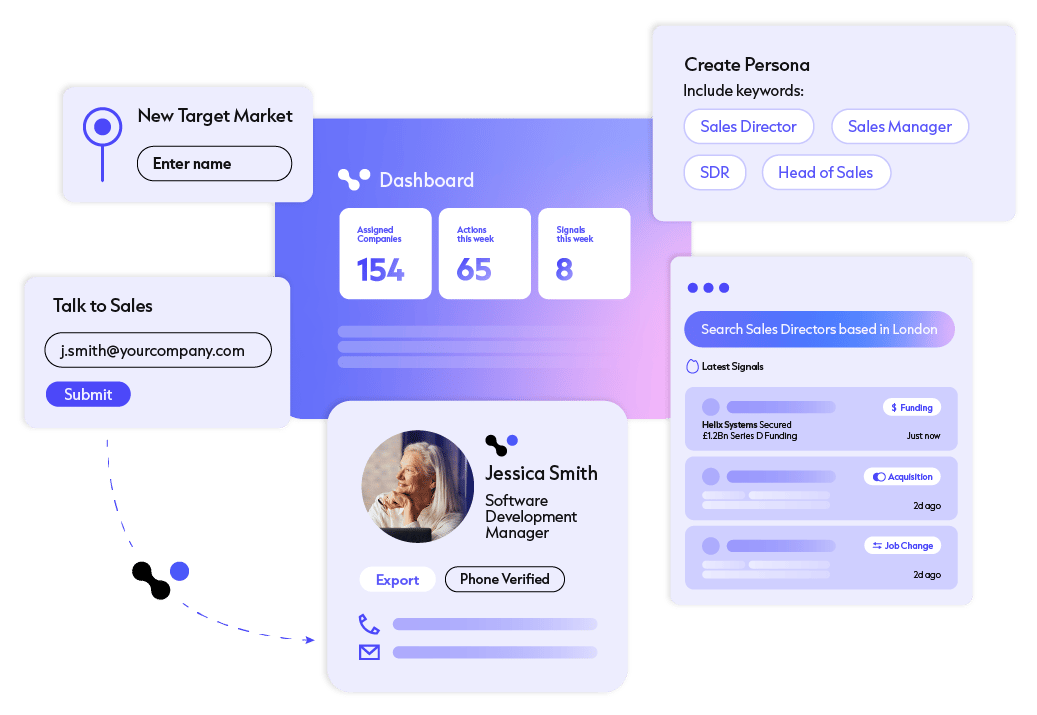
A rep can start with a company list, a territory or a set of filters: headcount, revenue, location, job title, seniority, technologies and recent events. Cognism’s Smart Personas can suggest target roles from a description of what the seller offers. AI company research supplies a compact brief without demanding a carefully engineered prompt. Hiring, funding, acquisition, job-change and Bombora intent signals add a reason to call now rather than next quarter.
The Chrome extension is the bridge for people who live in LinkedIn or a CRM. It exposes available contact details, shows whether a record already exists and can send the person into Salesforce, HubSpot, Outreach or another supported tool. This is mundane in the best way. Every avoided copy, paste and CSV is one fewer chance for a rep to invent a field format or create a duplicate named “John Smith NEW.”
Diamond Data is the memorable feature. These premium mobile numbers receive additional automated and human checks; on-demand verification lets a user submit a priority prospect for another pass. The label is gaudy, the purpose sensible. A phone number is perishable. Cognism reported in late 2025 that it refreshed 95 percent of director-level and above contacts every 30 days in the US and top European economies, and delivered mobile or email data for 90 percent of that European senior cohort. Those are vendor figures, so put them on the trial scorecard, not in the bank.
Compliance is a feature, not a halo
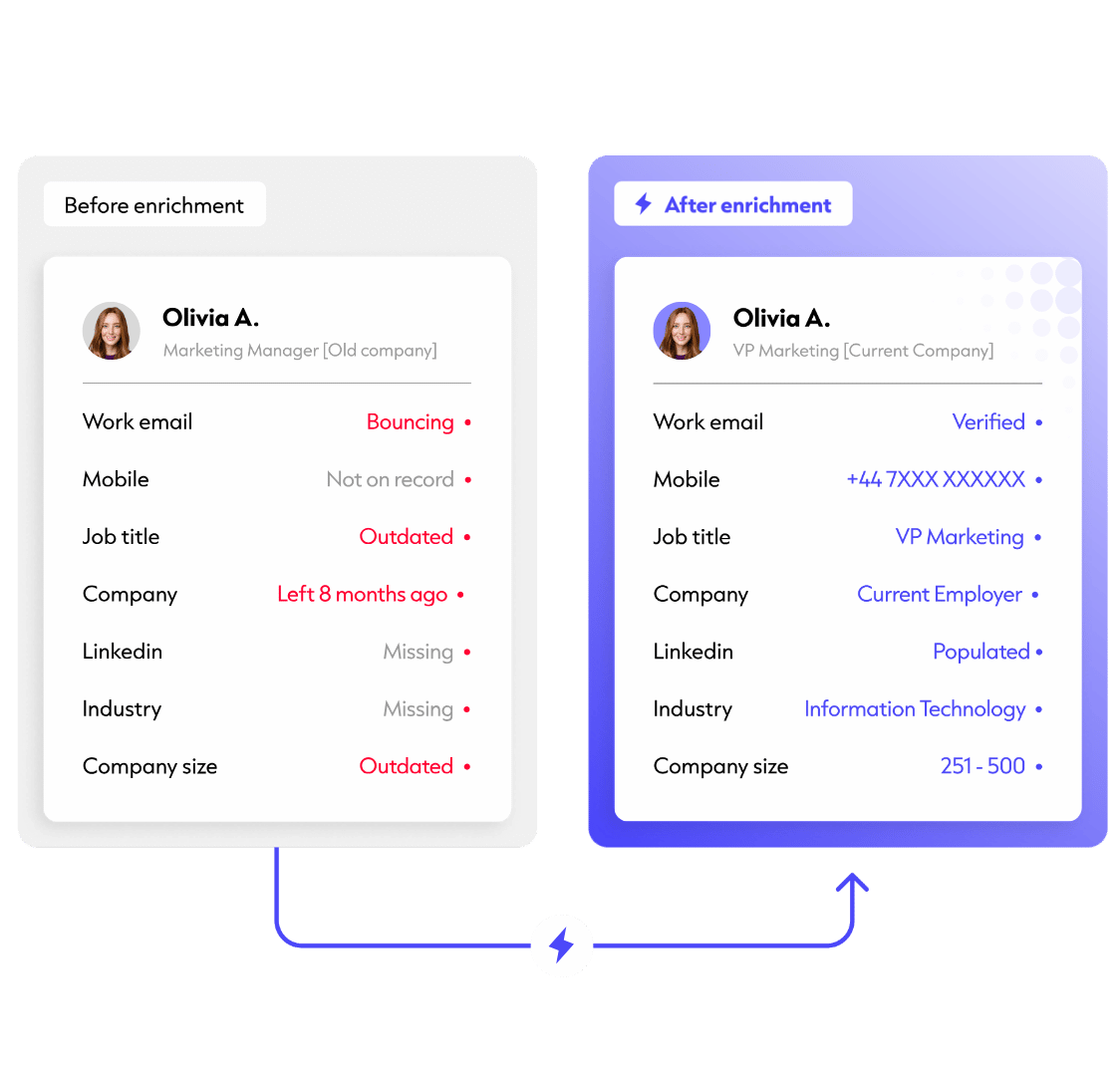
Cognism’s Europe story is inseparable from compliance. The company documents GDPR-oriented processing, screens phone data against national do-not-call lists and lets organisations sync CRM opt-outs into search, lists and the extension. Slovakia joined that screening coverage in July 2026. Admins can choose the CRM field that marks an opt-out, and Salesforce or HubSpot remains the source of truth. Selective field imports added in August mean customers need not hand the platform every CRM field just to enable matching and enrichment.
That is valuable operational plumbing, not legal immunity. The customer remains responsible for its lawful basis, outreach practice and local rules. Cognism’s own privacy policy explains that its business-contact profiles may draw on public professional sources, customer integrations, recruiters and other providers; when a business email is absent, it may generate one from the employer’s known email pattern. People can request erasure through the company’s privacy centre. A serious buyer should involve privacy counsel early, document country-level playbooks and test how suppressions behave after export.
| Job to be done | Cognism route | Question for the demo |
|---|---|---|
| Build a call list | Search, Smart Personas, phone-verified mobiles | What percentage of our sample has a working direct mobile? |
| Clean a CRM | Health dashboard, scheduled enrichment, field controls | Which fields change, and when does another credit get used? |
| Find timing | Intent, hiring, funding, M&A and job changes | Can reps see the territory and strength behind each signal? |
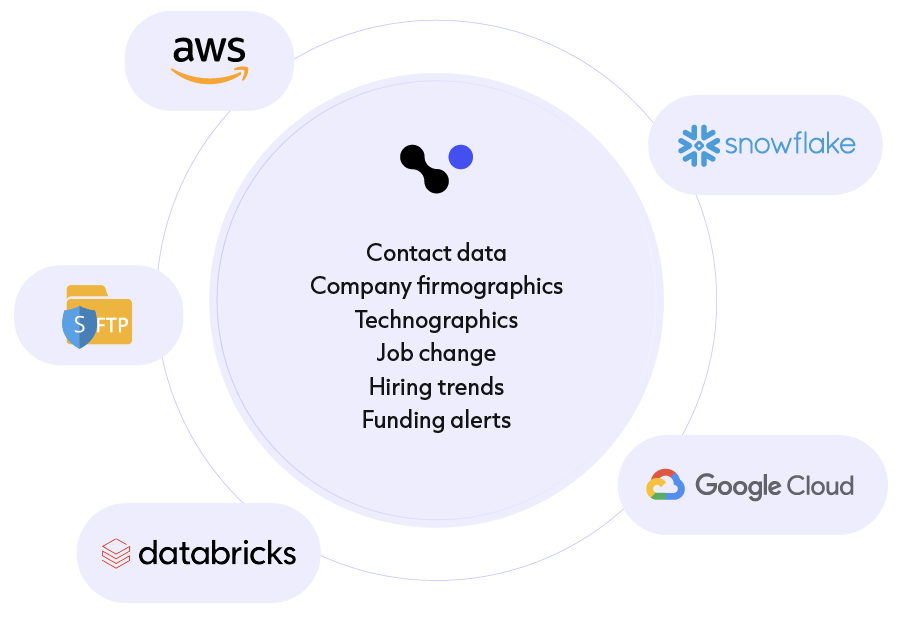
| Embed data | API or bulk Data-as-a-Service | What are the match rate, latency, limits and provenance fields? |
The price hides; the credits count
There is no public dollar figure. Cognism offers Standard and Pro prospecting packages, with Pro listing five included seats plus better mobile data, on-demand verification, intent and deeper dashboards. A credit reveals, enriches or exports one contact. Once revealed, that record can be reused during the contract; a job move can trigger a fresh credit. CRM Enrichment can be standalone or an add-on. API delivery requires a prospecting seat, while bulk delivery may stand alone. The eventual quote depends on products, seats, usage and data volume.
This is the part that frustrates smaller teams. Reddit discussions and software reviews regularly mention price or renewal pressure, though anecdotes should not be mistaken for a rate card. The practical response is procurement homework. Ask for the all-in annual price, included credits by seat, overage rate, verification treatment, onboarding fees, renewal cap, unused-credit policy and exit terms. Model three scenarios: normal usage, a hiring burst and a quarter where every rep becomes unusually enthusiastic.
Reasons to shortlist it
- Your team sells heavily into EMEA.
- Direct mobiles matter more than giant record counts.
- Salesforce or HubSpot hygiene is painful.
- You need DNC and opt-out controls in the workflow.
Reasons to pause
- Your budget needs transparent self-serve pricing.
- Your targets sit mostly outside Europe and North America.
- You only need a handful of contacts each month.
- You expect the database to run full nurture campaigns.
What customers keep repeating
The review pattern is unusually consistent. G2 showed a 4.5 out of 5 rating across more than 1,300 reviews during our research; Capterra showed 4.7 across more than 260. Users praise detailed filters, European data, the extension and quick export into CRM. One Capterra reviewer said it helped “find our exact ICP.” A TrustRadius reviewer highlighted decision-maker identification and Diamond Verify. Those are the happy-path jobs Cognism was designed to do.
The complaints are just as instructive. Reviewers report occasional bad phone numbers or bounced emails, more clicks than expected during export, a detailed interface that takes time to learn and thinner results for some small companies or regions. One vetted TrustRadius review put it plainly: “The phone numbers don’t always work.” Another found North American accuracy weaker than European accuracy. Trustpilot’s broader customer-service score was notably cooler than the specialist software sites. None of this makes Cognism unusual for contact data. It does make a representative bake-off mandatory.
Run a bake-off, not a beauty contest
Take 100 to 300 real prospects, including the territories and awkward company sizes that matter. Give every vendor the same sample. Record match rate, valid work emails, reachable mobiles, correct roles, stale jobs, DNC flags and duplicates. Then make reps use each extension for a week. Time list creation and CRM export. Check which fields arrive, what gets overwritten and whether suppression follows the record. Finally, divide the annual contract by verified contacts used and, better still, conversations created.
ZoomInfo deserves a look for North American depth and a broader go-to-market suite. Apollo is attractive when price and all-in-one sequencing matter. Lusha and LeadIQ suit lighter prospecting workflows; SalesIntel competes on human-verified data; 6sense is a different, intent-led enterprise proposition. Kaspr, owned by Cognism, targets individual contributors and smaller teams. Geography should decide the first cut. Workflow and unit economics should decide the winner.
Cognism earns its demo in Europe
Cognism is a strong candidate for established revenue teams whose pipeline depends on reaching European decision-makers by phone and keeping CRM data usable. Its current product is more thoughtful than a list vending machine: compliance flags, CRM-aware search, enrichment controls, intent geography and data delivery address the boring failures that wreck outbound programs.
The buying condition is simple. Do not purchase the promise in aggregate. Test your people, your countries and your systems, then negotiate against measured reachability and credit use. If Cognism wins that test, it can remove hours of scavenger work and a fair amount of compliance anxiety. If it does not, no diamond-shaped badge will rescue the connect rate.
Links for the due-diligence folder
Start with the product and pricing pages, then read the changelog before the sales call. The privacy and trust material belongs in the same folder as the quote. Reviews are best used to invent test cases, not to outsource the decision.