The first failure is almost embarrassingly ordinary. An email comes back. A phone number reaches the wrong desk. A name in the customer database belongs to someone who left months ago. Each looks like a clerical inconvenience, until a sales team begins organizing its day around them. Then the inconvenience acquires salaries, software subscriptions and a meeting about why the pipeline is thin.
Consider Finastra, which sells software to banks and financial institutions. Its marketing operation faced unreliable contacts and slow manual enrichment, alongside the demands of campaigns across several regulatory jurisdictions. In SMARTe’s account of the project, the eventual result was a 50% reduction in email bounce rates. The interesting question comes before that number: how much work was the team doing merely to establish that its audience existed?
- SMARTe finds B2B contacts, fills gaps in company records and tracks changes that may matter to sellers.
- Its buyers include sales, marketing and revenue operations teams; Finastra and Uber have published customer stories.
- The business now stretches from browser prospecting to APIs and AI assistants.
- Credits make the entry price easy to see. Your own contact coverage determines whether it is good value.
The mistake that keeps billing you
Finastra’s problem had several moving parts. A bad address wasted a send; manual research delayed the next campaign; questionable data handling complicated the decision to use a record at all. SMARTe supplied a data foundation intended to handle those problems together. The case study also reports 10% higher enrichment match rates and 5% higher conversions. Those are customer results published by the vendor, rather than a promise about another company’s next quarter.
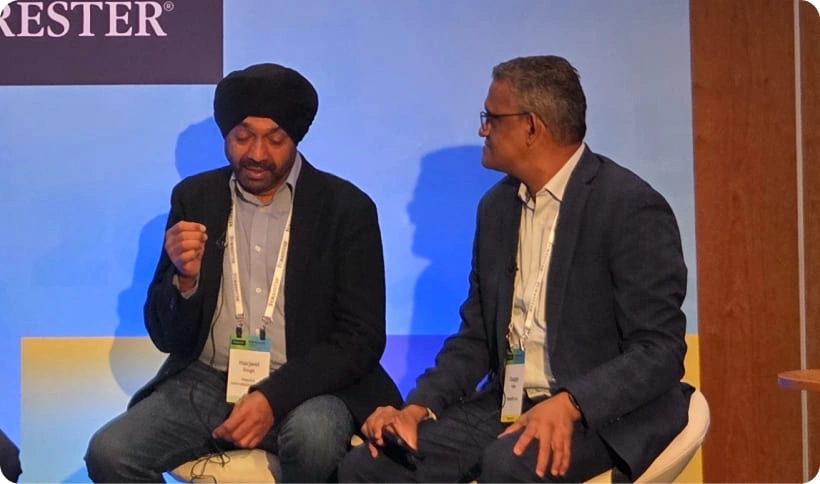
Harjeet Singh, identified as Finastra’s senior director of marketing operations, gave the relationship a revealing description:
“SMARTe is the only platform we've trusted to integrate with Salesforce.”Harjeet Singh · Finastra, in SMARTe’s customer story
A map with several streets missing
Uber’s example approaches the same business from another direction. In its SMARTe customer story, duplicate accounts and incomplete hierarchies made territory planning unreliable. A seller could see an account without seeing how it connected to other accounts, or know one employee without understanding the wider group involved in a purchase.
SMARTe worked on company attributes, account relationships and buying groups. The reported outcome was clearer opportunity coverage across EMEA, APAC and Latin America. There is no need to attach an invented revenue figure to that result. The practical change is understandable on its own: the team could plan against a more complete picture of the business it was trying to reach.
The copyable move is to inspect the map before enlarging the territory. Check duplicates, parent-child relationships and missing stakeholders. Otherwise, a larger list can simply give a team more ways to misunderstand the same market.
The long route from a list to a living record
SMARTe began in 2005, with Sanjay Gala and co-founder Parul Gala. Sanjay had previously co-founded Zycus. Parul’s company biography describes work across product, strategy and people operations. These backgrounds help explain a business concerned both with the information inside a system and with whether anyone can use it comfortably.
In a September 2020 interview, Sanjay recalled choosing to bootstrap despite approaches from investors. He named InfoGenie and DataGenie as the flagship products and described an original ambition to deliver data as a service. The company’s current catalogue uses a different vocabulary: agents, signals, playbooks and a data foundation for go-to-market work.
That progression reflects a change in what the product is asked to do. A downloadable list is useful at the moment it arrives. A record connected to a CRM, monitored for job changes and available through an API has a job to perform tomorrow as well. SMARTe has extended the ways its information reaches a customer’s working day.
Three questions before the first call
The prospecting tools begin with who: search for companies and people that match the customer you want. Company characteristics, geography and roles narrow the field. The browser extension brings contact discovery into LinkedIn and company websites, where a representative may already be researching.
Enrichment answers what is missing. SMARTe’s CRM offering adds contact and company context, supports lead routing and follows job changes. A short inbound form can collect a business email while enrichment supplies other attributes. A departing champion can become a reason to revisit an account rather than an unpleasant surprise discovered during renewal.
Signals address when. SMARTe tracks events such as funding, promotions and expansion. Its technology intelligence adds the systems a company uses. Those clues can make research more purposeful. They still require interpretation: a funding announcement is evidence of a funding announcement. Whether it creates demand for your product is a separate question.
- 01ChooseRelevant accounts
- 02CompleteUsable records
- 03CheckMeaningful changes
- 04DecideA reason to call
Your rival may also buy your ingredients
SMARTe competes in a crowded market that includes ZoomInfo, Cognism, Lusha, LeadIQ and Apollo. Its particular argument combines international contact coverage, refreshed information, custom research and access inside other tools. On its data page, the company reports 75% mobile coverage for North American contacts and 50% internationally. Those are vendor-wide claims; they cannot tell a buyer how a particular set of job titles in a particular country will perform.
The partner catalogue adds an amusing wrinkle. Apollo appears as a recipient of SMARTe data through waterfall enrichment. A competing prospecting service can also use SMARTe to fill gaps in its own results. Clay, Openprise and Nooks provide other routes into customer workflows; Salesforce and Outreach have native applications. Bombora supplies intent data.
That puts SMARTe in two places at once: a destination a seller can visit, and an ingredient inside software the seller already uses. Its expertise is in finding, matching and maintaining business information, then making that information portable.
The $25 question has a second line
The published Free plan offers ten monthly credits to one user. Pro starts at $25 a month for 50 credits, with up to five users. Enterprise pricing lists declining per-credit rates at larger commitments. Seat count and information consumption are therefore different parts of the buying decision.
50 credits · up to 5 users
The useful denominator: contacts your team can actually use.
For a small team, the sensible calculation goes beyond dividing $25 by 50. How many returned contacts fit the brief, still hold the role and can actually be reached? How much research remains? An inexpensive record can be an expensive chore. Test a representative slice of your real market and count usable results, rather than admiring a database’s headline size.
The developer documentation offers a useful budget discipline: Preview mode and the Stats API let teams check filters and record counts before full retrieval. Its credit rules tie deductions to delivered records and data type. That is a concrete habit readers can copy: inspect the query before paying to extract everything it finds.
AI gets a connection to the address book
SMARTe’s APIs carry enrichment, discovery and signals into other systems. SMARTe MCP takes that access into AI assistants, allowing natural language questions about contacts, companies and buying groups. The commercial idea is straightforward: let a user ask the question in the tool already open, then retrieve the business data needed to answer it.
The fit is strongest when a team has a defined B2B audience and a process for acting on fresh information. A team still deciding what it sells, or seeking consumer audiences, has a different problem. Even excellent contact coverage cannot supply a persuasive reason to buy. SMARTe’s useful promise is more modest, and more interesting: help the seller spend less of the day establishing who is on the other end.
SMARTe website ↗ · Company blog ↗ · LinkedIn ↗ · X ↗ · Facebook ↗
Product demo centre ↗ · Watch: browser extension ↗ · Watch: MCP workflow ↗