A prospecting database usually begins with a blank form and a mild interrogation. Industry? Headcount? Country? Revenue? Job title? Ocean.io asks a more useful opening question: name a company you would happily clone. Its software studies that business, searches millions of company profiles for semantic neighbors, and returns a ranked list of accounts that resemble the original in what they do, not merely the code somebody selected on a registry form.
That makes Ocean.io most interesting for a particular buyer: the B2B team with several good customers and an annoyingly specific ideal customer profile. Think robotics suppliers serving food factories, compliance software for regional banks, or an agency whose sweetest clients share a business model but not an industry label. If your brief is simply “every VP of Sales in California,” a broad contact database may be cheaper and easier. If your brief sounds like a paragraph, Ocean has a reason to exist.
The short answerWho should put Ocean on the shortlist?
Sales development and demand-generation teams can use it to build account lists. RevOps teams can mine closed-won CRM data for useful segments. Agencies can repeat a proven client pattern across a niche. Product companies can call Ocean through an API rather than send users into another dashboard. Recruiters can search companies and people, too. The common ingredient is a seed worth copying.
Good fit
- You have clear closed-won examples.
- Your niche defeats normal industry filters.
- You use Clay, a CRM, webhooks, or APIs.
- Account quality matters more than raw volume.
Test carefully
- You mainly need a huge people database.
- Your ICP is broad and easy to filter.
- Your budget is sensitive to credit use.
- You cannot validate a sample before signing.
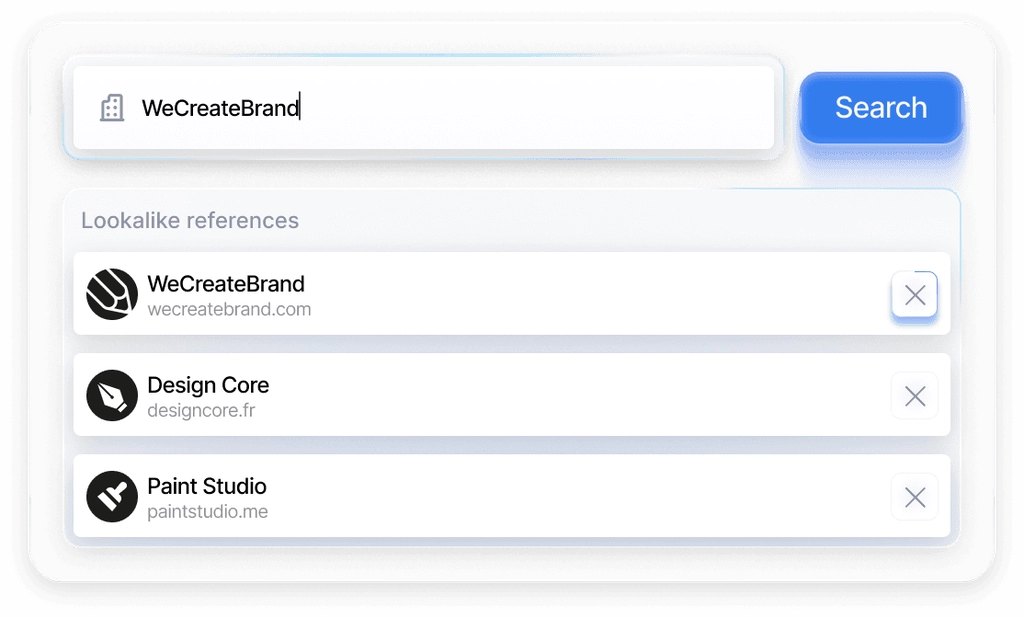
The clever bit is similarity, not size
Ocean says its current data layer spans 67 million company profiles, more than 250 million employee profiles, and over 100 data points. Those are serious numbers, but database size is table stakes in sales intelligence. The differentiator is the matching system. Ocean describes a context-vector similarity model that reads company context and ranks lookalikes. Search can also be Boolean, fuzzy, or semantic, with filters for industry, technology, headcount, location, growth signals, and other firmographics.
The idea dates to 2017. Founder Michael Heiberg has said the inspiration came from consumer recommendations: if software can learn which films or products a person likes, why should a B2B seller start every market search from a static taxonomy? Early Ocean crawled hundreds of millions of web pages and combined those signals with registries and public databases. The company spent its first year largely bootstrapped, later raised institutional money, and announced a $7 million round led by Peak in January 2022.
From seed account to usable pipeline
The cleanest workflow begins with three to ten representative customers, not the three largest logos on your homepage. Pick accounts that bought for the same reason, stayed, and produced decent economics. Ocean can find lookalikes from a domain or description; its segmentation product can also inspect CRM patterns and rank markets by outcomes. Once you have a candidate pool, narrow it with geography, employee count, technology, funding, or web signals. Then identify the relevant people and reveal contact details only for the finalists.
Choose honest seeds. Group customers by use case and buying reason. A famous outlier teaches the model the wrong lesson.
Inspect the neighbors. Manually grade the first 25 to 50 companies. Record why every miss is a miss.
Layer hard filters. Geography, headcount, technology, growth, and exclusions turn resemblance into a territory.
Reveal late. Find the right accounts before spending credits on emails and direct numbers.
This order matters because Ocean uses one credit balance across the platform and API. On the public pricing page, a verified email costs 1 credit, a direct phone costs 10, and additional search results cost 0.2. Exporting a company or person is free after the relevant reveal. The meter rewards discipline: discover broadly, validate cheaply, and enrich narrowly.
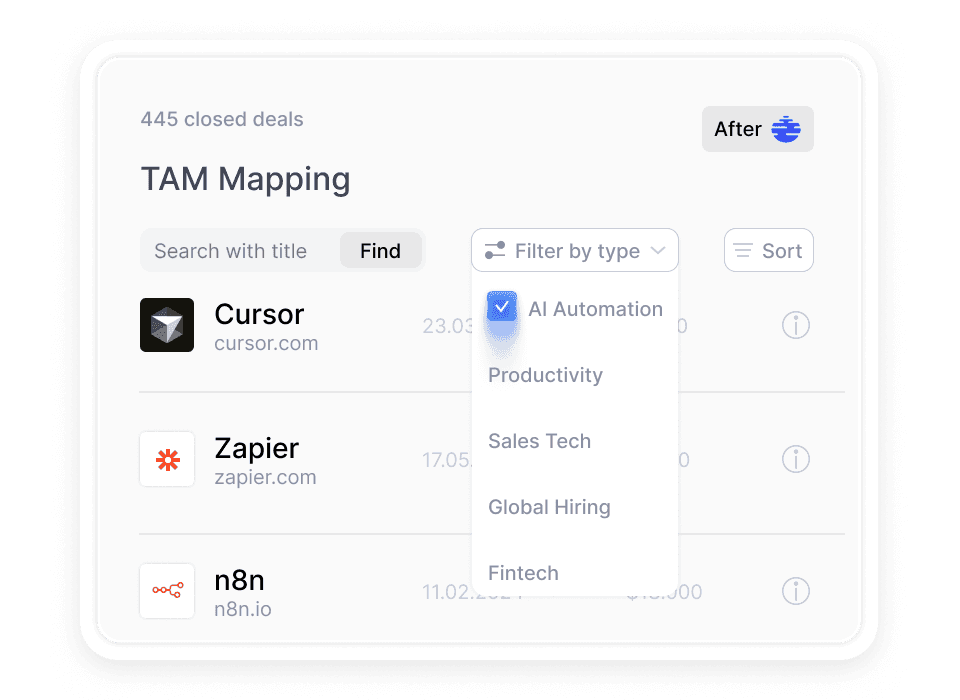
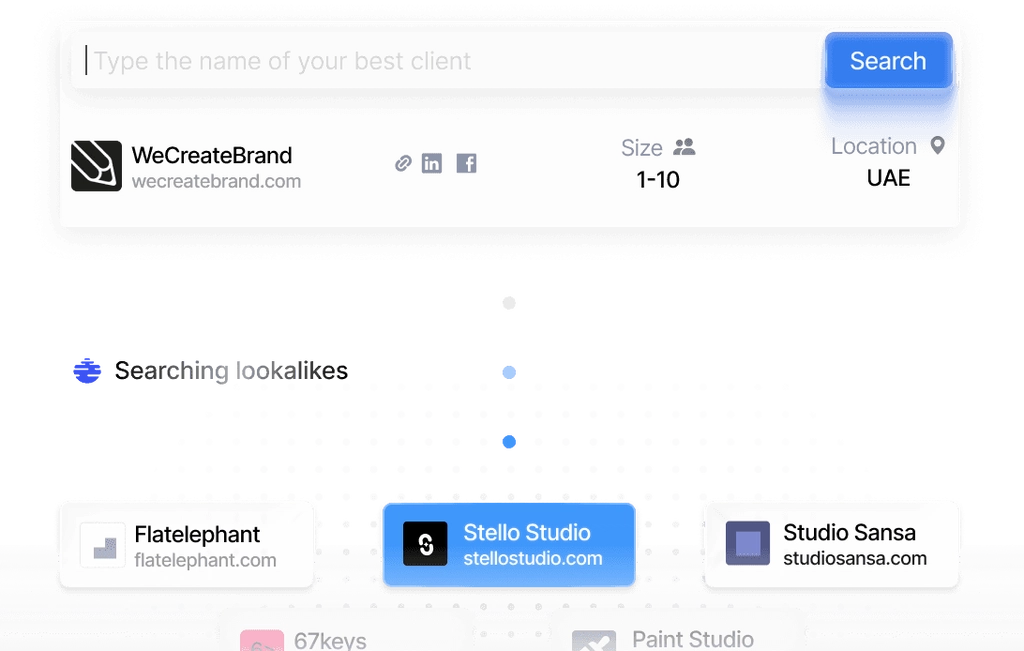
Ocean escaped the dashboard
The largest product shift happened in 2025, when Heiberg described Ocean as moving from platform-led to API-first. That sounds like founder vocabulary until you see the practical result. The REST API exposes search, enrichment, lookalike ranking, and email reveal. Webhooks can pass records into Zapier, Make, n8n, or an internal service. Native connections cover Salesforce, HubSpot, Pipedrive, and Clay. Attio and Zoho CRM are marked as coming soon.
Ocean now has a conversational Agent in its web app and an MCP server for compatible AI clients. Eleven visible tools can search companies and people, find lookalikes, query a CRM, export records, enrich profiles, inspect segments, and score segment fit. Each call is shown, which is useful when a cheery agent is about to spend credits or fill a CRM. This is the more convincing version of “AI sales”: the model translates plain English into inspectable data operations rather than composing another chirpy cold email.
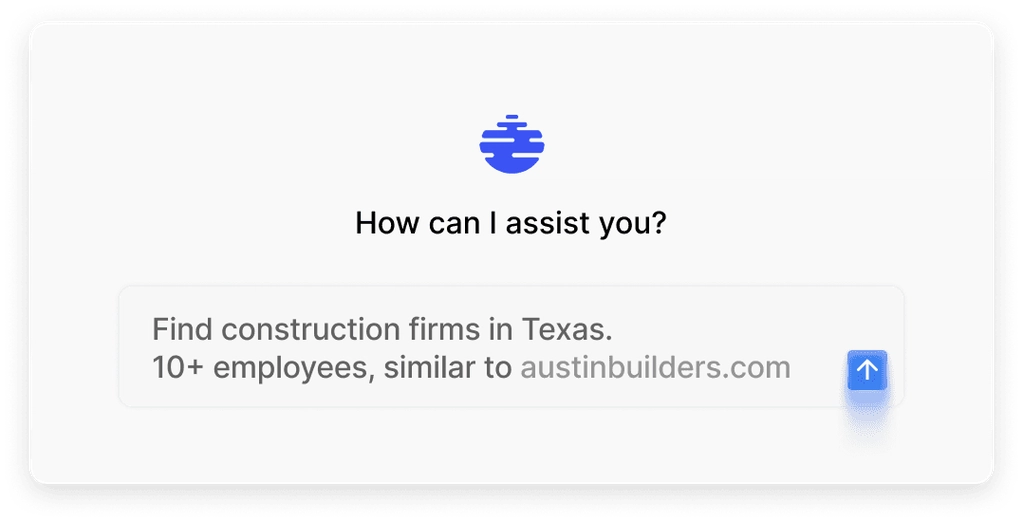
The proof is promising, with an asterisk
Ocean’s customer stories contain concrete outcomes. Clay says its users have run more than 1.5 million Ocean-powered lookalike actions. Cross-Border Communications reports a 23 percent lower cost per marketing-qualified lead. Leadinfo reports double the demo rate in its first week of entering new markets. Netmore reports 900 percent more prospects per month. These are useful signals, but they are selected, vendor-published case studies, not controlled tests.
Independent opinion is mixed and unusually instructive. G2 showed a 3.1 out of 5 score across 12 reviews when we checked. Positive reviewers praise ease of use and the ability to uncover lookalike companies that rigid filters miss. Critical reviewers cite stale records, poor fit, export limitations, cost, and renewal disputes. Trustpilot had only two reviews, both one-star, so its 2.9 score is too small a sample to generalize from. One Reddit user neatly divided the market: Ocean was “great for discovery” and less useful for people data, while Apollo offered more overall quantity. Another 2026 Reddit user liked Ocean for narrowing an ICP but said the credits hurt.
Buyer’s rule: never judge a lookalike product from its own demo accounts. Bring your messiest niche, run the same ten seeds through Ocean and two alternatives, then score the first 100 results blind.
Price the workflow, not the login
Ocean’s public calculator currently starts a yearly subscription at 9,000 credits for $567, billed annually. That is $47.25 per month on paper and $0.063 per credit at the displayed tier. The page also advertises monthly plans, pay-as-you-go buying, top-ups, volume deals, unlimited users, API access, the graphical interface, a Chrome extension, waterfall enrichment across more than 16 sources, and CRM integrations. It does not publish the exact free allowance or every pay-as-you-go rate.
Unlimited seats are a welcome choice for teams that want SDRs, marketers, and operators working from one pool. Credits roll differently by purchase type: the site says active monthly-plan credits can remain for up to six months, yearly credits last 12 months, and one-time credits last three months. Subscriptions renew automatically unless canceled. Read the order form and cancellation window, particularly because billing and renewal handling appear in several negative reviews.
| Option | Best when | Watch for |
|---|---|---|
| Ocean.io | Your ICP is semantic, niche, and easier to show with examples than describe with codes. | Credit consumption, sample relevance, contact freshness, and contract terms. |
| Apollo.io | You want broad people data, outbound tooling, and approachable small-team economics. | Industry categories can be blunt; independently verify contacts. |
| ZoomInfo | You need enterprise-scale coverage, signals, and a large commercial data suite. | Pricing, implementation weight, and overlap with tools you already own. |
| Cognism | Phone data, compliance processes, and international prospecting lead the brief. | Coverage varies by region and plan; benchmark your exact territories. |
| People Data Labs | Your product or data team wants people and company data through APIs. | You may need to build more of the discovery and operating interface yourself. |
Our verdict: buy the pattern finder
Ocean.io earns a place in a sales stack when discovery is the bottleneck. It turns a fuzzy sentence such as “more companies like our best logistics-software customer” into a list you can challenge, refine, enrich, and route. The API, Clay connection, webhooks, and MCP tools mean that list can arrive where work already happens. The product is less compelling when a team merely wants the largest possible address book or when ordinary headcount and industry filters already define the market.
The responsible buying process is short. Start free. Use representative seed accounts. Ask a salesperson to label results without seeing Ocean’s rank. Compare the same task with Apollo, ZoomInfo, Cognism, or another relevant provider. Verify a sample of emails and phones. Model a full month of search and reveal credits. Get renewal and cancellation language in writing. If Ocean keeps finding plausible companies your team did not know, it is doing valuable work. If the list needs heroic cleanup, the sea is simply too wide.