There was no dashboard. There was no predictive model a customer could log into. When Deepak Anchala tested the idea that became Slintel, he asked a handful of entrepreneur friends whether they would pay $1,000 a month for a service that might tell them which companies were worth pursuing. Some declined. Some agreed. The yeses were enough to start.
In one minute
- Slintel sold a manually delivered buyer intelligence service before building its software.
- It moved from identifying companies by their technology stacks toward detecting signs of buying intent.
- Its customers were B2B sales and marketing teams trying to decide whom to contact and when.
- After a $20 million Series A in June 2021, 6sense acquired Slintel that October.
That first sale was a small act of market research with a wonderfully inconvenient condition: money had to change hands. Anchala and co-founder Rahul Bhattacharya worked on the business alongside day jobs. A small team in India crunched data for paying customers, learned what questions those customers actually asked, and kept selling. By the time the founders went full time in 2018, the operation had reached ten customers and a staff of thirteen, according to an account published by investor Accel.
The clue inside the software stack
Slintel began with technographics, the ungainly but useful practice of identifying which software a company uses. A sales team selling a Salesforce add-on, for instance, would rather know that a prospect runs Salesforce than discover it halfway through a call. A competitor’s install might suggest a replacement opportunity; a complementary tool might suggest an integration pitch. This was better than a generic list of companies sorted by industry and headcount.
But a software install is also a photograph. It describes a state, not a change. The customer may be delighted with its current stack, midway through a contract, or simply too busy to switch. Slintel’s more consequential move was to ask what had happened lately. A new executive, a hiring surge, a product launch, a funding round, or a change in tools could give the sales team a reason to pay attention now.
Stellaris Venture Partners, an early investor, says Anchala began making buying intent central to the product in late 2019 or early 2020. Its account is unusually candid: technographics was the original differentiation, but it was not enough to solve the timing problem. The company’s expertise became the combination of data collection and interpretation. That distinction matters. A list can be copied; a useful judgment about what changed is harder to reproduce.

A narrow question at a very large scale
The user was usually someone in a revenue team: a salesperson looking for an account, a business development representative assembling a call list, or a marketer trying to aim an account-based campaign. Slintel joined company attributes, technology adoption, contacts and market events so those teams could rank prospects instead of treating every name as equally promising. It was a subscription data and software business, built for organizations where a mistimed sales approach has a real cost.
By the time of the acquisition, 6sense said Slintel refreshed more than 60 attributes on 15 million companies each week. It also reported 250 million B2B profiles, 50 million email addresses and 20 million direct dial numbers. Those are company figures, not a promise that every record was current or every signal predictive. They show the scale of the data job: the product needed breadth, regular refreshes and a way to turn a flood of changes into a short queue of accounts worth examining.
Slintel’s positioning sat between a contact database and a full account engagement platform. ZoomInfo was an established alternative for company and contact intelligence. 6sense, by contrast, specialized in reading account activity and helping revenue teams act on it. Joining the two made industrial sense: the platform could have more native company and contact context, while Slintel’s information could sit beside other buying signals and workflows. The buyer was not purchasing an oracle. The buyer was purchasing a better organized starting point.
What broke, and what changed
The first thing to fail was not the product concept. It was the founders’ time and cash. Accel’s account describes nights spent working after day jobs, a struggle to hire engineers, a slow first fundraising process, and a period when the founders skipped salaries. The team had an answer customers wanted, but turning a laborious service into a repeatable product required people and runway. It is the unglamorous arithmetic behind the attractive phrase “product-market fit.”
“Would you pay me $1,000 a month?”Anchala’s early test, recounted to Accel Atoms
The company made two changes that its investor credits with scaling it. First, it treated technographics as an input to a larger question about intent. Second, it shifted its customer acquisition from mostly outbound prospecting toward inbound demand. Stellaris argued that people already searched for ways to prioritize prospects and could pilot Slintel quickly. An inbound path let those interested buyers find the product, while an inside sales team handled conversion. The investor reports revenue from annual subscriptions grew more than thirtyfold from its seed investment to the 2021 exit; that is a directional report from an investor, not audited financial disclosure.
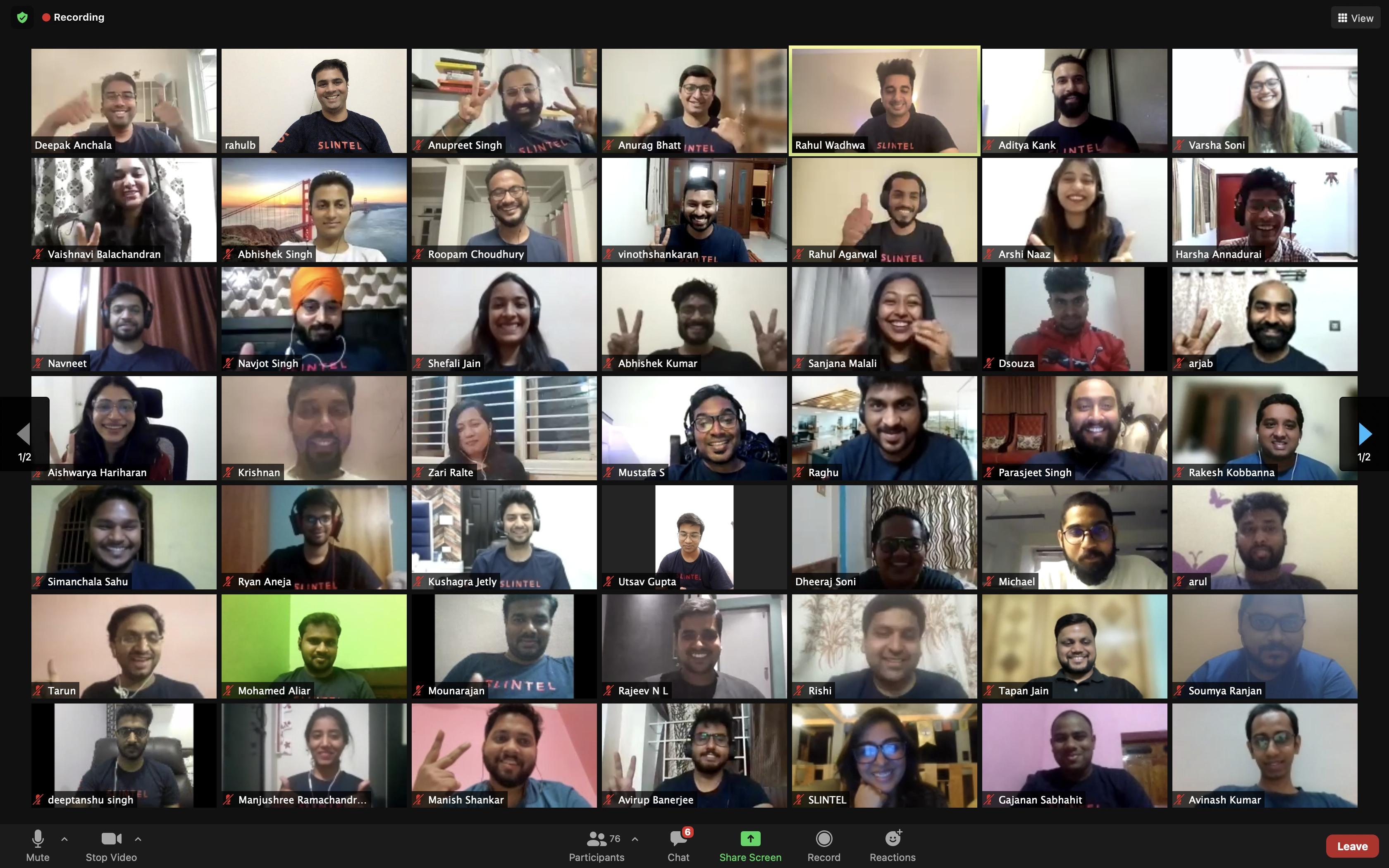
The money arrived in stages: $1.5 million in an early round led by Stellaris, $4.2 million announced in 2020 with Accel leading, then $20 million in June 2021 led by GGV Capital. In October, 6sense announced its acquisition of Slintel. The sale price was not disclosed. Phenom’s marketing vice president described the combined data and platform in the acquisition announcement as a way to find in-market buyers and make outreach more specific.
The name after the deal
Acquisition stories often end with a logo beside another logo. This one has a more traceable product trail. A March 2022 6sense update said Slintel contact data had entered Sales Intelligence in January and technographic data was next. In March 2023, 6sense launched Revenue AI for Sales. Anchala later wrote that the product combined the two companies’ capabilities and that Slintel’s team, technology and processes had been integrated. Slintel today appears as “Slintel, a 6sense company,” pointing visitors to the broader 6sense platform.
There is a practical idea here for anyone building a data product. Start with the decision a customer wants to make, offer to help make it by hand, and charge enough to learn whether the answer is valuable. Then watch where the first answer disappoints. Slintel’s early customers paid for help finding prospects; the more valuable problem became finding a reason and a moment to speak. That lesson travels. The exact machinery does not: buyer intelligence needs enough observable activity, reliable data, and a team ready to use a signal before it goes stale. Without those conditions, a beautifully scored list is still just a list.