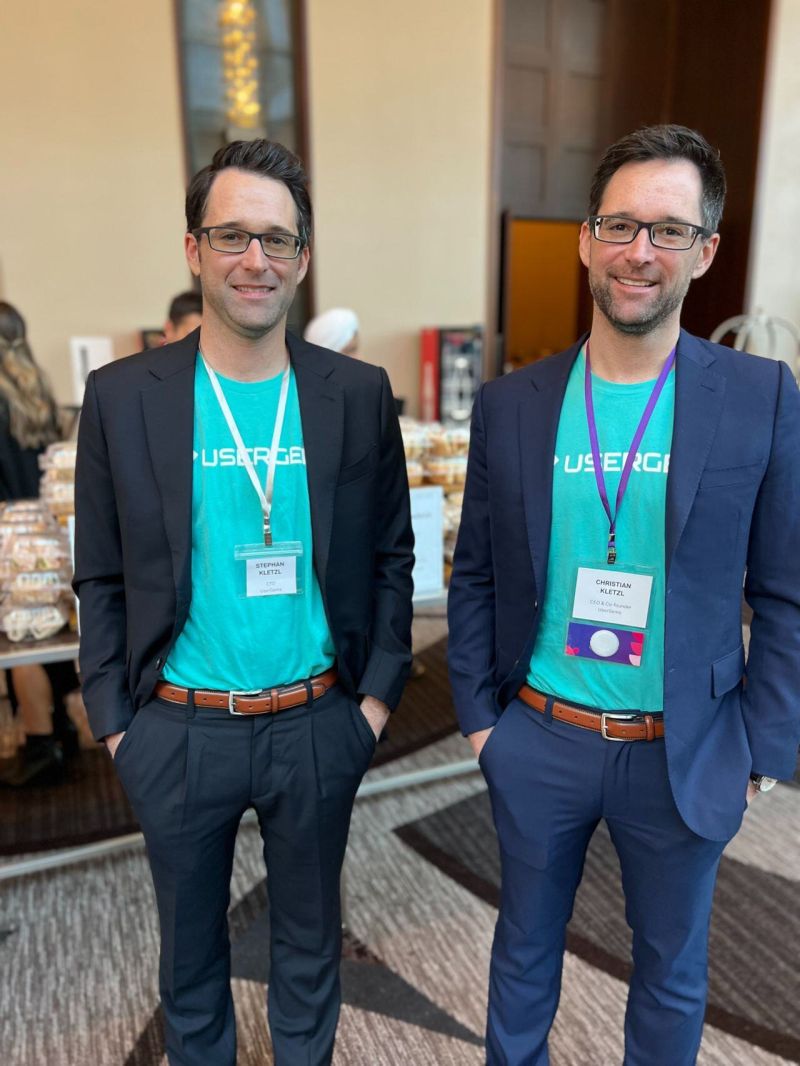
The product that became UserGems began as a piece of plumbing nobody was supposed to notice. Christian and Stephan Kletzl were running SmartHires, a network where startups backed by the same investors could trade promising job candidates. They needed to know when an important customer moved to a new employer, so they built a tracker. Other founders perked up at the tracker and politely ignored the company around it. That is the sort of customer feedback that arrives carrying a tiny hammer.
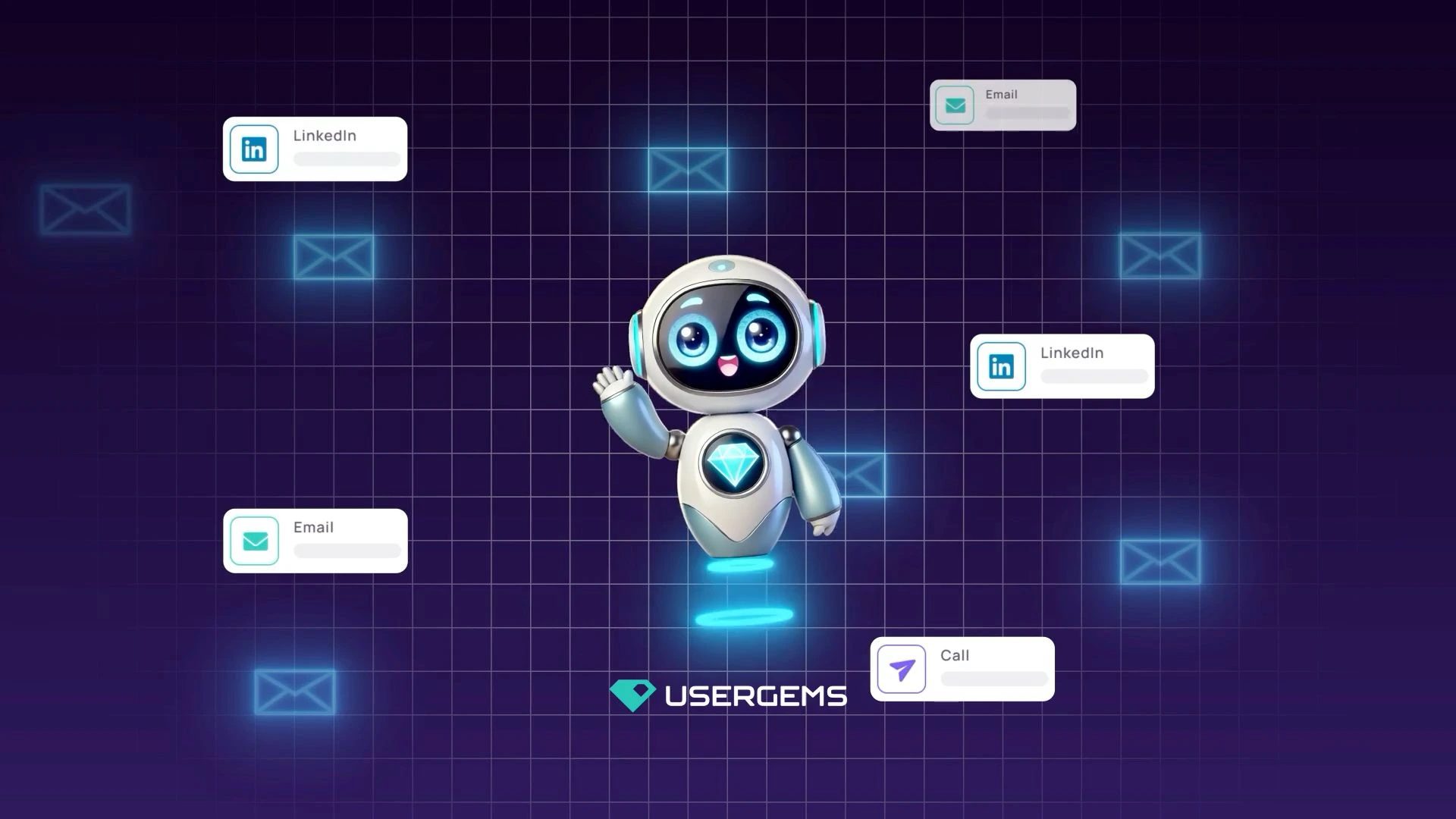
Today, UserGems sells the expanded version of that clue. The software watches for moments that make a business buyer more reachable: a former champion starts a new job, a target account hires an executive, a prospect visits a website, a company raises money, or a once-lost deal acquires new context. It combines those events with CRM records, call transcripts, product usage and a customer's own history. Then it scores the people, finds missing contacts, drafts outreach and moves the work into Salesforce, HubSpot, Outreach, Salesloft or Gong Engage.
The company calls this an AI command center for outbound and account-based marketing. Strip off the category language and the promise is simpler: your reps should open their laptops to a short list of people worth calling, not spend the morning spelunking through six dashboards.
First came the box on the doorstep
The Kletzl brothers, Austrian twins with technical and business backgrounds, started with ShelfFlip in 2014. The consumer app read email receipts, built a digital inventory and estimated what unwanted purchases might fetch on resale markets. It was a clever solution to a weak economic fact. Most household stuff, they discovered, was not worth much secondhand. Apple products were the cheerful exception.
They tested an extravagantly manual version: leave a box outside apartment doors and offer to sell everything people put inside. Even the easiest imaginable experience did not pull demand. ShelfFlip was scrapped. This is the first useful thing to steal from the story. Before spending months sanding an idea, test the version so generous, expensive and unscalable that customers have almost no excuse to refuse it. If they still shrug, the friction was not the problem.
SmartHires came next. Its circular logic was fatal: every participating company wanted access to the candidate pool, but few wanted to donate good candidates. An influencer-identification tool followed. In 2019, after years of iteration, a four-person team retreated to a cabin in the Austrian Alps and built the first focused UserGems beta in a week.
“Try out the craziest, most expensive, most unscalable version as soon as possible.”Christian Kletzl, on knowing when to stop
What the customer actually buys
Early UserGems was easy to explain: track your best customers and prospects, then tell sales when those people change jobs. A happy user arriving at a new company brings familiarity, credibility and sometimes budget. The replacement who takes over the old job can matter too. The wedge was called champion tracking, and customers including UserTesting, Procore and Medallia helped establish it.
But a signal alone leaves work on the table. Someone still has to verify the new role, find an email, decide whether the account fits, write a note, choose a sequence and remember to follow up. UserGems gradually moved from selling what Christian Kletzl has called lumber to selling furniture: not a list of job changes, but the operational workflow wrapped around them.
The current platform advertises more than 30 native signals and says Gem-E, its AI agent, can evaluate more than 600 inputs while learning from closed-won patterns. The score is meant to be visible and editable, a deliberate contrast with account-intent products that return a mysterious number. Research and Writing agents gather context and compose messages. An Orchestration agent builds campaigns. Buying-group tools find the committee around a deal. Ads can be synchronized to LinkedIn, Meta and Google while sellers receive matching tasks and emails.
Proof arrives as a shorter morning
UserGems' customers are B2B sales, marketing, RevOps and customer-success teams, usually in the mid-market or enterprise. The company says it has worked with more than 350 startups and public companies. Its roster includes Mimecast, Workday, HubSpot, Docebo, Quickbase, Sendoso, Outreach, CaptivateIQ and NetSPI. The case studies are vendor-published, so the numbers deserve the same caution as any supplied performance claim. Still, they show precisely what buyers are paying to change.
At Quickbase, SDRs had spent roughly two-thirds of the day finding contacts, prioritizing accounts and writing messages. A UserGems workflow now runs at 4 a.m., loading prospects and drafts into Outreach before reps arrive. Comparing the average quarter of 2025 with the first quarter of 2026, Quickbase reported five times the lead reach, three times the pipeline and twice the closed-won revenue.
Docebo reduced a book of 400-plus accounts to a daily queue of 30 prioritized people, with emails ready for review. It reported 54 enterprise opportunities in the first full quarter, a 16 percent average reply rate and 70 percent of pipeline flowing through UserGems. NetSPI reported 71 meetings and $610,000 in pipeline over roughly five months. Accord says research and email preparation fell from 20 minutes to three to five. The repeated benefit is not magical copy. It is fewer decisions before a rep can do the human part.
“I don't want to show BDRs all the work they could do. I just want to show them what they should do.”Simona Gatta, Docebo
The price makes the filter obvious
UserGems is sold as annual B2B software with implementation and specialist support. Its public 2026 menu lists Core at $40,000 a year, Advanced at $75,000 and Elite at $150,000. Implementation adds $10,000. Higher tiers bring more usage credits, broader total-addressable-market coverage and features such as research. This is a budget-line platform, not an individual rep's browser toy.
Annual subscription, before implementation
Listed implementation: $10K. The advertised revenue guarantee depends on contractual outreach, attribution and usage conditions.
That positioning separates UserGems from several kinds of alternative. ZoomInfo and LinkedIn Sales Navigator are associated with finding people and contact data. 6sense and Demandbase center more heavily on account intent and ABM. Clay gives operators a flexible bench for assembling enrichment and automation. UserGems' bet is that a revenue leader will pay more for one opinionated chain connecting person-level signal, custom score, message and execution, with specialists helping configure it.
The fit is conditional. A solo seller can watch LinkedIn alerts more cheaply. A young company with few former customers will generate champion leads slowly. A team with a dirty CRM, vague ideal-customer profile, small deal values or no appetite for consistent outreach may never produce enough attributable revenue to justify the fee. AI-written email also needs review; even UserGems' friendliest customer formulation is “AI drafts, humans finalize.”
The practical fit check
- Meaningful CRM and customer history
- High deal values and repeatable personas
- Reps already living in connected tools
- Leaders willing to tune scores and campaigns
- One-person prospecting operation
- Tiny customer base or target market
- Messy ownership and unreliable data
- Low-volume outreach with no measurement habit
The launch lesson hidden inside Gem-E
UserGems had already learned how a market can reject a product. Gem-E taught it how an internal team can reject one. When the company previously tried to push a second product, it adjusted commission and added sales requirements. The carrot-and-stick plan failed. For Gem-E, leaders treated their own account executives and SDRs as the first customers. Sellers helped shape pricing, fed back on the drafts and used the system to build the pipeline they themselves needed.
Six months later, Christian Kletzl said Gem-E contributed 53 percent of company revenue. In another account, he said four AI-assisted campaigns generated 70 percent of UserGems' own pipeline and raised average outbound opportunities per rep from 12 to 19.3 a month. Those are company-reported results, but the method travels well: make the people who must sell a new product eager to use it first. Adoption is harder to fake than enthusiasm in a launch meeting.
The next move broadens the command-center claim. In 2026 UserGems demonstrated Research and Orchestration agents, dynamic audience sync, buying-stage views and an MCP that can bring platform actions into AI assistants. The ambition is to sit between the CRM, where facts are stored, and the sales tools, where actions happen. That middle seat is valuable because every vendor wants it. It is also precarious for exactly the same reason.
A decade of wrong turns, compressed
Email receipts become an inventory for reselling household goods. Demand does not follow.
A candidate-sharing network stalls because everyone wants to take and few want to give.
Four people spend a week in the Austrian Alps focusing the job-change tracker into UserGems.
A $2.4 million seed and $20 million Series A fund product and hiring.
Signals gain an AI research, prioritization and writing layer.
UserGems recasts itself as the shared brain for signals, scoring and orchestration.
The cleanest lesson from UserGems is not “pivot until something works.” Endless motion can look a lot like progress from inside a startup. The sharper lesson is to notice which small piece outsiders repeatedly ask for, then wrap that piece in enough workflow that the result earns a real budget. ShelfFlip's legal name still survives on UserGems contracts, a corporate fossil from the first wrong answer. The useful code survived too.
Keep a few tabs open
See the product, watch customers explain their workflows, or hear the founders tell the longer version.