At Rochester, a silver-and-gold mine in Nevada, the number that explains Coeur Mining is $730 million. That was the reported capital cost of its expansion. In December 2020, the company had outlined $397 million in planned construction capital. The distance between those numbers tells a useful story about industrial ambition: discovering metal and building a system that extracts it profitably are different accomplishments.
- Build: enlarge Rochester’s crushing, leaching and recovery system.
- Buy: add Las Chispas, then New Afton and Rainy River.
- Prove: turn the extra capacity into cash after operating costs and reinvestment.
Coeur is a producer of gold, silver and, following its New Gold acquisition, copper. Its seven operating mines sit in the United States, Mexico and Canada. It occupies the physical beginning of a supply chain whose later products look considerably more glamorous than crushed ore. Here, the interesting questions concern particle size, construction bills and how quickly a new underground mine section can produce.
The customer never sees the mine
A mine does not generally deliver a wedding ring or a finished electrical component. Coeur sells metal-bearing output into commercial markets. Doré, a partly refined gold-and-silver alloy, goes onward for refining. Concentrates go to specialist buyers and processors. Refiners, smelters and metals counterparties are its direct commercial audience; jewelry, industrial and investment demand sits farther downstream.
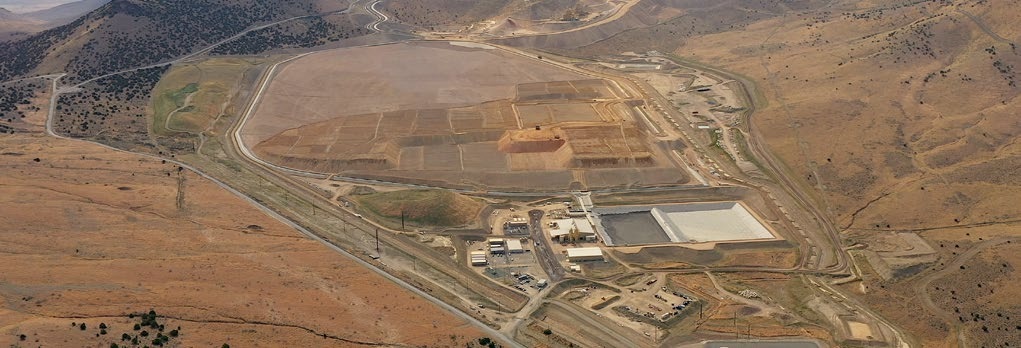
The product is metal. The expertise is getting it out of rock, repeatedly, while managing water, waste, ground conditions and worker safety. Coeur combines underground operations with open-pit mines and heap leaching. At Rochester, crushed ore is placed on lined pads, where a dilute cyanide solution dissolves precious metals for recovery. A larger crusher needs somewhere for that ore to go.
The budget moved before the metal did
The expansion joined three major pieces: a new leach pad, a Merrill-Crowe processing plant and a three-stage crushing circuit. Coeur’s September 2023 announcement described planned throughput of 32 million tons annually, approximately two and a half times historical levels. The logic was straightforward: spread infrastructure and operating effort across more production, while improving recovery.
The execution was less tidy. By early 2023, the capital estimate stood at $650 million to $670 million. Extreme winter weather pushed expectations toward the upper end. Earlier disclosures described inflation and supply-chain disruption. The original construction budget proved too optimistic as the design and costs evolved. The public record shows a budget and schedule problem before steady-state operations could be tested.
First metal from the new pad and plant arrived in September 2023. In March 2024, commissioning of the new crushing circuit brought the declaration of commercial production. That sequence matters. A first pour is a milestone, but it does not mean every part of a mine has reached its intended operating rhythm.
“The focus is now shifting to commissioning, ramp-up, and mine optimization initiatives”Mitchell J. Krebs / September 2023
Even the subsequent spending plan remained revealing. Coeur’s initial 2026 guidance included $96 million to $110 million of Rochester capital expenditure, covering further leach-pad development and modifications following crusher startup. Completion closed a construction chapter. It left a substantial operating and investment agenda.
Then Coeur bought more geology
Rochester was only one route to scale. In February 2025, Coeur completed its acquisition of SilverCrest, adding the Las Chispas silver-gold mine in Mexico. The deal’s announcement had implied about $1.7 billion in equity value. Coeur issued roughly 239 million shares to close it. An all-stock purchase preserves cash, while giving the sellers a substantial ownership interest.
New Gold followed in March 2026. That acquisition added Rainy River in Ontario and New Afton in British Columbia. Its announcement implied approximately $7 billion in equity value; completion involved about 393 million newly issued Coeur shares. Those are announcement-date valuations and closing share counts, not cash invoices. Shareholders must judge whether the added earnings justify the expanded ownership base.
Coeur’s competitive distinction is this combination of North American geography, meaningful silver production and a broader gold business. Hecla and Pan American Silver offer alternative silver exposures; larger gold producers offer different portfolios. The metals themselves are commodities. The distinction lies in deposits, mine lives, recovery, costs and capital discipline.
Higher prices, production and acquisitions all contributed. This is not a measure of productivity alone.
The next bottleneck is underground
The 2025 revenue jump is striking, but it bundles several changes together. Higher realized metal prices helped, as did production and Las Chispas. Calling the increase an efficiency gain would miss the economics. A producer can sell more ounces, receive more per ounce, acquire someone else’s ounces, or improve its costs. These are separate achievements.
The newer Canadian assets supplied a timely complication. In August 2026, Coeur revised their partial-year production expectations to reflect slower assumed ramp-ups at Rainy River’s underground operations and New Afton’s C-Zone. Owning more capacity does not settle the question of how quickly that capacity becomes usable.
Exploration offers another path. September drilling results extended mineralization at New Afton’s K-Zone by more than 300 meters beyond its original footprint. Nearby discoveries can potentially use existing infrastructure. Yet a mineralized interval is not a producing mine, and a larger resource still needs engineering, economic evaluation and development.
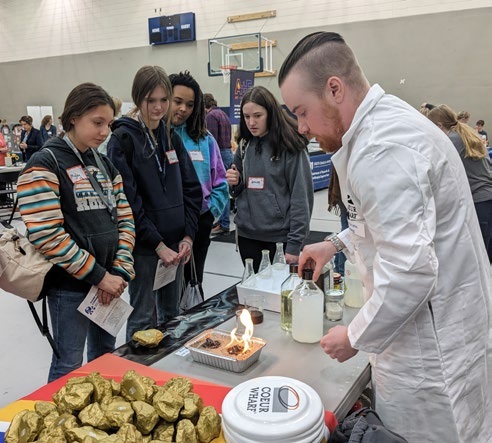
There is a human constraint, too. Mines need skilled people where the deposits happen to be. Coeur’s 2025 Responsibility Report describes Wharf’s work with local schools and skilled-trades programs. That connection is practical: an operating plan depends on geologists, engineers, maintenance crews and equipment operators. Coeur’s stated emphasis on safety and training belongs in the same discussion as throughput. A production target assumes a workforce that can carry it out.
Copy the sequence, check the conditions
The transferable lesson is to examine the whole production chain before enlarging one component. Follow the material from extraction through processing and sale. Keep dated budgets beside revised ones. Separate price gains from operating gains. Coeur’s public disclosures make those comparisons possible.
The conditions matter: ore grade, recovery, permitting, water management, construction costs and metal prices can each frustrate the benefits of scale. Coeur scheduled its next results for November 4, 2026. The useful test remains wonderfully concrete: how much cash does the larger system produce after paying to keep itself running?