The curriculum vitae is a peculiar invention. It records the places a person has been and asks an employer to imagine what that person might do next. Clover Venture begins at the awkward distance between those two things. Give people a problem, put them together, and watch the work. The conversation becomes rather more interesting.
- Corporate challenges double as opportunities to observe skills.
- Four software modules turn assessments into profiles, team maps and benchmarks.
- An early branding mistake offers a lesson in choosing words your partners understand.
First, a room full of people
Clover’s origin story starts with a hackathon that Paolo Licata had been asked to organize. As the company tells it, businesses had ideas and technologies, yet struggled to recognize the missing skills preventing progress. The obstacle was hiding inside the organization. Another idea would do little to explain it.
That observation gave the event a second purpose. Participants were solving challenges, but they were also demonstrating how they collaborated and made decisions. Clover began adding assessments, profile analysis and digital tools so that those observations could remain useful after everyone went home. An event became the starting point for a skills intelligence platform.

The company’s first-year impact report puts some dimensions around that setting. In 2025, it recorded 212 participating talents, ten university partners and 18 companies with active innovation challenges. It also counted 39 startups supported through scouting, venture building and access to funding opportunities. These are Clover’s reported activity figures, rather than a census of paying customers.
The word that frightened the partners
Before Clover could make skills legible, it had to make itself legible. Its November 2025 rebranding announcement described a surprisingly ordinary failure: people misunderstood the business. Some saw a consultancy. Others saw an innovation hub. Some organizations Clover wanted as partners saw a competitor.
The announcement’s video transcript was blunter. The innovation-hub positioning had obstructed collaborations. Clover reframed itself as a technology company designing and automating innovation processes. It introduced Clover Lab for programs and execution, and Clover PI for software and AI agents, including a platform called Grace.

“Si improvvisa solo da organizzati”
Paolo Licata · 2025 impact report
Roughly: improvisation requires organization.
This is the most portable business lesson in Clover’s story. A label describes the relationship a buyer thinks they are entering. “Hub” can sound like a place competing for attention; a toolmaker offers something an existing institution can use. Clover’s account suggests that changing the words helped clarify its intended role. The practical test is whether a prospective partner can explain where you fit.
Four ways to ask a better question
Today, Clover’s website leads with skills. Its corporate hackathons divide into four formats because employers arrive with different questions. A Talent Hackathon lets a company see candidates work and receive individual skills reports. An Assessment Hackathon examines capabilities inside an existing team, including skills that may have escaped notice.
A Learning Hackathon builds a challenge around the business’s needs, giving employees a setting in which to apply new knowledge. The multi-company format brings businesses and other participants around a shared problem. Clover is selling designed experiences with an assessment purpose. The challenge, participants and desired decision need to agree with one another.
- 01 / ChallengeStart with a business problem.
- 02 / ObserveSee skills through the work.
- 03 / MapBuild profiles and team views.
- 04 / DecideUse them for hiring or learning.
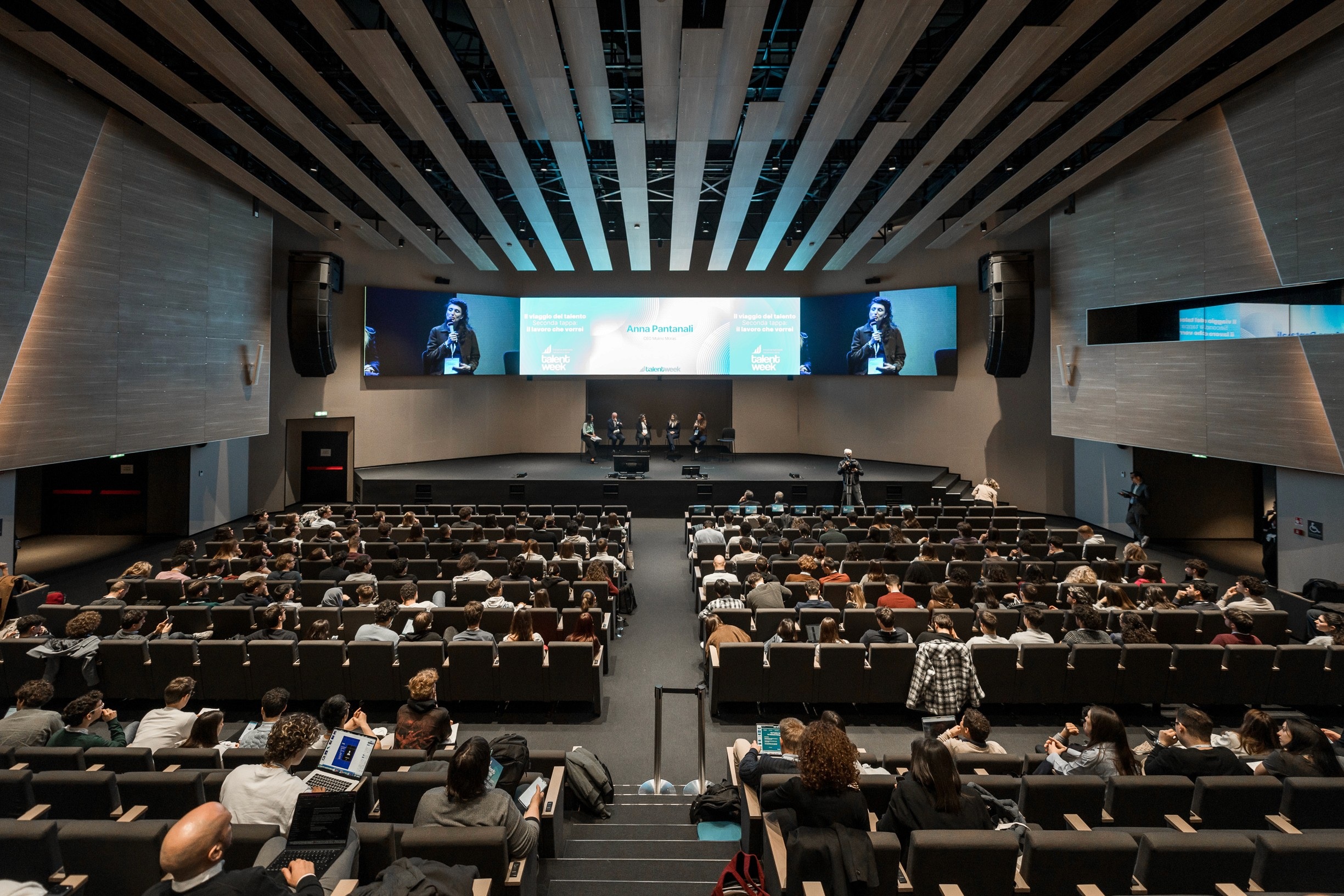
GenNext shows the format in practice. Eurotherm’s Annalisa Patelli described judging student responses to company challenges, complete with business models and financial plans, at the 2025 event. In April 2026, Clover announced another completed edition. Its winning teams included Eleva on a Thermokey challenge, Kineo on Technowrapp’s, and Foresight Studio on UniCredit’s. The problems came with actual organizational owners.
The morning after the hackathon
The platform tackles the less photogenic work of making those observations usable. Assessment maps hard and soft skills. Skill Manager provides what Clover calls an organizational “digital twin”: a representation of people’s capabilities that supports management and development. The promise is easier access to information that might otherwise remain scattered.
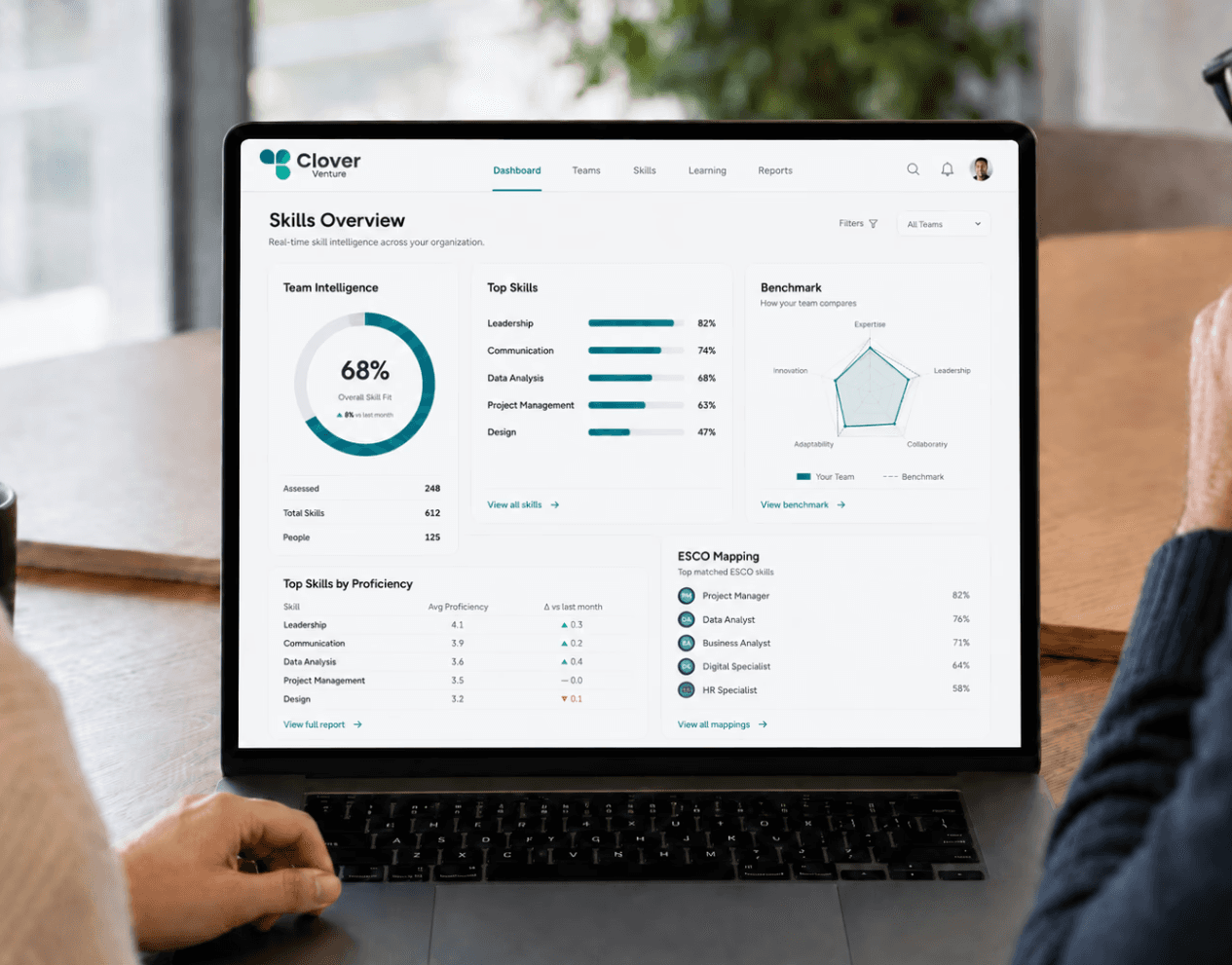
Workforce Intelligence moves from individuals to groups, mapping coverage, gaps, mentoring and alternative team compositions. Benchmark Intelligence compares internal capabilities with role and market expectations. Together, they address a familiar managerial choice: develop someone already here, rearrange the team, or recruit. The product’s emphasis is on making that choice more explicit.
That places Clover between corporate innovation services and HR technology. A recruitment assessment provider, a learning consultancy or a skills database could each address part of the problem. Clover’s distinctive combination is the live challenge and the continuing software view. Its B2B offer pairs tailored programs with a platform demonstrated to prospective buyers. Employers bring the organizational problem; talents get projects, mentoring and chances to show their abilities.
Borrow the sequence, keep your judgment
The cost starts with attention: a useful challenge requires preparation, participants and people able to interpret their work. Clover’s talent format describes observing 50 candidates in a day; GenNext is a multi-day undertaking. These are different commitments. A buyer should define the decision before commissioning the experience, then agree what evidence would actually change it.
The sequence is easy to borrow: choose a real task, decide which skills matter, observe the work, and carry the findings into a concrete decision. Its usefulness depends on how closely the task resembles the work that follows. A brief, energetic pitch gives limited evidence about a role requiring months of patient execution. Group results also need careful interpretation before they become judgments about individuals.
Clover’s bet is that an organization can learn more about its people by arranging the right circumstances. The hackathon creates those circumstances; the software tries to preserve what they reveal. For an employer, the intriguing question arrives before the next vacancy: what can the people already here do, if someone finally asks them to show it?