Consider the humble insurance quote. Inside the Sem Parar app, a driver can simulate vehicle coverage without beginning an entirely separate journey. A second service lets that driver arrange a vehicle inspection or service appointment. Neither sounds like a revolution. Both required a large company and a startup to agree on something more consequential than a pleasant meeting.
- Liga sells corporations the work of turning startup connections into projects.
- Its toolkit combines consulting, startup data and employee training.
- The revealing detail: purchasing rules can undo the cleverest pilot.
Liga Ventures helped organize the program behind those additions. The São Paulo company occupies an awkward, useful space between organizations that have customers and organizations that have new solutions. Its subject is innovation. Its recurring problem is coordination: deciding what to test, who should test it, and how an experiment becomes part of an operating business.
Two buttons, several negotiations
Sem Parar wanted to move beyond the familiar territory of tolls and parking. Its SuperApp offered an existing customer relationship into which other mobility services could fit. Liga’s Inova Sem Parar program mapped challenges, selected startups and developed proofs of concept. The 2023 cycle brought insurance technology company TEx and vehicle-service startup Minha Revisão into the app.
This is a helpful way to understand the company’s work. The starting point was an existing product and a business need. The startup supplied a capability. The program supplied a process for making the two cooperate. Liga’s published case describes the integrations; it does not establish how much additional revenue each feature earned.
There was also an idea that needed another look. In a LigaCast discussion, Sem Parar representatives described re-evaluating an at-home car-washing service. An adjacent service can sound perfectly sensible while proving awkward in practice. The useful question becomes whether the team can revise its assumptions before the experiment acquires an expensive institutional life.
the problem
a partner
the service
what works
The invoice enters the plot
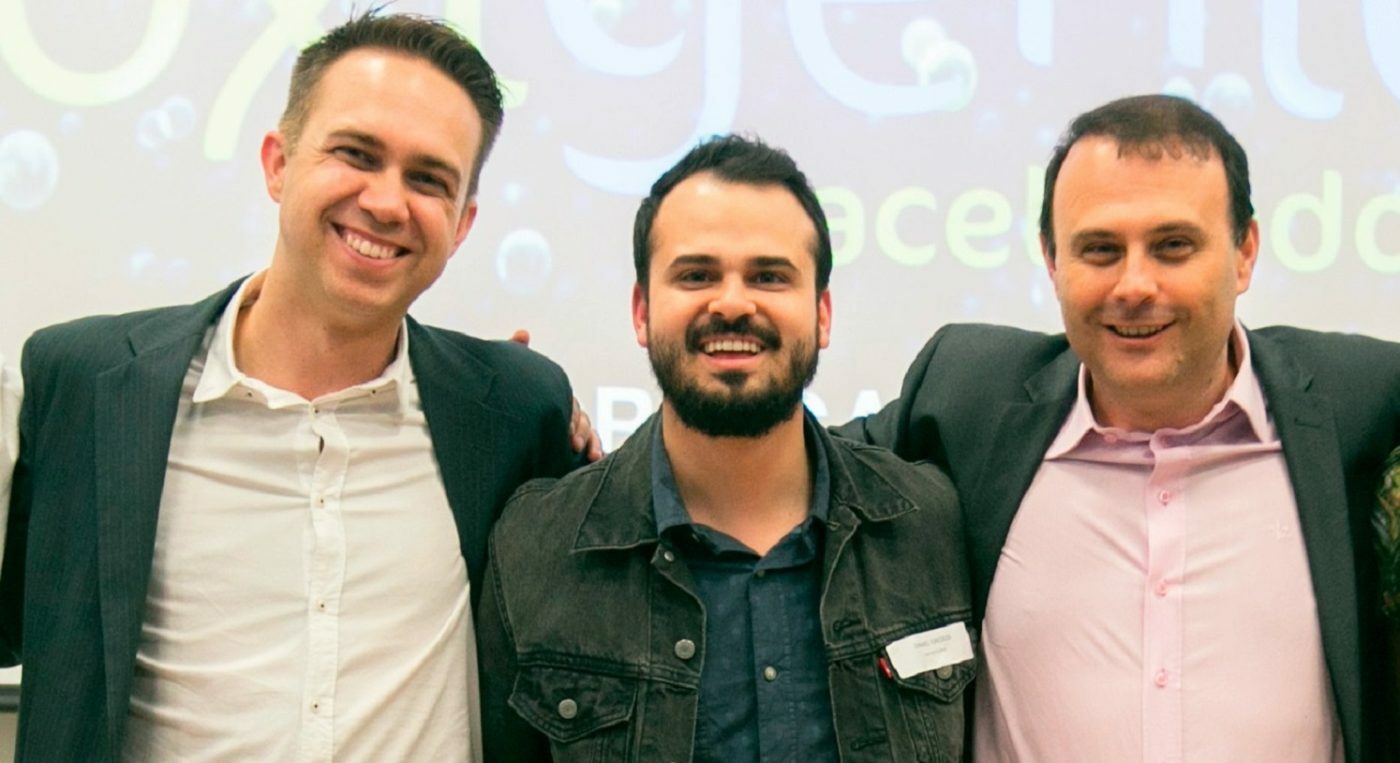
Founders Daniel Grossi, Guilherme Massa and Rogério Tamassia had worked on corporate acceleration at Grupo Abril before establishing Liga in 2015. They chose corporate-paid services because waiting for startup exits looked too slow a route to sustaining the operation. That choice made the corporate buyer central to the business.
Then came a lesson in cash flow. Tamassia recalled a startup nearly breaking under traditional purchasing arrangements, including payment waits of 90 or 120 days. Liga consequently began examining purchasing and legal procedures during program setup. A promising supplier still needs money while a corporation processes its paperwork.
For a corporate reader, the implication is practical: give procurement a seat before the scouting begins. Agree on who can authorize a test, how a startup gets paid and what happens if the test succeeds. A demonstration can be scheduled in an afternoon. Preparing an organization to buy the result takes considerably more care.
“Inovação não é um evento. É uma operação.”“Innovation is not an event. It is an operation.”
Liga Ventures, company website
A radar needs an operator
Liga now describes itself as a “consultech,” joining business consulting, technology and an innovation ecosystem. Its published offer covers strategy and governance, new businesses, education, open innovation, intelligence, and M&A or corporate venture capital. Those capabilities let it enter a project before a startup is selected and remain involved after selection.
Startup Scanner is the data layer. Built with strategic support from PwC Brasil, it organizes startup information into sector maps. Its methodology considers businesses with activity or traces of activity and an apparent product or service beyond the idea stage. Categories reflect how companies describe themselves, interpreted by Liga’s researchers.
That distinction matters. A map helps a buyer discover candidates; it does not prove that a candidate can deliver the buyer’s particular integration. Research, selection and a real test remain separate jobs. Liga Match offers another entry point: corporations publish challenges, and interested startups apply.
Compared with hiring a standalone scouting tool, Liga offers people to help frame the problem and run the work. Compared with a conventional advisory engagement, it brings a startup database and program operations. These are differences in the service bundle; they do not establish that every client needs the whole bundle.
Eighty hours with a pile of discarded sandals
Sometimes the new capability is already inside the customer’s building. At Alpargatas, Liga organized an intrapreneurship marathon around circular opportunities for Havaianas. Factory waste and returned sandals became material for a product-development question. The commitment was concrete: 80 hours spread across four months, combining workshops, outside perspectives and customer exploration.
The company’s case reports 61 prototypes, five new collections and more than 61 tonnes of waste identified as potentially reusable. That final word deserves its place. Potential reuse is a design opportunity, rather than proof that every tonne has already returned to a finished product.
Ford’s program addressed a different internal constraint: employees needed a method for developing projects with startups. Six modules led to 29 trained participants, 11 project scopes and more than 40 startup connections. The scopes still required approval before execution. Training had produced something leaders could evaluate.
The meeting is worth less than the next decision
Liga’s business spans paid corporate programs, advisory work, training and technology-enabled intelligence. The Alpargatas time commitment shows one kind of cost: employees must step away from ordinary work to explore something uncertain. Buyers should also budget for testing and integration when deciding what a partnership is worth.
Some relationships lead beyond a commercial pilot. In 2023, Liga and ADVISIA Investimentos established Liga ADVISIA, combining startup access with transaction expertise. Its offer includes acquisition and investment advisory, financing and corporate venture capital structuring. Buying a service and buying the supplier are different decisions, requiring different skills.
A reader can borrow Liga’s sequence without borrowing its vocabulary. Name a customer problem. Find a capable partner. Put an owner, budget and evaluation criterion behind the test. Revise what disappoints. This approach depends on a corporation willing to make decisions and a startup able to meet the brief. Without those conditions, a richer database merely produces a longer guest list.