A tractor is an awkward thing to squeeze into a pitch deck. There are batteries to manage, parts to manufacture and customers who expect the machine to work outside. For MOA Ventures, the Brazilian company helping industrial startups find capital and commercial partners, those complications are part of the attraction. Its business takes shape where a promising invention meets the expensive business of making and selling it.
Consider YAK, the electric-tractor maker in its investment orbit. In September 2025, YAK announced a R$6 million project combining Finep resources with its own contribution. The spending covered development and manufacturing, including tooling, molds, machinery and industrial processes. MOA had invested through HARDS’ third acceleration cycle. The later project illustrates the distance between backing a young technology company and getting a repeatable production operation running.
That distance is MOA’s territory. It advises established businesses, helps operate their startup programs, structures investments and supports technology development. The resulting company sits between management consulting, venture capital and the practical work of building new businesses. Its specialist programs extend from electric mobility to biotechnology and geospatial intelligence. The common thread is a commercial problem with a substantial engineering or scientific component.
The hardware in the family tree
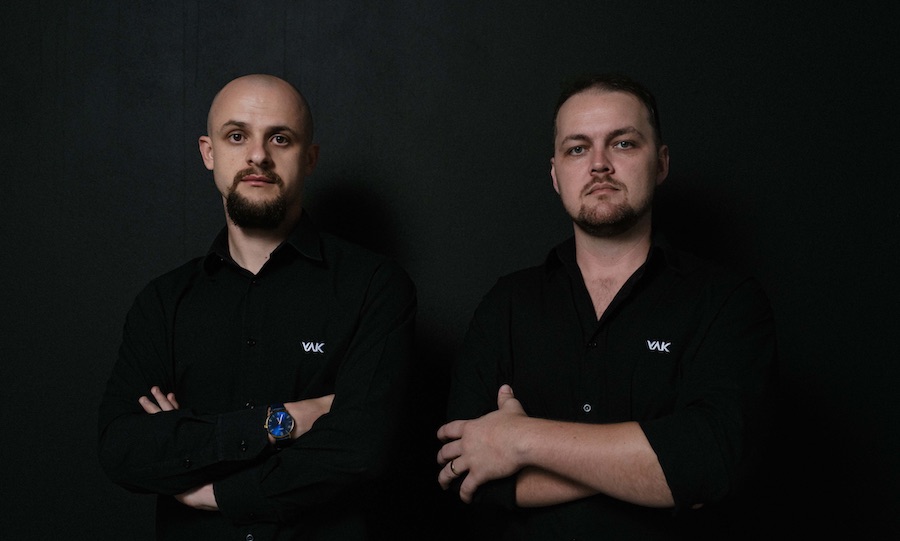
MOA’s founders, Marcos Buson and Odilo Schwade Junior, also appear in the founding team of HARDS, the hardware-plus-software accelerator whose portfolio MOA now manages. HARDS describes roots in Fundação CERTI, CVentures and Darwin Startups. Its infrastructure included relationships with Produza and SENAI/FIESC, giving young companies access to pilot production, testing and manufacturing expertise.
The old HARDS team page has a pleasantly unruly streak: Buson is “The troubleMAKER,” while Schwade Junior is “The misfit MAKER.” Behind the nicknames was a specific proposition. A startup making a physical product could receive help with prototypes, certification tests and routes to larger-scale manufacturing, including connections in China and Southeast Asia.
Those roots help explain MOA’s market position. A venture investor can supply money; a consultancy can help define strategy; a laboratory can support technical development. MOA packages access to these functions around programs and investment theses. The appeal depends on the connections being useful to a particular business. A manufacturing relationship has value when it helps a founder solve a manufacturing problem.
Start with the customer’s headache
The corporate side begins with organizations that need to decide where innovation belongs in their businesses. MOA Consultant targets medium and large organizations, with services spanning opportunity mapping, innovation committees, startup acceleration and funding support. Its website lists Mastercard, Algar, Nissan, Copel, Rumo, Sebrae and Loccus among organizations it has served.
That makes the customer more specific than “anyone with an idea.” Think of an industrial business evaluating new technology, a corporate team considering startup investments or an institution operating an acceleration program. MOA can help define the brief and organize its execution. Its software also addresses the people responsible for documenting what those programs deliver.
MOA’s investment approach starts with a value chain. Its food-sector example runs from farm and livestock production through industry, transport and retail to the consumer. The exercise identifies gaps, turns priorities into an investment thesis and then guides startup selection. It also leaves room for commercial partnerships and joint development, so buying equity is one possible result of the process.
- 01Map the chain
- 02Find the gap
- 03Write the thesis
- 04Test the match
- 05Build or invest
The business model follows those activities: corporate services, technology work, program operation and venture-building arrangements that can include equity. For a prospective client, the useful buying question is concrete: which part of this process needs outside help? A company with a clear technical brief may need development support; one struggling to choose investments may need a thesis and decision process first.
Seven months to make the idea answer back
ORBI, the open-innovation program at Sapiens Parque, shows how MOA’s work becomes a calendar. Its published cycle lasts approximately seven months. Corporations define challenges; the program searches for suitable startups, evaluates them and develops business cases or proofs of concept. Execution is accompanied by monitoring and a final consolidation of results.
The program focuses on energy, mobility, and oil and gas. It offers access to startups, researchers, partners and infrastructure for prototyping and testing. In that setting, the corporate participant brings more than a logo. It supplies the business problem against which a proposed technology can be assessed.
One ORBI cycle: challenge definition, startup selection, business case or proof of concept, execution and review.
MOA’s institutional presentation goes further into selection. Its proprietary method, The Factory, includes preliminary screening, detailed diligence and a “Crucible” stage: a challenge with a short deadline to test the management team. Learning then feeds back into the investment thesis before the committee considers business cases. The diagram explicitly allows an idea to be reworked.
There is a useful lesson here for readers running their own programs. Write down the problem, establish what evidence would change the decision and give the team a bounded test. MOA’s published process makes revision part of the work. Its final review asks what happened and what was learned, while the diagram points toward sales and margins as results to measure.
A lab bench, a tractor, a view from space
The sector programs make the proposition tangible. BIOS and NANOS, announced in 2025 with biotechnology company Loccus and the SENAI Innovation Institute for Embedded Systems, address bio-inputs, diagnostics and nanotechnology. They seek startups at technology-readiness levels five through seven, already involved in pilots or serving initial customers.
The offer includes laboratory equipment, technical resources, mentoring and help accessing research and innovation funding. The investment toolkit can involve equity, convertible instruments and joint ventures. That is a fairly demanding entry point: these programs are aimed at teams with technology to develop and validate, rather than an untested notion scribbled in a notebook.
PERSEUS takes the partnership model into space. SENAI Pernambuco announced the accelerator in February 2025 with SpaceSeed and MOA. Its brief covers geospatial startups, with support from planning to prototypes and access to funding calls. SENAI’s announcement places that work alongside its activities in disaster monitoring and public safety.
MOBILIS addresses electric mobility, including specialist guidance on regulation and scaling products. SMARTS focuses on urban technology, offering testing environments and expertise in regulation and business growth. The programs share an operating logic, but their useful partners differ. A city is a different testing environment from a laboratory, and an energy operator brings different knowledge from a diagnostics manufacturer.
The paperwork becomes a product
MOA also sells a response to a less photogenic problem: keeping track of the work. Its platform, presented as MAIAS and called MAIA on the product page, records mentoring, activities, deadlines and indicators. It targets accelerators, incubators, innovation hubs and programs financed by public or private institutions.
The product’s pitch is that evidence should accumulate during execution. Program managers otherwise face information spread across spreadsheets, email and messaging groups. MAIA aims to centralize the history and generate reports from recorded activity. A meeting and a completed deliverable are different events; a useful system should let the sponsor see that distinction.
“A MAIA registra o que foi feito, enquanto acontece.”
MOA’s product page: MAIA records what was done as it happens.
TechLab supplies another layer, with data engineering, applied AI, predictive systems and integration into corporate software. It also supports technical and market validation and the creation of new ventures. Its emphasis on real-world data gives the AI proposition a practical test: whether the resulting system helps a business evaluate a product or make a better-informed operating decision.
Read the money in separate columns
MOA’s homepage reports R$11.2 million invested in portfolio startups, more than R$81 million raised by startups through funding calls and R$636 million in follow-on investment. It also reports more than 2,400 startups accelerated in corporate programs. These are company-reported measures of different activities, with different populations behind them.
They should stay separate. Follow-on funding measures later capital entering startups. It does not measure MOA’s revenue or realized investment returns. Likewise, the homepage’s R$1.6 billion combined portfolio valuation describes portfolio companies, rather than the value of MOA itself. For readers assessing the business, the distinction is essential.
YAK supplies a more concrete view of expenditure. Its R$6 million project combines public-agency resources and company money for an industrial objective. That makes it a useful illustration of MOA’s wider setting: a startup can need early investors, later investors and project funding at different points. Each finances a different stretch of the journey.
What survives contact with the customer
The approach asks something of both sides. Founders need enough technical maturity to benefit from specialist facilities and commercial tests. Corporate participants need a defined challenge, people willing to evaluate the result and a route to act on it. A program can organize those decisions, but participation alone cannot establish demand.
MOA’s distinctive bet is that these tasks belong close together: selecting technology, finding the right industrial partner, arranging capital and recording what actually happens. The part worth copying is the discipline of moving from an attractive possibility to a testable business case. For a tractor, a diagnostic tool or a geospatial service, the customer eventually asks the same awkward question: does it work for me?