In a vineyard, the question is rarely whether a technology is clever. It is whether it helps someone decide what to do before the weather changes. That is a useful place to begin understanding I3P, the incubator attached to Politecnico di Torino. Its work reaches from university laboratories to space companies, but one of its revealing recent projects started by asking wine producers what was bothering them.
- Business support for technology founders, including entrepreneurs outside academia.
- Standard incubation charges tailored fees and takes no equity.
- Corporate programmes put startups in front of practical problems and prospective buyers.
The vineyard comes before the pitch
Terra & Tech, developed with Filiera Futura, began in 2023. During 2024, five discussions around Italy involved more than 140 producers and professionals. They identified 13 innovation needs. Only then came the startup call, attracting more than 70 proposals from Italy, elsewhere in Europe and the United States.
Twenty solutions were selected for presentation to producer networks. Ten field tests were arranged; by September 2026, eight had started or, in some cases, finished. The next edition was being prepared for olive production. The sequence is worth borrowing: listen, select, test. A splendid solution to a problem nobody has is an expensive ornament.
Programme stages, not a startup survival funnel. Eight tests had started or been completed.
A professor’s approval is only the beginning
I3P supports founders whose projects combine substantial technology with growth potential. Its connection to Politecnico supplies access to scientific expertise and qualified people. Researchers and students can apply, but so can entrepreneurs who have never studied there. The university affiliation provides resources; it does not impose an alumni password.
The problem it addresses is familiar to anyone who has tried to commercialise research. Technical feasibility answers one question. Finding a customer, assembling a complementary team and explaining the economics answer several others. I3P provides strategic consulting, coaching, mentoring and fundraising preparation around those tasks.
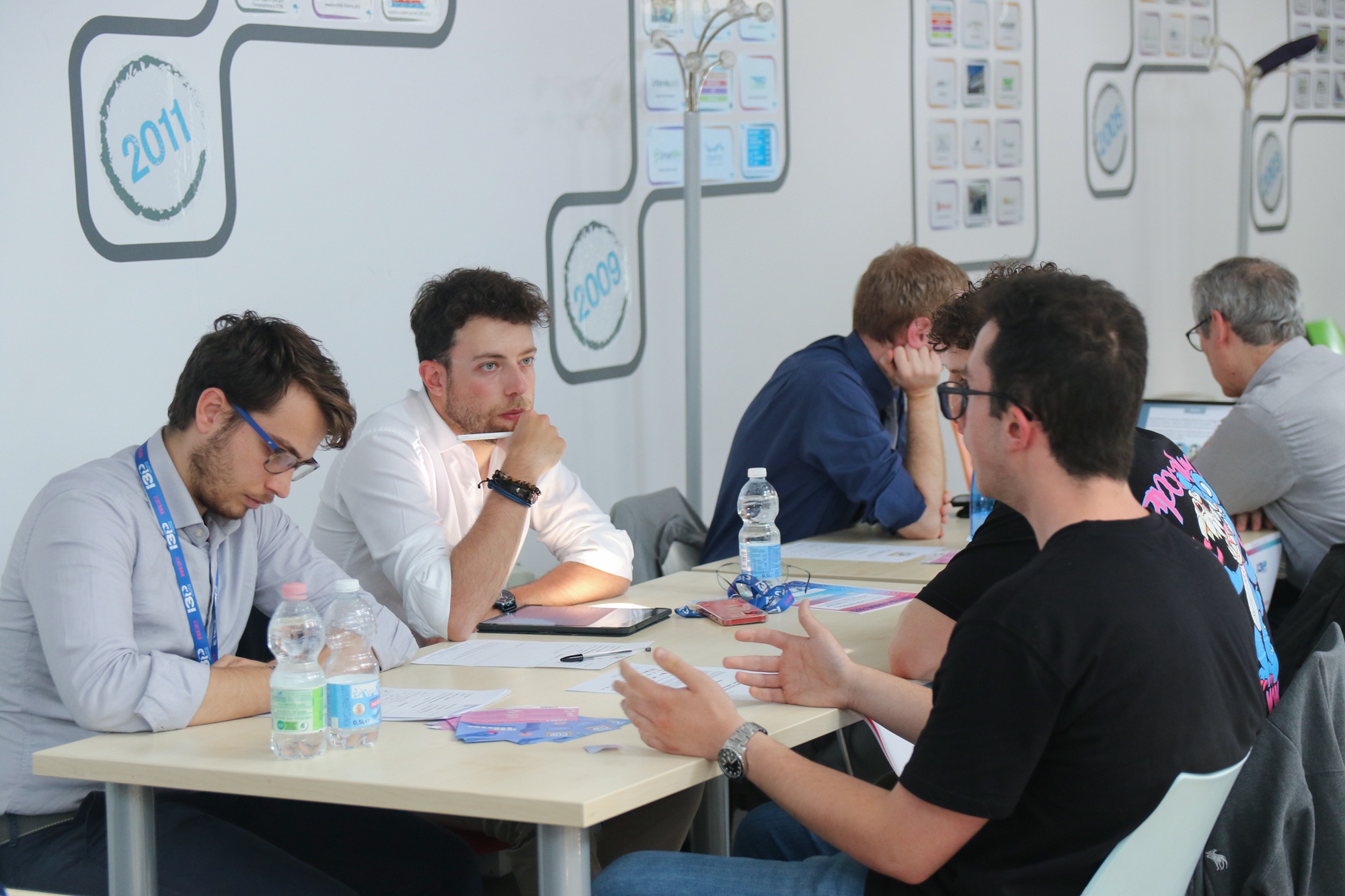
There are workspaces, too, and access to specialist advisers. But the services also come through virtual incubation. That detail matters: the product is not simply a desk in Turin. It is a route to business advice, partners and people who can challenge a founder’s assumptions.
A patient route, with a bill attached
The current standard programme runs from a few months to three years. Pre-incubation helps teams clarify a project before full incubation. Applications are assessed for team, technology and market prospects. A positive preliminary review leads to a first appointment that is free and carries no obligation.
Standard incubation itself is paid. Fees depend on the services required, while public support or private sponsorship can make certain pathways available at symbolic or zero cost. That calls for a discussion about the actual package, rather than an assumption that every university programme is free.
I3P’s FAQ makes another distinction explicit: it does not directly finance projects or take equity through standard incubation. Nor does its staff develop the technology for founders. It helps teams prepare for market tests and introductions to investors. An entrepreneur expecting a cheque and an outsourced engineering department would be shopping for a different service.
The space exception has specific numbers
ESA BIC Turin, launched in 2021 and managed by I3P, adds a dedicated pathway for space-related businesses. Politecnico and LINKS Foundation supply technological support, with ESA, ASI and local institutions involved. Space can mean hardware heading upward or services using space technology back on Earth.
Zero-equity grant for each admitted startup
The package includes the grant plus up to 100 hours of business consulting, 80 hours of technical support and ten hours of intellectual-property advice. Eligible companies are no more than five years old; founding teams can also apply. A successful applicant must establish a company in Italy before signing the incubation contract.
By December 2025, the programme reported more than 30 supported companies, over €24 million raised in private investment and more than 120 skilled jobs created. Those are company outcomes reported by the programme. They are neither I3P revenue nor proof that every participant succeeds.
The customer on the other side
I3P also sells consultancy to established businesses. Its open innovation method starts with needs analysis, moves to scouting and proceeds to a proof of concept and possible adoption. Relationships include Iveco Group’s Beyond Lab, CA Auto Bank’s Digital Factory and initiatives with Italgas.
This gives the incubator an interesting position between founders and industrial buyers. A young company needs someone willing to try its product; a larger company needs a manageable way to inspect unfamiliar technology. Introductions become useful when both parties have something specific to examine.
The graduates supply the more interesting evidence
Adaptronics illustrates the technical range. The University of Bologna spin-off develops electro-adhesive robot grippers, completed ESA BIC Turin incubation in 2024 and announced a €3.15 million round in November 2025. Here was an outside university’s technology finding a place in Turin’s programme.
Focoos AI, a Politecnico spin-off working on efficient computer vision, and Novac, which produces supercapacitors, were named I3P’s Startups of the Year 2025. The juxtaposition is instructive: the common ingredient is a demanding commercialisation problem, rather than one fashionable technology.
“When we joined I3P, we had many more questions than answers”
Antonio Tavera, Focoos AI co-founder and CEO / December 2025
Start with the question you can test
For earlier-stage founders, Startup Academy offers free training. Its 2026 edition comprised seven Saturday workshops, held in person. The course is aimed at people under 40 and encourages customer discovery and teams with complementary skills. Starting with a conversation is cheaper than discovering, after incorporation, that nobody wants what you built.
Founders can begin through I3P’s online application. Corporate teams can bring an operating problem to its open innovation service. Either way, the useful habit is the same one those wine producers demonstrated: describe the need precisely enough that an invention can be tested against it. Cleverness gets the meeting. Evidence gives the meeting a purpose.
I3P website · Apply · News · ESA BIC Turin
LinkedIn · X · Instagram · Facebook
I3P on YouTube · Startup Academy video · Adaptronics technology demo