A nurse finishing a twelve-hour shift and a recruiter starting a nine-to-five day have a scheduling problem before they have a hiring conversation. One has a moment to apply. The other has a queue to clear. Take2 AI has made that awkward interval its business: let software conduct the first phone screen whenever the applicant is ready, then give the recruiter something more useful than another unanswered callback.
- The job: automate healthcare sourcing, phone screens, scheduling and credential checks.
- The evidence: named customers report faster screens and less administrative work.
- The catch: those results depend on the role, workflow and people supervising selection.
A résumé cannot answer back
Take2 began with a different question. Stanford classmates Kaushik Narasimhan and Yaniv Shimoni spent two years researching skills-based hiring. Their conclusion, described in a founder interview, was that skills data alone missed the softer qualities needed in entry-level work. A résumé could list experience while saying remarkably little about how someone would actually behave.
The early product generated sales simulations specific to an employer and role. Candidates demonstrated abilities rather than merely claiming them. Employers, however, had established interview habits. They worried about changing the process, AI bias and applicants’ reactions. The founders recruited experienced HR advisers and worked with Stanford professors; they said customer outcome data eventually helped ease objections.
By its February 2026 funding announcement, Take2’s public pitch had moved to healthcare recruiting agents. A Techstars interview credits the accelerator with sharpening customer focus and responsiveness to market signals. The thread connecting both products is simple: get evidence from the candidate, and stop making the résumé carry the entire argument.
The first interview has office hours
At Midi Health, the scheduling mismatch was tangible. Nurse practitioners worked long shifts; recruiters worked business hours. Applications could be plentiful while useful conversations remained scarce. Credentials needed checking, and clinical managers wanted to assess communication and empathy. None of that improved while everyone waited for the phone to ring.
Midi’s published Take2 account describes a fifteen-position pilot and a three-week implementation, including Greenhouse integration and legal review of screening questions. Clinical leaders helped construct the scoring rubric. The company reports twenty hours saved per recruiter each week and an average application-to-offer interval shortened by 4.3 days.
The telling detail is when candidates participated: 57% of screens happened outside business hours. These are vendor-published customer results, rather than an independent audit. Still, they suggest a useful mechanism. A conversation available at the applicant’s convenience can remove delays that even an exceptionally diligent recruiter cannot fix while asleep.
Four agents, one less round of phone tag
Take2’s current product lineup divides the work. The Interviewer conducts and records phone screens. The Sourcer re-engages past applicants and searches candidate databases. The Scheduler arranges subsequent interviews. The Verifier checks licenses and certifications against state databases and federal exclusion boards. Results return to the employer’s existing applicant tracking system.
That puts Take2 in recruiting automation, alongside overlapping offerings from Humanly and HeyMilo. Its pitch emphasizes healthcare terminology and credential requirements. The meaningful comparison is whether a system understands the particular job and fits the employer’s workflow. A fluent voice is pleasant; a useful record in the right system is what lets tomorrow’s recruiter act.
Start with eight jobs. Earn the next 227.
Dental Care Alliance offers a concrete adoption story. Its trial began with eight openings in one region. Within three weeks, the deployment had expanded to 235 openings. Its customer story reports 1,000-2,000 candidate interviews monthly and a halving of Indeed sourcing spend year over year.
The sourcing agent searched the organization’s existing candidate database before turning to paid channels. Yesterday’s unsuccessful applicant might suit today’s vacancy. The implication is pleasingly unglamorous: before buying another audience, remember the people who already expressed interest. Recruiters gain time when that search and outreach stop being a manual archaeological expedition.
“No decisions are made without a human touch.”Jeff Battinus, Dental Care Alliance
The price of a callback
Take2 sells to employers through a demo and pilot process. A useful buying conversation starts with hiring volume, repeated administrative tasks and the value of eliminating delays. Eventus WholeHealth’s account reports roughly eight screening hours saved per recruiter weekly. Its talent acquisition leader argues that avoiding one physician placement through an agency would pay for the platform. That is his organization’s economics, not a universal price promise.
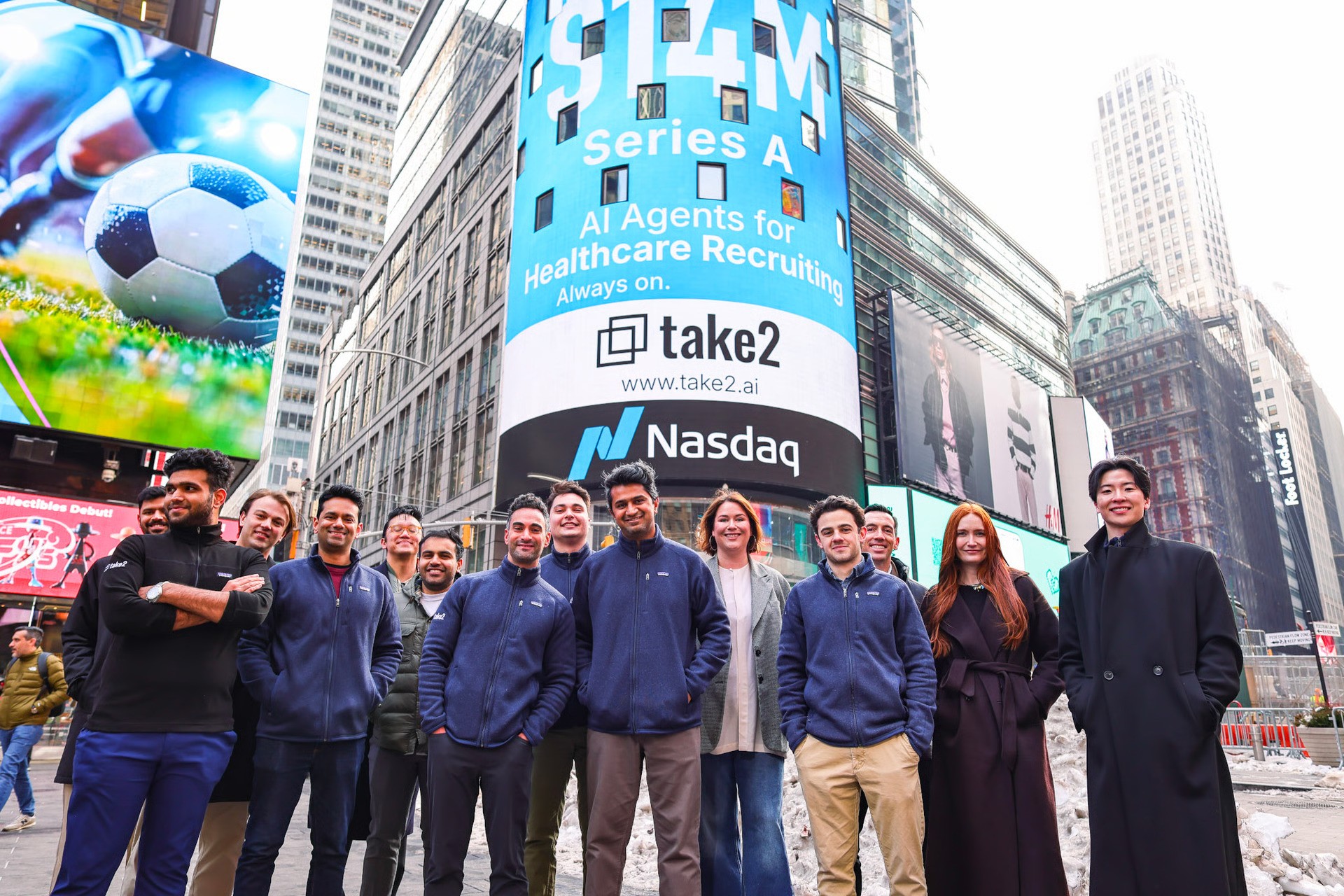
The financing is clearer. Take2 announced a $3 million seed round in April 2024 and a $14 million Series A in February 2026, led by Human Capital. The latter brought publicly announced total funding to approximately $17 million, backing expansion across more recruiting tasks.
Leave the hiring decision with a person
UCHealth reports an 81-minute median from application to completed screen. At Inglis, Take2 worked around an older HR system, and the customer reports a 93-minute median. These details matter because implementation friction can consume the time automation promises to save.
At Health Connect America, the reported improvements reach beyond the first call: time-to-hire fell from 64 to 52 days, and retention was 79% among candidates who completed Take2 screening, versus 66% among those who did not. Those groups may differ in other ways, so the figures do not establish that AI caused the retention gain. They do show why a sensible pilot follows candidates past the interview. Faster screening is a useful operational measure. Whether people accept, arrive and stay is the more demanding test of a hiring system’s value.
The current website describes a three-month pilot restricted to selected roles, facilities or workflows. Employers can configure questions, scoring criteria, knockout requirements and recruiter escalation rules. That makes the buyer’s preparation part of the product: someone must decide what a good first conversation should establish. Take2 can collect the answers at scale. A team still needs to examine those answers, question an unsuitable rubric and know when a candidate deserves a second look. Otherwise, a faster workflow can repeat an old mistake more efficiently.
The practical lesson is to start with a few roles, agree on the questions, connect the records and measure the delay. Compare candidate experience and hiring outcomes alongside hours saved. Low hiring volume, poor role criteria or a bottleneck later in the process will weaken the case. Software cannot make an unattractive offer attractive. It can help ensure that a promising applicant gets a conversation before accepting somebody else’s.