At the Chicagoland Chamber, the trouble was in the handoff. The organization ran hundreds of events a year and needed to keep members informed. But its email platform and Microsoft Dynamics CRM did not reliably agree. Records mismatched. Synchronization lagged. Marketing campaigns and member engagement tracking suffered. Before anyone could improve the message, somebody had to make the systems talk.
- The bet: put marketing tools inside the CRM sales already uses.
- The buyer: a Dynamics team tired of disconnected campaigns and customer records.
- The lesson: fix the data, choose the next action, then automate.
Click, formerly ClickDimensions, made that particular headache its business. Its software brings email, forms, landing pages, lead scoring and automated journeys into the Dynamics environment. The Chamber switched. According to Click’s case study, the change resolved its previous integration problems and saved the marketing team hours each week. The interesting result was what followed: fewer emails, aimed at more relevant groups.
The customer is already in the building
There is an appealingly ordinary idea underneath Click. A company already keeps customer records in its CRM. Salespeople work there. Why should marketing have to reconstruct those relationships somewhere else? The commercial opportunity sits between knowing who a person is and deciding what to send them next.
John Gravely had worked in that neighborhood before. He founded c360 Solutions, which supplied additions to Microsoft’s CRM, before co-founding ClickDimensions with Koren Tako in 2010. In an interview with Hypepotamus, Gravely described seeing the disconnect between sales and marketing firsthand. Click’s specialization grew from that problem: give Dynamics users marketing tools within the system they already know.
That makes Click a focused choice in a crowded market. Buyers might also consider Microsoft’s Customer Insights - Journeys, HubSpot or Adobe Marketo Engage. Click’s argument is strongest when Dynamics is already central to the business. The question becomes whether its campaigns fit the organization’s existing records and working habits. A feature checklist alone will not answer that.
Give the next message a reason
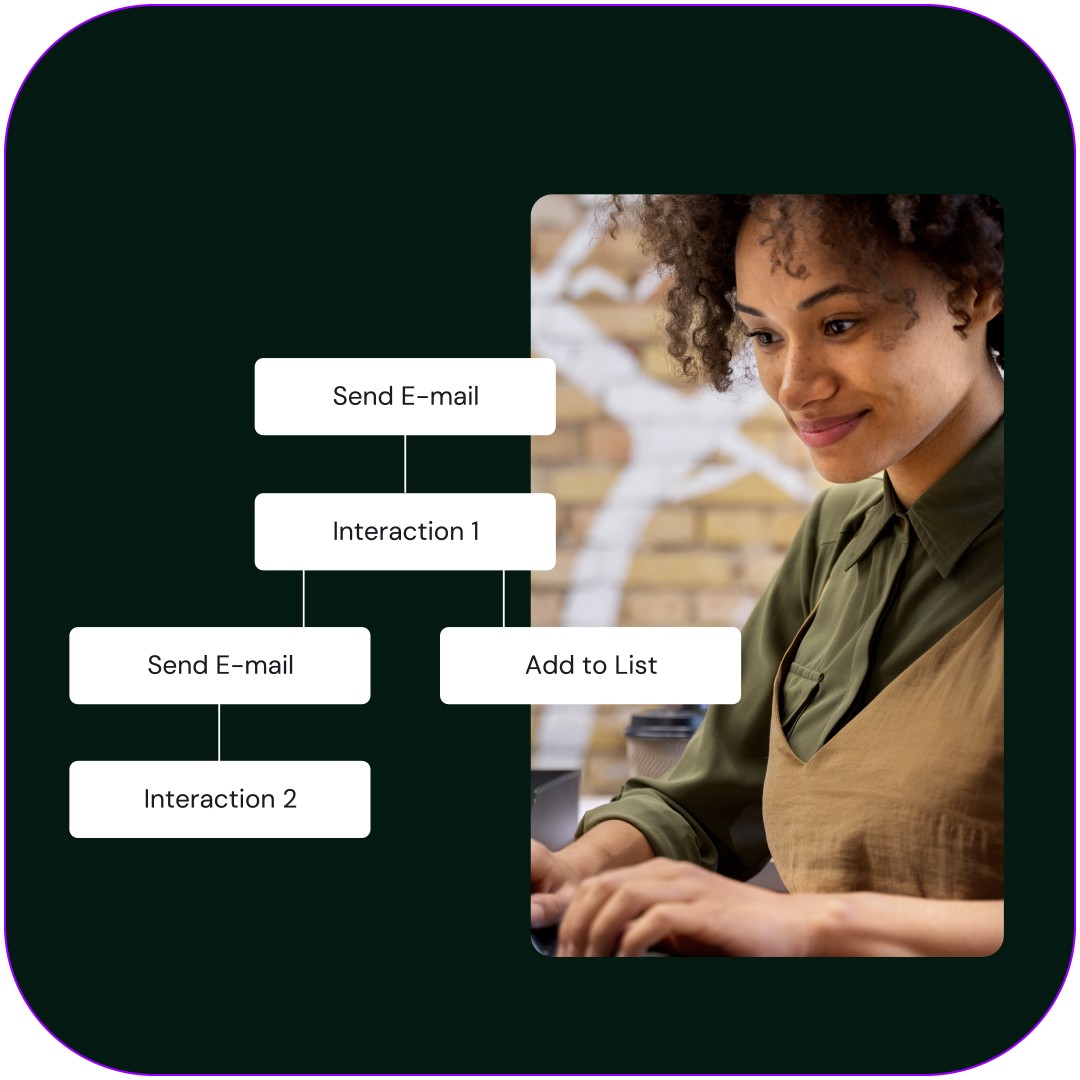
In Click’s journey builder, a form submission, an email link click or a visit to a particular web page can trigger an action. A contact might receive a personalized email or SMS. Dynamic segments can admit people as their CRM records change. The marketer draws the route; the software handles the repeated execution.
Consider event registration. Someone who registers can enter a welcome sequence. Someone who shows interest without signing up can receive a different follow-up. Click describes both paths in its product material. This is useful because the same invitation does not remain useful forever. The moment a person registers, the sensible next message changes.
Akita, an IT provider and Click reseller, eventually chose the platform for its own marketing. Its previous supplier had changed direction, removing features or making them cumbersome, according to Click’s account. Familiarity helped, but so did seeing the newer segmentation and campaign tools. Akita reported a two-week onboarding, supported by hands-on training, and better lead handoffs to sales development representatives.
“simple to use, yet powerful enough to handle complex, logic-based automation.”Jonathan Bye, Akita / Click customer case study
First, find out why the email bounced
Parker Products offers a less glamorous, more useful example. The company wanted to expand outbound marketing but had email bounce rates reaching 80%. Click’s Marketing Services team identified a DNS problem as the main cause. They also built dashboards for 12 sales representatives and helped replace generic campaigns with personalized nurture workflows.
The practical lesson is about sequence. Automation cannot rescue an email that never arrives. A dashboard cannot prioritize a lead unless someone decides which behavior matters. Parker’s experience shows why Click sells expertise alongside software. Its services now extend from customer journeys and reporting to paid advertising, website development and design retainers. Customers can buy help doing the work as well as tools to perform it.
The bill has more than one moving part
Click makes money through software subscriptions and services, with a reseller network helping it reach Dynamics customers. G2’s vendor-supplied listing gives Base at $635 and Business at $900, using pricing last updated in March 2025. Those are reference figures, rather than a current contract offer. The listed packages include unlimited users and contacts, but email allowances and available features differ.
A sensible buying exercise starts with a real campaign. Count the annual sends, identify the required features and ask what implementation and ongoing help will cost. Then run one customer record through the proposed workflow. Who owns it? Which action changes its segment? What can a salesperson see afterward? These questions make a demonstration earn its keep.
A longer clock, and some familiar bugs
The company’s ownership has changed while its Dynamics focus has persisted. Accel-KKR invested in 2016; Volaris Group acquired the business in January 2023. Both transactions had undisclosed financial terms. Former CEO Mike Dickerson told Volaris that long-term ownership appealed because management could make decisions without preparing for another sale within a few years. Volaris describes an operating model that preserves local autonomy.
Today, Click’s product work includes the small repairs that buyers should care about. Its October 2026 release added imports of existing templates into Email Designer. It also addressed duplicate recipients during split-test retries and forms that failed to sync under certain conditions. Native integration is a design advantage, not a promise that every workflow will behave perfectly.
For a team outside Dynamics, Click’s central attraction carries less weight. For a Dynamics team, the useful experiment is modest: choose one journey, clean its records and agree on the sales follow-up. Measure the result before extending the machinery. At the Chamber, a better connection made fewer messages possible. That is a worthwhile ambition for marketing software: help the next email deserve its place in somebody’s inbox.