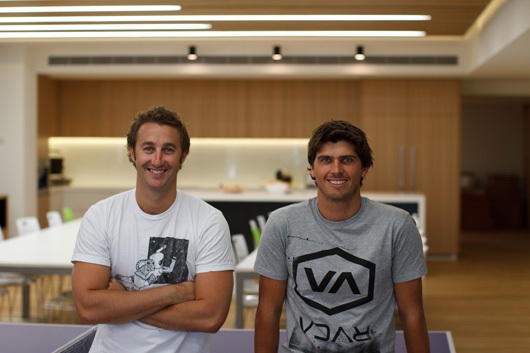
The first thing to go wrong was the software. Ben Richardson and David Greiner were designing email newsletters for clients, and the available tools did not suit the job. Their response was wonderfully literal: build something that did. A client could manage a newsletter without handing every small task back to the designers. The designers could get on with designing. An inconvenience had acquired a business model.
- What it does: builds, sends, automates and measures email marketing.
- Who it suits: small marketing teams, businesses, nonprofits and agencies.
- The distinctive wrinkle: agencies can manage separate clients, apply their own branding and add a billing markup.
- The new move: Marketing Studio connects AI campaign creation, brand assets, translation and Instagram publishing.
01 / The cheque came after the customers
Campaign Monitor launched in Sydney in 2004. The founders kept their design work while developing the product, financed it with consulting profits and took just over six months to launch. Greiner later recalled a cheap shared server and almost no marketing expenditure. Their early resource was a problem they understood intimately.
“We spent next to nothing on marketing”David Greiner, recalling the early business in 2010
Ten years later, the financial scale looked rather different. In April 2014, Campaign Monitor announced a US$250 million investment from Insight Venture Partners, its first outside funding. The company said it had been profitable every quarter since launch and had more than 100,000 paying customers in over 170 countries. The announcement put the money toward product innovation and international expansion.
The order matters. A recurring problem produced customers; a decade of business preceded the large cheque. Read the investment as evidence of an established operation, rather than a launch budget. It also records a change in strategy: a self-funded company was now willing to take capital to expand. The announcement tells us the intended use of the money, without supplying a diary of the founders’ private deliberations.
02 / Taste, with a send button
Today, Campaign Monitor by Marigold is cloud software for the work surrounding an email: making it, deciding who receives it, arranging when it goes, and examining what happens afterward. Its design heritage remains visible in responsive templates, a drag-and-drop editor and the ability to import custom HTML. A brand can start with a prepared layout or bring its own design.
Its public developer resources reveal a less glamorous expertise. Email design has compatibility problems. A layout that behaves in one email client may misbehave in another. Campaign Monitor publishes a CSS support guide, coding resources and tools for email buttons and background images. These are the useful, slightly grubby parts of design: the work required to keep elegance from falling apart on arrival.
For a small team, the appeal is continuity. The newsletter should resemble the website. A receipt should resemble the newsletter. The person updating tomorrow’s announcement should not have to rediscover every choice about spacing, typography and color. Templates make those decisions reusable; testing helps check whether they survive the recipient’s software.
That does not make visual polish a substitute for an offer. It makes the offer easier to recognize. A beautifully arranged email asking the wrong person to buy the wrong thing is still an expensive misunderstanding.
03 / A surf brand is selling more than a wetsuit
Rip Curl supplies a useful example. Campaign Monitor’s customer story describes product emails built around items such as the Mirage Boardshort, alongside invitations and results from surf events. The audience receives merchandise and the world surrounding it. Surfing supplies the reason to pay attention; a product supplies a possible next action.
This is the practical problem Campaign Monitor addresses for retailers, nonprofits and other organizations with returning audiences. They need a way to contact people repeatedly without treating every message as an isolated production. Its email-marketing page advertises use by over two million people at 250,000 businesses around the world. Those are company-reported reach figures, rather than a current count of paying subscriptions.
Audience segmentation separates subscribers into useful groups. Automated journeys connect messages to timing, interests or actions. Prebuilt journeys include welcome, anniversary and thank-you sequences; custom journeys allow conditional paths. A new subscriber and an established customer can receive different treatment without a marketer manually dispatching each message.
- 01 Someone signs up
- 02 A welcome email introduces the brand
- 03 Timing and conditions guide the next message
- 04 Reports inform the next revision
Transactional email handles another kind of relationship: the expected receipt, account confirmation or password reset. Campaign Monitor provides branded templates and delivery logs for those messages. Reporting then gives a team somewhere to inspect campaign activity, rather than relying on the warm feeling that comes from pressing Send.
04 / The agency can put its own name on the door
The founders’ original customer problem has a modern commercial expression. Agencies can create separate client accounts, control permissions, lock parts of templates and provide a privately branded interface. A client gets room to edit approved content. The agency gets a way to keep the underlying design consistent.
Billing belongs to the same system. Campaign Monitor supports client-specific rates, local currencies and markup options. The software can become part of the service an agency sells: campaign production, reporting and management wrapped around a shared platform. The operational value lies in repeating a good process across clients without mixing their lists or handing everyone the same permissions.
Integrations extend that process into existing systems. The company’s directory features a Salesforce integration developed by Beaufort12 and a WordPress integration developed by Campaign Monitor. These are connections to other products, rather than a claim that Campaign Monitor itself replaces a CRM or an online store. The API and public SDK repositories offer another route for teams with development resources.
05 / Your afternoon now has five fewer tabs
The newer product story concerns the marketer doing several jobs at once. In September 2026, Marigold announced Marketing Studio inside Campaign Monitor. Its five named components cover email generation, imagery, branding, translation and social reuse. The aim is to shorten the trip between a campaign idea and something ready for review.
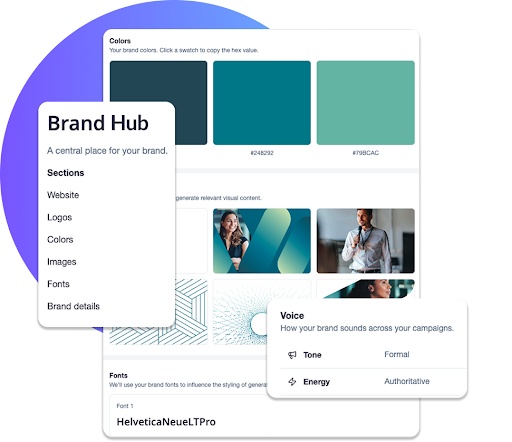
Brand Hub pulls brand information from a website. Email Workspace generates a campaign around a chosen goal. Creative Lab generates and refines imagery in the builder. Translation creates another-language version while preserving the original. Social Suite turns a completed email into an Instagram post that the user can adjust.
The distinction between assistance and judgment remains useful. A generated campaign still needs someone to check the claim, the offer, the audience and the language. Marketing Studio reduces production steps; the marketer remains responsible for deciding whether the result deserves to be sent.
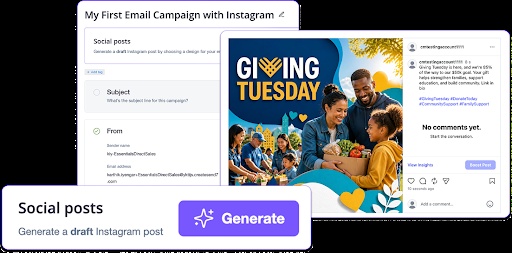
Availability is a meaningful detail. Essentials and Premier include unlimited Marketing Studio access; Lite and trial access are limited. As of October 1, 2026, the feature page says agency accounts are not supported. An agency attracted by the white-label tools should therefore check the creative workflow separately. Sharing a product name does not mean every account receives every feature.
06 / The bill counts people. The inbox counts trust.
Campaign Monitor sells subscriptions organized by contact count and plan. Lite limits monthly campaign sending to five times the subscriber count. Essentials and Premier offer unlimited campaign and journey emails, with other limits still applying. The legacy monthly-billing documentation explicitly counts duplicate subscribers across different lists, a small detail with a possible budget consequence.
The sensible cost exercise is to model the real audience and sending schedule, then check the applicable account terms. Add any required services and integrations. A team sending occasionally and one running frequent journeys can have very different economics. A tidy subscriber database helps both relevance and budgeting.
Delivery deserves equal precision. Campaign Monitor advertises an average 99% delivery rate based on internal data approved in February 2026. Its own documentation distinguishes server acceptance from reaching and engaging an actual inbox. Sender authentication, list quality and sending behavior still matter. A percentage on a product page cannot grant permission to become a nuisance.
Professional services cover setup, automation, design reviews and training, with deliverability consulting available too. That gives a team access to specialist help when a software interface alone cannot resolve the problem.
07 / A focused place in a crowded market
Campaign Monitor occupies the email marketing and automation market, with an emphasis on smaller businesses and agencies. Mailchimp, Constant Contact, ActiveCampaign and Klaviyo belong on a buyer’s comparison list. The useful comparison is the buyer’s actual workflow: campaign design, client management, commerce data, automation requirements and total cost. Campaign Monitor’s combination of design tools and agency administration is a concrete reason to investigate it.
The parent-company story also needs care. Campaign Monitor stayed with Marigold when Marigold sold its enterprise business to Zeta in 2025. Marigold’s current portfolio centers on Campaign Monitor, Emma and Vuture, with different customer needs attached to each. Campaign Monitor’s place is therefore easier to understand through the work it helps a small team finish than through the size of a former corporate portfolio.
The part of its history worth copying is quite modest. Find a repeated customer chore. Make the solution reusable. Let the customer do more without calling you. That approach requires a problem that repeats and a customer willing to adopt a common workflow. Bespoke work that changes completely every week offers much less to package. Campaign Monitor began where repetition and frustration met. Twenty-two years later, the product is still trying to make that meeting less tedious.