For five years, the University of Michigan had a bus technology problem that sounded almost too mundane to matter. Its intelligent transportation system struggled to integrate with its scheduling system. Dispatchers consulted run sheets to judge punctuality. Drivers changed destination signs and triggered announcements manually. There was software everywhere, yet people were still carrying information across the gaps.
- Clever Devices connects transit operations with the information riders see.
- Its advantage is the breadth of an integrated hardware and software portfolio.
- Customer savings depend on the systems being replaced and the connections that actually work.
Five years between two systems
Michigan chose Clever Devices’ dispatch, passenger information, reporting and disruption tools. The replacement launched in January 2020. According to the company’s case study, dispatchers could see a vehicle’s on-time performance by hovering over it, while drivers no longer had to perform those sign and announcement changes themselves. The campus network served more than eight million annual riders. A small-looking interface problem had a very large audience.
That is the useful way into Clever Devices. The company sells the connective tissue of public transportation: onboard computers, dispatch software, communications, schedules, arrival predictions and analysis. Its customers buy operational coordination. The passenger encounters the result as something considerably less technical: knowing whether to hurry.
The countdown is the last link
Consider a bus-stop display. BusTime combines GPS position with scheduling data to calculate arrivals, then distributes that information through mobile interfaces, websites and electronic signs. Behind it, CleverCAD gives dispatchers vehicle locations and service status. AVA synchronizes spoken stop announcements with LED signage. The Intelligent Vehicle Network supplies rugged onboard computing. The screen is the final participant in a conversation that began elsewhere.
The portfolio reaches into less visible corners. SmartYard locates vehicles inside depots and supports assignments. AVM monitors vehicle health. CleverInsights handles ridership reporting. CleverCloud hosts ITS infrastructure. Agencies can procure several connected functions rather than assemble every component separately. For a dispatcher, that promises fewer handoffs; for an IT department, it creates a serious integration assignment.
Clever Devices occupies an established enterprise market, alongside providers such as INIT and Trapeze, with Avail also appearing in agency procurements. Fleet tracking alone is hardly a private invention. Clever’s pitch rests on transit expertise, portfolio breadth and the ability to join operations to passenger information. Michigan’s experience makes the buying criterion concrete: demonstrate the connection, with the customer’s existing systems, before admiring the dashboard.
A radio bill with room to shrink
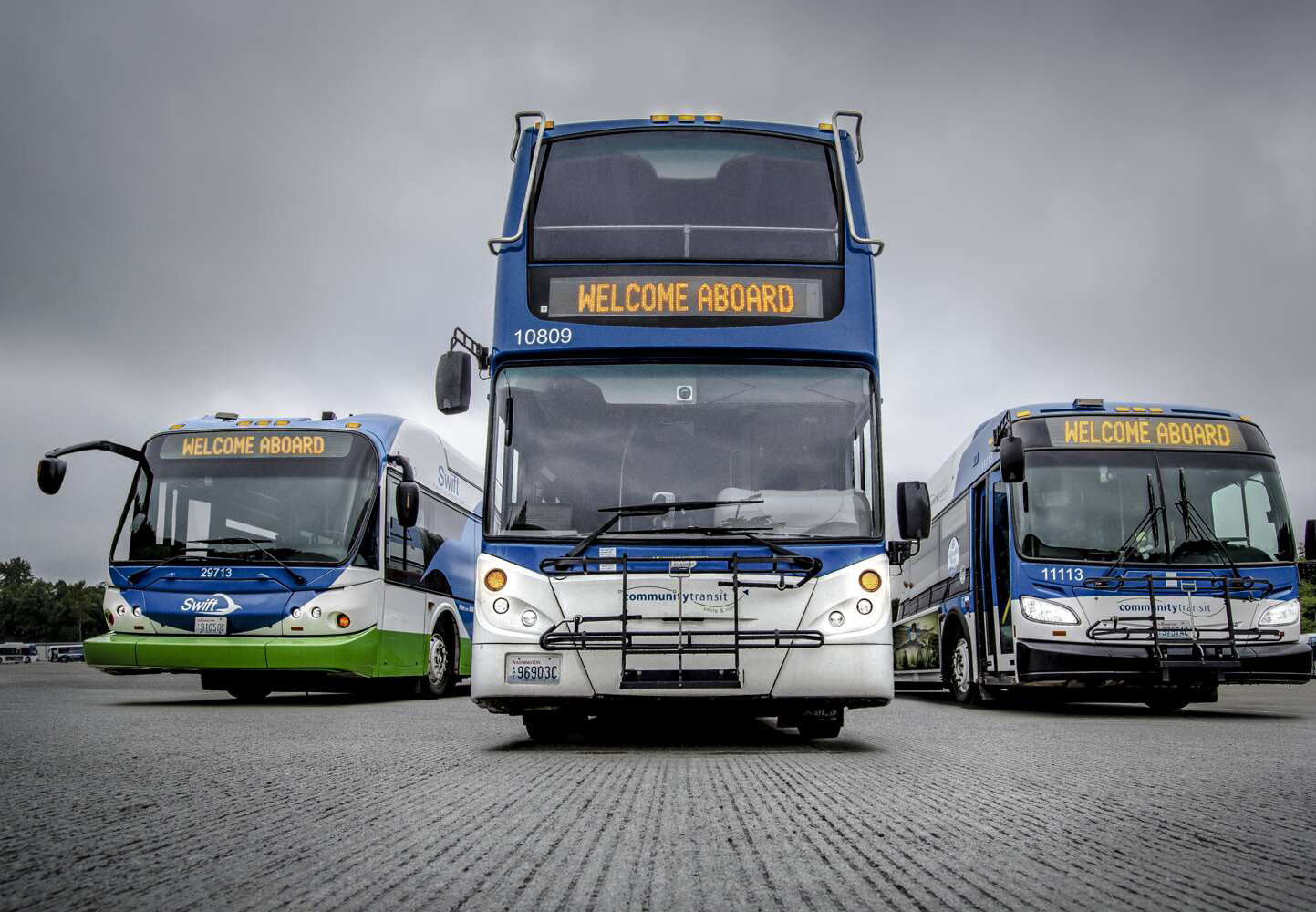
At Community Transit in Washington, the question was communications. An aging land mobile radio system needed an upgrade. The agency required voice quality, Android smartphone support and integration with its existing dispatch technology. It selected Celrado, Clever Devices’ cellular Voice over IP solution.
The company-published case study reports $13 million in capital savings against a new LMR system, approximately half the original capital budget, plus roughly $600,000 in annual operating savings. These are the agency’s reported comparison figures, not a price list. Clever worked with the existing CAD/AVL provider on integration. The account also describes better voice quality over Verizon’s private network after weather, interference and tower issues had affected radio communications.
Capital savings compared with a new LMR system
The lesson is to compare the complete operating arrangement. Hardware, infrastructure, integration and ongoing support belong in the same calculation. Cellular communications also require dependable coverage and service availability. Moving the conversation onto a network changes the dependencies; it does not abolish them.
Buying the timetable, then the network
Clever’s expansion has repeatedly moved toward adjacent problems. In 2002, it won a $14 million Chicago Transit Authority order for automated passenger information on 1,432 buses. In 2017, it acquired Italian scheduling specialist MAIOR. The acquisition backgrounder says customers had long requested scheduling solutions. Knowing where the bus was became more useful when the business could also help decide where it ought to be.
“scheduling system agnostic”The commitment in Clever Devices’ 2017 MAIOR acquisition FAQ
That promise matters. A broader supplier can simplify purchasing, but agencies still need interfaces to other vendors. In May 2025, Clever partnered with the Transit app to deliver detours and relocated stops through GTFS-RT Trip Modifications. Early agencies included Santa Cruz METRO, Pierce Transit and GRTC. Operational knowledge could travel beyond Clever’s own passenger-facing products.
Hitachi Rail completed its acquisition on July 1, 2026, appointing Frank Antonysamy chief executive. The business now presents itself as Hitachi Mobility Multimodal Solutions. Hitachi described more than 600 employees, customers including eight of North America’s ten largest transit agencies, and projected 2026 revenue above $220 million. Integration with HMAX Mobility is part of the announced direction, rather than evidence that every promised combined capability is already deployed.
The bus has to be ready before it leaves
Electric fleets add another coordination problem. A charged bus is only useful if it has enough energy for its assignment. SmartYard paired with Electric Vehicle Management Solutions displays state of charge and can prevent assignments a vehicle cannot complete. The company describes charging toward the next duty’s needs and staggering charging to manage demand costs. Those decisions require trustworthy battery and assignment data.
The business model accommodates gradual buying: modular agency contracts combine software, hardware, implementation and support. Alexandria Transit’s published example starts with onboard technology, then adds dispatch, passenger information, reporting and depot tools. Buyers elsewhere can copy the sequence’s discipline: choose a usable foundation, test the interfaces, then extend it as funding permits.
In May 2026, Sacramento Regional Transit selected Clever to modernize rail passenger information, building on an existing bus relationship. That is the company’s expansion logic in miniature. Solve one operational problem, earn the next assignment, and make the information travel further. A passenger waiting at a stop does not need to know any of this. The countdown should simply deserve belief.