St. Luke’s Health System had a curious problem. It was preparing a $71 million consolidated service center, yet supply disruptions still moved through email, spreadsheets and manual back-and-forth. More than 20 people helped manage the process. Tasks stalled between them. A building could gather supplies under one roof; gathering the answers was another matter.
Clarium became its control tower and coordination partner. It connected data, then configured an AI agent to move disruption tasks through sourcing, inventory, purchasing and distribution. The published case study reports a 71% reduction in resolution time. The revealing detail is the agent’s job: helping the next person know what to do next.
- Connect the records. Astra OS brings hospital and supplier data together.
- Move the work. Teams can monitor shortages, approve substitutes and update surgical supply lists.
- Read the numbers carefully. Customer results describe particular deployments, with savings opportunities distinct from money saved.
01The spreadsheet had a good run
Steve Liou founded Clarium in 2020, as hospitals struggled to secure basic PPE. He came from healthcare finance and investing. The pandemic exposed an operational weakness: essential information lived across separate systems, while people stitched the pieces together by hand. Clarium set out to build a provider-centered data platform. Its subject was unglamorous enough to be useful.
At Ochsner Health, Hurricane Helene and the IV-fluid disruption sharpened the case for change. Leaders could offer directional estimates of critical supplies, but precise inventory visibility was limited. Kyle Simnick, its supply chain data governance and resiliency director, described the need plainly:
“There was no way for us to do this without a centralized command center.”Kyle Simnick · Ochsner Health
Clarium’s documented Helene response included obtaining affected-item lists and tagging those products across customer data. Teams could filter their exposure, inspect stock and consumption, and review substitutes. A shared tag sounds almost comically modest beside the phrase artificial intelligence. During a shortage, modest tools with the right information can be rather welcome.
02Software that finishes the sentence
Astra OS sits across existing hospital systems and supplier feeds. It cleans and normalizes their data, then supports applications for disruption monitoring, substitute management and procedure-card optimization. The aim is to connect an observation with an action: a threatened item, a possible replacement, an approval request and a responsible colleague.
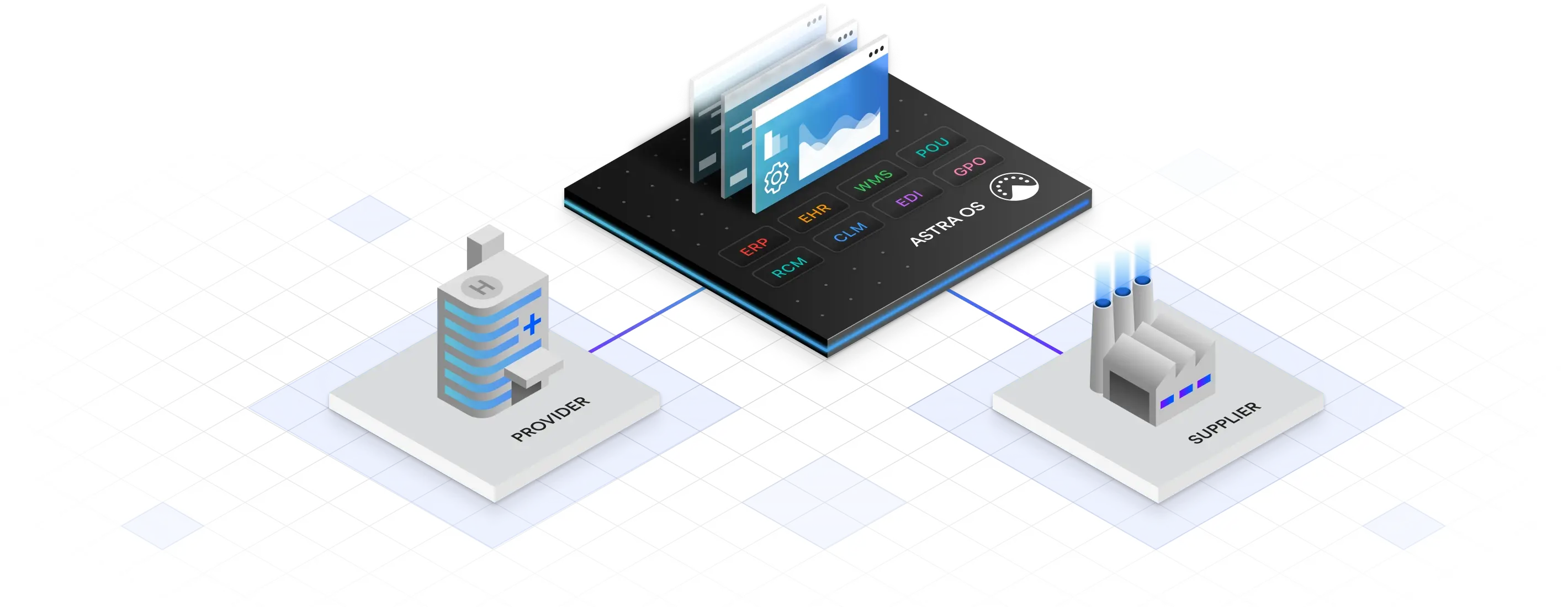
This is a clinical workflow as well as a purchasing workflow. Substitute Manager draws on a shared library of validated products, while approval steps connect supply chain and clinical teams. A recommendation still has to become an accepted replacement. Matching two catalog descriptions is only part of that journey.
- 01Detect
- 02Inspect
- 03Substitute
- 04Approve
- 05Act
An early product offers a useful clue to Clarium’s method. Its Exception Monitor pilot launched in May 2022 to help resolve invoice mismatches. Weekly resolutions rose from 340 to 675, according to the company. Projected annual labor savings exceeded $500,000; those were estimates. Users taught Clarium that some teams handled exceptions in batches, while others needed different data columns. Bulk actions and customized views followed. The lesson for software builders is refreshingly ordinary: watch the work before designing its replacement.
03The operating room’s overgrown shopping list
A surgical preference card lists the supplies a surgeon requests for a procedure. At Yale New Haven Health, those lists had become a source of overordering: items could enter the operating room, be opened and remain unused. Reviewing tens of thousands of cards manually was a daunting proposition.
Yale helped co-build Clarium capabilities through weekly sessions involving supply chain, value analysis and clinical teams. Comparing cards with historic usage exposed $3.1 million in supply waste; the case study reports $1.3 million in savings already realized. Keeping those figures separate makes the story more credible, and more useful to a buyer.
Vendor-published customer result. Realized savings shown as approximately 42% of identified waste.
The next step moves closer to the source of the data. In June 2026, Mount Sinai announced plans to deploy Clarium Vision and preference-card optimization across eight hospital and ambulatory surgery sites. Vision uses operating room cameras and trained models to capture supply usage, validate items and feed utilization records into supply databases and card workflows. The announcement describes intended improvements in documentation and waste; it does not report completed financial results.
04Selling the time between tasks
Clarium sells into health systems through enterprise engagements and demo requests. Its offering includes data onboarding and integration. A separate HIRC collaboration announced a Resiliency Monitor with member access and a premium subscription tier. The broader commercial proposition is operational: less time coordinating, better supply decisions and fewer unused products.
Investors have financed that proposition. General Catalyst led a $10.5 million strategic round in August 2024. A $27 million Series A led by Northzone followed in May 2025, bringing reported total funding to $43 million. Capital was earmarked for platform development, hiring and additional health system relationships. Funding buys room to expand; customer results must supply the argument.
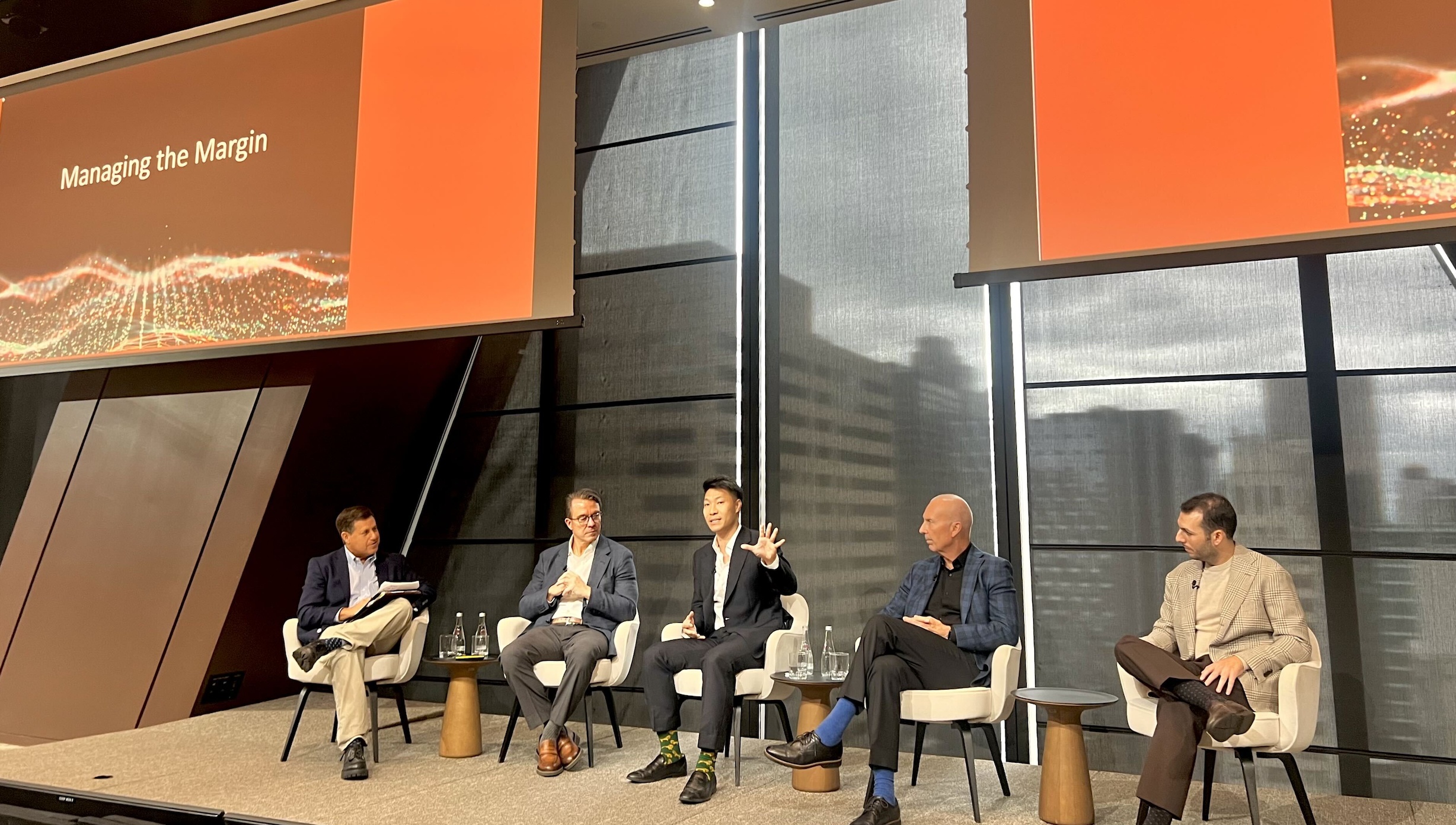
Domain experience is part of the offering. In October 2025, Clarium announced senior appointments for Mary Beth Lang, formerly Kaiser Permanente’s chief supply chain and pharmacy officer, and Eric O’Daffer, formerly a healthcare supply chain research vice president at Gartner. Their backgrounds cover the purchasing, safety and operating questions that a software demonstration can skate past. By August 2026, Community Health Network had announced a surgical supply program across nine hospitals, while Corewell described selecting Clarium alongside its new consolidated service center. These engagements extend the product’s reach; the announced goals still need to become measured outcomes.
The market has company. GHX offers its own AI-powered Resiliency Center for disruptions and substitutions. Clarium’s distinctive case rests on customer co-development, cross-system data and coordinated execution. Buyers should compare those capabilities against their actual workflows rather than assume that an AI label settles the contest.
05Copy the handoff, then count the hours
The practical lesson travels beyond hospitals. Map where information stops and responsibility becomes ambiguous. Give each task an owner, record the reason for a change, and measure elapsed time alongside savings. Ochsner’s experience emphasizes inventory visibility and audit trails. Yale’s working sessions show why clinicians need a place in product development.
Those conditions matter. Incomplete data leaves exposure uncertain; a substitute without local approval leaves work unfinished. Clarium’s published successes involve integration and collaboration. The software’s value depends on whether a hospital can turn a shared answer into coordinated action. For a patient waiting on care, that is a very practical distinction.