Watch the bottom of a television screen. A name appears. A score changes. A sentence tells you why the person at the microphone matters. These little interventions are so familiar that they barely register as technology. Yet someone has to put the right words in the right place at the right second. Chyron built a business around that second. Then something peculiar happened: people began using its name for the thing it made.
- Chyron makes live graphics, production tools and the workflows connecting them.
- Its customers include broadcasters, sports producers, newsrooms and venues.
- PRIME anchors the graphics portfolio; LIVE puts production tools in the cloud.
- The purchasing test: follow a change from the data feed all the way to air.
A brand that enters ordinary speech has won a curious prize. Everyone recognizes the word; fewer people remember there is a company attached. Chyron still has to persuade broadcasters to buy its software. A familiar name cannot synchronize a camera feed or train a producer. The interesting part of this company is how much work now sits behind that apparently modest strip of television.
A centaur walks into the control room
Chyron traces its beginnings to 1966. Francis Mechner and engineer Eugene Leonard founded Systems Resources Corporation, the business behind the original graphics technology. The name drew on Chiron, the centaur of Greek mythology. It was an unusually classical choice for a machine concerned with getting letters onto a screen. Today, a news producer can ask for a chyron without intending to specify a supplier.
There is a small historical wrinkle worth preserving. SEC filings date the legal corporation’s incorporation to April 8, 1966, under The Computer Exchange name, and record the change to Chyron Corporation in November 1975. The technology’s origin story and the legal entity’s naming history are related accounts, rather than interchangeable ones. Corporate biographies, like television graphics, improve when somebody checks the labels.
The business widened. Chyron merged with Sweden’s Hego in May 2013, combining broadcast graphics with sports data expertise. Vector Capital’s funds took ChyronHego private in a $120 million transaction completed in March 2015. In 2021, following a recapitalization led by Apollo Investment Corporation, the group introduced separate Chyron, Hego and Tracab brands for broadcast products, production services and coaching tools. Chyron reclaimed its shorter name.
The picture is only the last step
Chyron occupies the professional production layer between information and a live audience. Its expertise includes real-time rendering, data integration, graphics control and the coordination of production assets. This is enterprise media technology: software purchased by teams responsible for a show, with systems and services arranged around their particular operation.
PRIME is its modular production platform. It supports graphics, branding, clips, touchscreens and video walls, with additional production functions available through modules. The useful idea is shared design capability across different surfaces. A studio wall and a television overlay have different jobs, but the team should not have to reinvent its visual language every time the destination changes.
Elsewhere in the portfolio, AXIS helps make newsroom maps, charts and composites. CAMIO manages graphics assets and connects them to newsroom rundowns. PAINT lets sports analysts illustrate replay. Virtual Placement inserts graphics into live video using optical tracking. VSAR brings Unreal-powered virtual environments into production, while Click Effects handles venue displays. The catalog reads like a tour of the places where a live show can acquire more information.
- 01 / INPUTLive data or editorial text
- 02 / DESIGNA reusable graphic template
- 03 / CONTROLProducer or operator review
- 04 / OUTPUTOn-air picture or studio display
Chyron’s September 2026 CAMIO update supplies a telling detail. Its LUCI Control Panels let producers populate graphics using layouts that resemble the final output, instead of relying on a vertical list of fields. A color palette replaces typing a hex code. That sounds small until you imagine making the adjustment while the rundown is changing. Product design here is measured in the distance between what an operator intends and what appears on television.
The old system reaches its retirement date
Torneos offers a concrete example. The Latin American sports producer selected Chyron after reviewing replacements for an end-of-life graphics system. That was the reported trigger: an aging platform needing replacement, rather than a documented on-air disaster. Its modernization combined PRIME, VSAR and CAMIO, with training and a phased rollout.
The lesson is transferable even if your screen never shows football. Begin with the system approaching retirement. Identify the workflows depending on it. Prepare the people, then introduce the replacement in stages. Buying software and achieving readiness are different dates on the calendar; prudent teams make room for both.
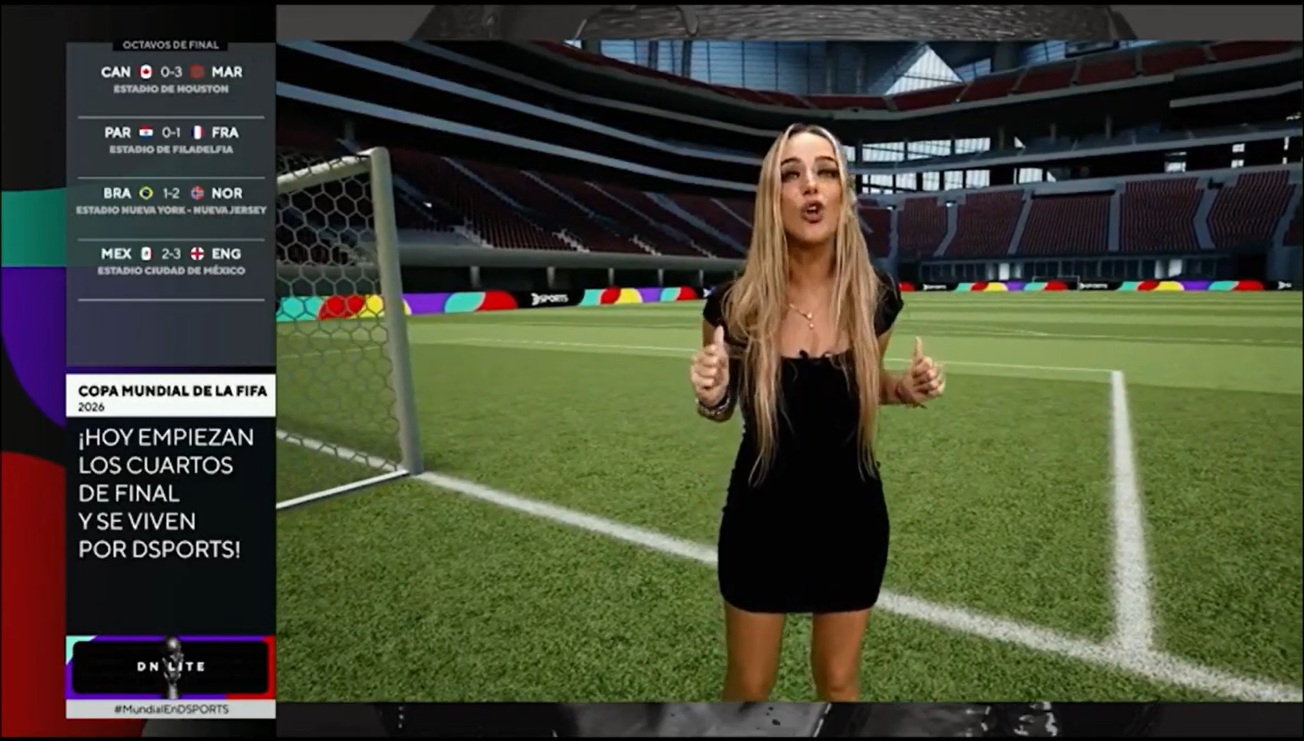
Chyron’s other customers show the breadth of that production layer. Telemundo used PRIME 5 for real-time graphics across Telemundo, Universo and Peacock during the 2026 World Cup. Chyron reports support for more than 700 hours of programming, with live data integrated into templates and graphics managed for up to four simultaneous matches. The scale explains why consistent templates and shared controls become operational concerns.
Chyron’s reported PRIME 5 support for Telemundo’s 2026 World Cup coverage.

A production hour acquires a price tag
Chyron LIVE, launched in 2022, brings switching, graphics, audio and illustrated replay into an AWS-based cloud platform. Its browser interface opens a different purchasing conversation. A producer can think about production capacity for an event rather than starting with the purchase of a dedicated box.
A late-2025 promotion made the proposition unusually concrete: $19.66 an hour, a nod to the founding year. It applied to agreements reached between November 28 and December 31, 2025, for productions during 2026. Four hours at that rate equals $78.64. Treat that as a historical software-cost illustration, with a specific contracting window, rather than a universal present-day quote.
Platform charge at the promotional rate. Cameras, connectivity, encoding, people and delivery belong elsewhere in the show budget.
The total production bill remains a larger matter. Field video must be encoded, synchronized and delivered; operators still need a workable connection and a rehearsed show. Product manager Kristy Weir described a common customer question as “How will this work for me?” It is a sensible question. A cloud interface has to meet the equipment and conditions of an actual event.
LIVE’s June 2026 updates addressed those handoffs with Haivision StreamHub integration for remote contribution and SCTE-35 ad insertion for monetization. Chyron also sells support, license and maintenance agreements. Its commercial model mixes software, systems, services and ongoing support, while some Virtual Placement deployments have offered subscription or pay-by-game options. The right purchase depends on frequency, staffing and the production already in place.
The operator is part of the product
Training receives unusually visible treatment. Chyron Academy awards colored belts for product proficiency. The redesigned platform launched in June 2026 with hands-on simulations alongside demonstrations and quizzes. Chyron says its previous program registered more than 3,700 broadcast professionals and awarded nearly 1,900 certifications. That is a useful reminder that a graphics platform also needs a community capable of operating it.
Professional services extend the idea through creative work, commissioning and solutions engineering. Chyron’s public culture emphasizes consultation and customer workflows. These are observable priorities in its products and services; they matter because a production team buys the ability to deliver a show, along with the software that helps deliver it.
There are credible alternatives. Vizrt offers real-time graphics, virtual studios, graphics management and browser-based tools. Cloud deployment or attractive animation alone therefore cannot settle the choice. Chyron’s case rests on how its combination of graphics, newsroom orchestration, specialist sports tools and training fits an existing operation. That fit needs demonstration, not faith in a brand’s age.
Ask a vendor to change a score, move a rundown item and send the result to the intended outputs. Include the person who will use the controls. For cloud production, test the contribution path under the conditions of the event. A small occasional stream may need fewer tools; a complex newsroom may need considerable integration. Either way, watching the whole chain is more revealing than admiring the final frame.
The small strip at the bottom of the screen has taught Chyron a durable commercial lesson. Viewers usually notice graphics when the information changes, or when something goes wrong. The company’s job is to make those changes routine. Being taken for granted, in this particular line of work, requires a surprising amount of preparation.
Into the control room
Explore the tools, watch them work, or follow the next release.