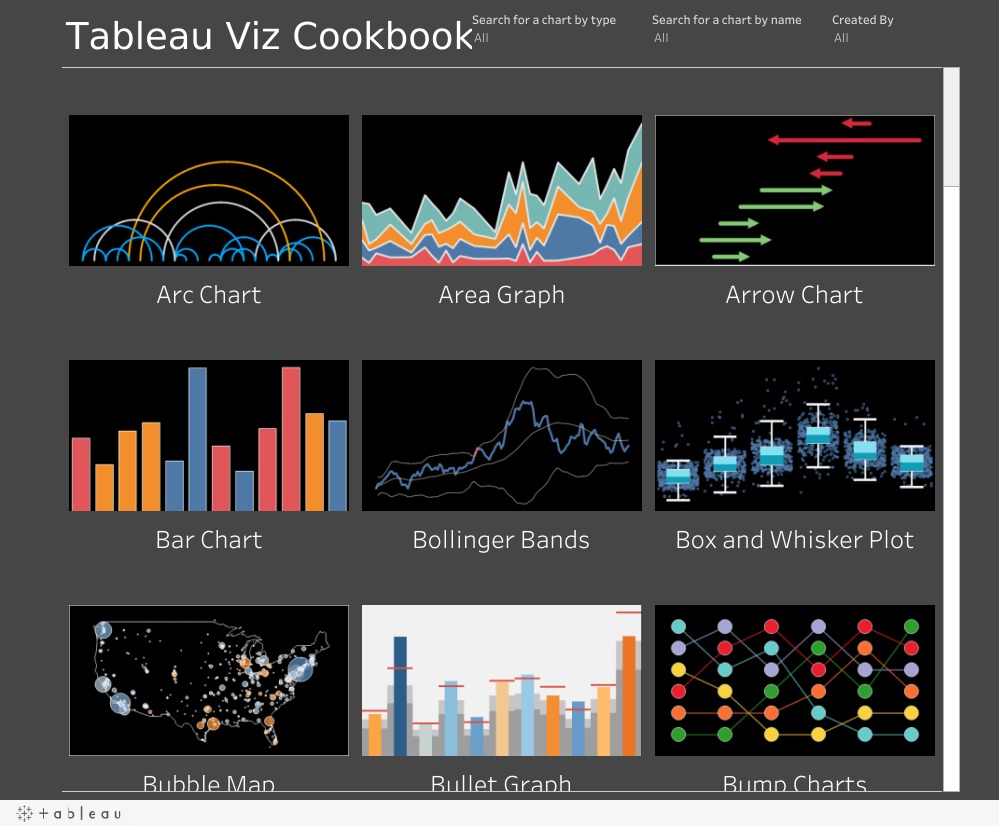
A cookbook is an odd monument for an engineer. It is domestic, dog-eared, and happiest with stains on the page. It assumes that knowledge should survive contact with a kitchen. In 2017, Josh Weyburne published one for Tableau users. The Tableau Cook Book gathered community-made instructions for building visualizations and arranged them as recipes. You could browse by creator, open a technique, and see how someone else had done the work. Years later, the project has more than 242,000 views and 2,100 favorites. It remains the cleanest introduction to Weyburne’s career because it reveals his recurring obsession: sophisticated tools are only as useful as the route he can build into them.
That route has taken him through three eras of enterprise technology. At Tableau, the problem was self-service analytics. At Snowflake, it was the cloud data platform. At Handshake, where he works as a founding forward-deployed engineer, it is artificial intelligence placed inside the operating life of a company. Each era arrived with a fresh vocabulary and an impressive demonstration. Each also arrived at the same old door: someone had to make the thing work for people who had jobs to do.
The recipe was the argument
The Cook Book did not present Weyburne as an oracle. Its real authors were distributed across the Tableau community, and the project’s job was to collect their techniques into something navigable. That modest architecture mattered. Enterprise software has a habit of making expertise look like magic. A reusable recipe removes the cape. It says: here are the ingredients, here are the steps, and here is a workbook you can take apart.
Tableau’s own public team chose the Cook Book as one of its notable visualizations of 2017. At the time it was the most favorited visualization on Tableau Public. The praise focused on precisely what made the project durable: people could download the workbook, study how it was built, and filter the collection by its original creators. Weyburne had made a map of other people’s knowledge. There are louder ways to establish expertise, but few are more useful.
By then, he was already explaining the institutional version of the problem. At the 2016 Disney Data & Analytics Conference, Weyburne and a colleague gave a presentation called “The Modern Approach to Enterprise Analytics: Bridging the Gap Between Business and IT.” The title is nearly a thesis for his working life. Business teams wanted speed and the ability to answer their own questions. IT teams needed security, accuracy, governance, and systems that would not become expensive archaeology. The answer could not simply be to declare one side correct. Somebody had to make the boundary productive.
“He is passionate about Tableau and helping IT and the business come together to bring modern analytics to organizations.”Weyburne’s Tableau speaker biography
The sentence comes from an official speaker biography, which means it has the polished manners of conference copy. Still, it has aged well. “Come together” is not a technical feature, nor can it be toggled in an administrator panel. It is the human labor around the feature: listening, translating, demonstrating, revising, and knowing when a customer’s awkward request is evidence of a deeper need. The software business likes nouns. Weyburne’s specialty lives among the verbs.
A career along the fault line
Weyburne studied at Michigan Technological University from 2006 to 2011. His public record becomes clearer during his Tableau years, where he appeared as an enterprise sales consultant and systems consultant, teaching the operational side of modern analytics. His 65-minute technical overview for Tableau covered security, scalability, integration, disaster recovery, monitoring, management, and governance. It is a wonderfully unglamorous list. It is also the list that separates a handsome demo from software an institution can responsibly adopt.
One boundary, three technology cycles
He later moved to Snowflake, first publicly visible as a solution engineer and then as a sales engineering manager and solution engineering manager. The titles changed as the data industry changed beneath them. Cloud warehouses became data clouds; data clouds became foundations for AI. Weyburne appeared at customer events in Indianapolis and Chicago, the sort of rooms where architecture slides eventually meet questions about cost, ownership, migration, and whether anything will work with the systems already in the building.
In 2024, he earned Snowflake’s SnowPro Core certification. By a March 2026 Snowflake event in Chicago, his session environment had expanded to data agents, AI readiness, governance, pipelines, and “enterprise intelligence.” The nouns were new again. The practical questions were not. What data is ready? Who governs it? How does the organization move from experiment to routine? And can the person at the front of the room explain the limits without draining the possibility from it?
Forward-deployed engineering is a natural next chapter. The role puts technical builders close to customers, often embedding them in the difficult middle between a general product and a specific organization. It rewards code, but also diagnosis. It asks an engineer to notice the difference between what a customer requests, what its workflow requires, and what a product can safely become. In other words, it turns the old business-IT divide into a daily place of work.
The last mile of artificial intelligence
At Handshake, Weyburne entered a company already known for connecting students, universities, and employers, and now building an AI business alongside that network. His supplied title is founding forward-deployed engineer. Handshake’s 2026 Access program also bills him as a deployment strategist for Handshake AI. The difference between those titles is revealing rather than contradictory. One emphasizes building. The other emphasizes the decisions that make building worthwhile.
For Access, he was placed in a customer-focused session about new employer products and the organizations piloting them. The format suits his career. Product leaders could describe a roadmap, but customers would explain what changed in attraction, hiring decisions, and measurement. A technology earns its biography in use. The forward-deployed engineer stands close enough to watch the adjectives fall away.
This is where his old Cook Book becomes newly relevant. AI systems are more flexible and less predictable than dashboard software, but organizations still learn through examples. They need techniques that can be inspected, tested, governed, and adapted. A prompt is not quite a recipe; an agent is not quite a workbook. Yet the social task is familiar. Take concentrated expertise and make it portable. Preserve enough structure to be reliable, and enough openness to be owned by the next person.
Weyburne’s public work does not contain grand personal manifestos about artificial intelligence. That absence is useful. His career offers a more grounded argument in the sequence of jobs themselves. First help people see their data. Then help companies organize and scale it. Then help put intelligent systems beside the work. The progression is less a conversion than a widening radius.
A local answer to a global career
Weyburne is based in Cincinnati, not in the headquarters city printed on a corporate press release. In 2022, while working as a Snowflake solution engineer, he graduated with the first class of Cincy LEAD, a Cincinnati USA Regional Chamber program that brought together 55 advancing leaders from business, public institutions, and nonprofits. The cohort included a museum marketer, a court communications manager, engineers, bankers, attorneys, and community executives. It was another exercise in crossing professional dialects.
He also serves as board secretary of the Queen City Book Bank. The organization’s work is materially different from enterprise software, and it should not be squeezed into a clever analogy. Books for children are books for children. Still, his board role belongs in the same portrait. A person whose career revolves around access to complex tools gives time to an institution concerned with access to the oldest portable technology in the room.
There is something pleasantly unfashionable about secretarial work. Minutes must be accurate. Decisions must be recorded. Governance must exist after the meeting ends. The role resembles the less photogenic side of enterprise engineering: the structures that allow other people to move with confidence. It is not the keynote. It is the reason the promises made at the keynote can be remembered on Tuesday.
The thread is not data, cloud, or AI. It is the patient construction of a route from possibility to use.
Technology careers are often narrated as a race toward the newest thing. Weyburne’s looks different when viewed through the Cook Book. Tableau, Snowflake, and Handshake are milestones, but the durable subject is legibility. Can a business team understand the governed system? Can a customer turn a capability into a workflow? Can a community member pick up a technique and make it their own?
A recipe is not the meal, and a demo is not a deployment. Both are invitations to begin. Josh Weyburne has spent his career making that invitation clearer, then staying near the table long enough to see what happens next.