Christopher Padfield had built a company that was growing. The difficulty was finding enough time to work on the thing it sold. By 2023, Deskpro had reached its sixth product generation, the team was expanding, and its founder wanted to spend more of his day on product direction. Success had supplied him with a familiar managerial inconvenience: more business, less time to make the software better.
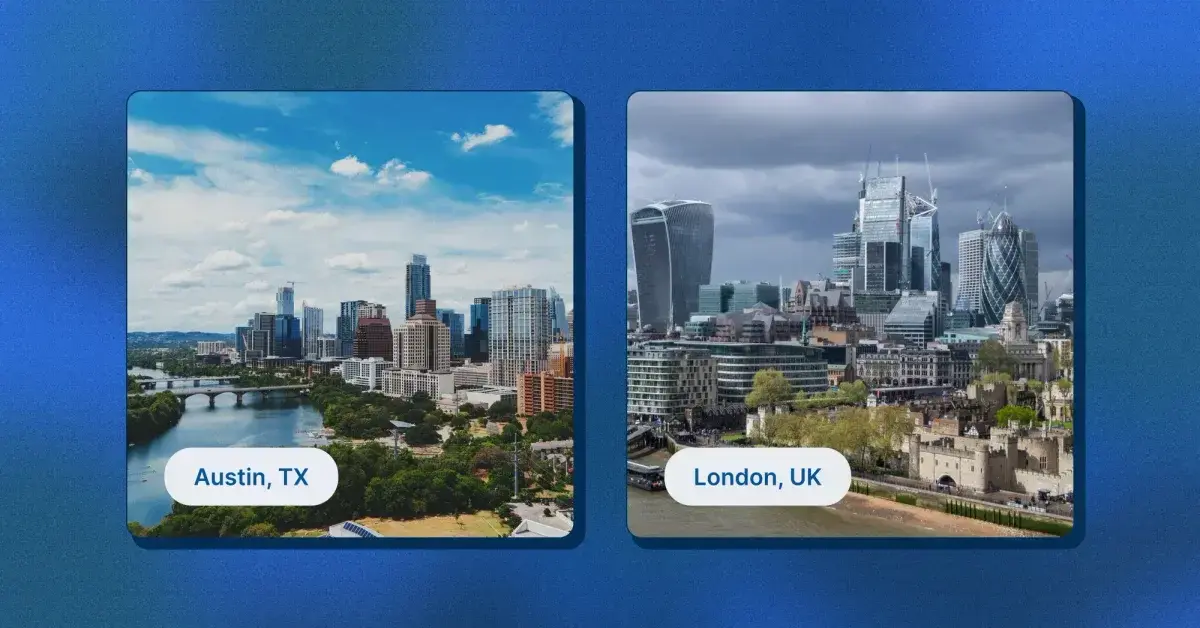
In June 2024, he changed the arrangement. Elsewhere Partners invested $25 million, Brad Murdoch became chief executive, and Padfield moved into the chief product officer role. Deskpro established a global headquarters in Austin while keeping its product development and engineering teams in London. For a business born in an Oxford university room, this was a substantial change of address and division of labour.
The financial announcement was easy to understand. The more interesting part concerned a founder’s working day. Padfield had spent years building Deskpro. The transaction gave him a way to keep contributing while allowing someone else to carry the chief executive’s brief. Money bought resources; the handover created room for a different job.
A university room, then years of answering questions
Deskpro began in 2001, while Padfield was at Oxford. He studied at New College, and his academic background was politics, philosophy and economics. The early business traded as Headstart Solutions. Its subject was customer support: helping organisations handle the questions that arrive whenever a product, account or service needs explaining.
A university room makes an appealing opening scene. The work that followed gives the scene its weight. Building support software means staying useful as customers change how they contact businesses. Email acquired neighbours: live chat, phone, social channels, and tools for people who would rather find an answer themselves. A help desk has to keep the conversation together even when the conversation refuses to stay in one place.
Padfield bootstrapped the business. By the time of its 2024 financing, Deskpro served customers in more than 60 countries and supported more than 20 languages. Those figures describe the company at that moment, rather than a claim about its present size. They also put some distance between the dorm-room origin and the enterprise facing an investment decision.
There is an unusually modest ambition underneath this kind of software. A customer wants an answer. An agent wants enough context to give one. Neither necessarily wishes to participate in a grand technological occasion. A system that gets them through the exchange with fewer detours has done useful work, even if nobody thinks to applaud the database.
A founder on both sides of the funding conversation
Alongside building software, Padfield worked in early-stage investment. His career included London Seed Capital and London Business Angels, where he was an investment manager. He also founded ControlMyName. These roles place him in a wider circle than the customer-support business alone: entrepreneurs seeking capital, investors assessing companies, and the practical negotiations between them.
That earlier investment work gives the later financing an interesting backdrop. In 2024, the founder seeking a partner had already worked around the business of backing founders. The two situations involve different responsibilities. Looking at a company from an investor’s side and deciding what to do with a company you built are separate exercises, however familiar the vocabulary may be.
Deskpro had received approaches from potential buyers before the eventual transaction. Padfield brought in FirstCapital to explore the possibilities. The process began with the expectation that a sale might be the outcome, then developed into a partnership intended to support further expansion, particularly in the United States.

A buyer’s interest is an invitation to make a decision, rather than a decision in itself. The alternatives matter: sell, continue independently, or bring in a partner while retaining an interest in what happens next. Padfield’s eventual arrangement combined an exit component with resources for the business and a continuing share in its future.
The database gets a question too
There is a more technical view of Padfield in his public questions on Stack Exchange. In September 2014, he asked about enabling a MySQL setting for a single-tenant software service with thousands of databases. Other questions concerned queries, indexing and limits. These are specific engineering problems, far removed from the polished language of an investment announcement.
They are also useful evidence of what building a software business contains. A customer sees a conversation window. Behind it sit choices about how information is stored, retrieved and separated. The small decisions can become sizeable ones when a system serves many customers. An apparently ordinary question about configuration may describe a very ordinary afternoon in an enterprise software company.
His name also appears on Deskpro release announcements. A July 2012 update, build 72, included changes to logging and chart behaviour, with different update instructions for cloud customers and those running downloaded software. The detail is pleasingly unceremonious. New software arrives with promises; maintained software also arrives with corrections.
In that sense, the product history is a history of continuing obligations. A release must work for the people already using the system. Their files, conversations and routines do not become less important because a new version has a more attractive interface. Years of support software accumulate years of responsibility to the organisations relying on it.
Good design leaves fewer conversations stranded
The Messenger redesign offers a visible example of the product work. Designer Nick Green developed a modular experience that let users start a chat, search knowledge-base articles, manage tickets and submit a request when an agent was unavailable. The familiar little chat window gained several useful ways to finish the job.
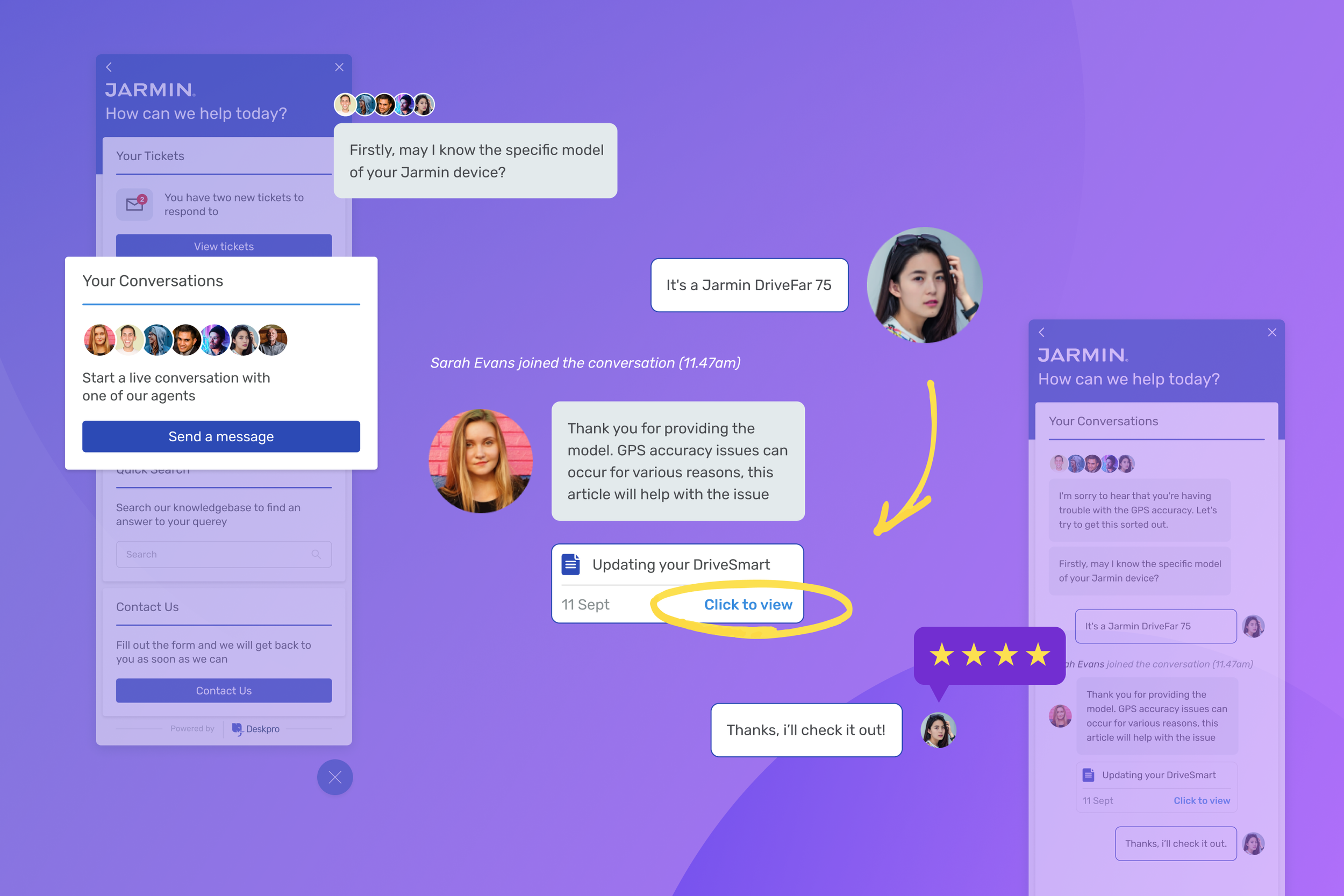
For someone asking a question, those routes have different purposes. An article might solve the problem immediately. A live conversation might need another person. A ticket can preserve a request until somebody is available. The design challenge is to offer these choices without making the customer learn the organisation’s internal arrangement first.
Padfield’s testimonial for Green credited the modular Messenger redesign with reducing agents’ ticket backlog. He also recognised Green’s work on the Help Center, branding and website during five years as design lead. The attention to several parts of the experience is revealing in a concrete way: product, presentation and self-service all had work to do.
There is no numerical reduction attached to that testimonial, and the important point needs none. A support product can make an agent’s day easier before the agent starts typing. Helping customers find an existing answer changes the work arriving in the queue. Design reaches beyond the neatness of the box on the screen.
A partner had to understand the server room
Deskpro’s deployment choices were part of Padfield’s search for an investor. The product could run in Deskpro’s cloud, a customer’s private cloud or the customer’s own data centre. That matters to organisations whose requirements prevent them from buying a conventional shared cloud service. A product decision becomes a question of which customers a company can serve.
Keeping several deployment options means carrying more than one set of operational needs. A hosted service and a customer-managed installation present different practical questions about upgrades and administration. Deskpro’s Horizon generation included an On-Premise Controller to help manage installations. The work continued on both the interface and the machinery supporting it.
In January 2022, Deskpro had also been selected as one of eight software suppliers for the UK government’s Help to Grow: Digital scheme. The programme offered eligible smaller businesses a discount on approved software. It was a different route to customers from the multinational or large public-sector contract, but concerned the same broad task: helping organisations organise their support.
The title changes, the product stays on the desk
The 2024 partnership divided the next stage of work. Murdoch brought experience in US software businesses and took the chief executive role. Padfield concentrated on product strategy. Rod Favaron, Rita Selvaggi and Nick Stoffregen joined the announced board alongside them. The Austin office provided a base for expansion in North America.
The transition kept co-founder Christopher Nadeau in the story. Padfield’s public thank-you named Nadeau, the team and customers, as well as the advisers who helped complete the partnership. On LinkedIn, he also thanked his wife, Eleanor Blagbrough, for the private-equity experience she brought to the process. Company transactions may be presented as tidy announcements; getting to one involves rather more people.
Padfield described an ambition to reach thousands more customers and to spend more time shaping the product. That is a specific aspiration with two connected demands. Expansion brings new organisations to serve. Product development determines what those organisations can actually do when they arrive. The handover put different people in charge of carrying those demands forward.
The box of spare ports
A small hardware detail supplies a fitting final scene. In a testimonial for Framework laptops, Padfield praised interchangeable ports, Linux support for developers and straightforward pricing. Deskpro kept spare ports in a box so employees could change their machines’ connections themselves. A purchasing preference became something a colleague could physically pick up and use.
“we have a box of spare ones, so people can change themselves”
Chris Padfield, on Framework laptop ports
The spare-port box is a useful companion to the larger story. It puts choice within reach of the person doing the work. A developer needs a different connection; an agent needs a clearer conversation; a customer needs an answer. Each situation has its own scale, but all reward attention to the practical obstacle.
Padfield’s 2024 change of job belonged to that practical world too. He wanted more time for product direction and arranged a partnership that made it possible. After years of building a help desk, the founder had reorganised his own desk. There was still software to make.