The useful accident in Chris Lynch's career was architectural. As a young technology journalist in San Francisco, his cubicle sat beside the sales bullpen. He could hear representatives make the same pitch, call after call. He could not hear the prospects, but he learned to recognize which versions were working. A practiced ear could detect the difference between a recitation and an argument.
The other half of his day supplied the raw material. Lynch asked product designers and engineers what they were building, listened to the specialist answer, then rendered it in plain English. It was reporting, certainly. It was also product marketing before he had decided to become a product marketer.
Lynch had expected journalism to be the destination. He wrote for The Patriot Ledger, a daily newspaper south of Boston, and became a staff writer at CIO, where the beat placed him at the seam between technology and business. International Data Group moved him west at a moment when Google, Facebook, Twitter and LinkedIn still felt novel enough to cover as emerging companies. The work offered a privileged education in how software was made, bought and described. It offered a less persuasive education in the economics of being a reporter in San Francisco.
“I still like to call myself a product marketer in a CMO's shoes.”Chris Lynch, reflecting on his career at Mindtickle
He has given both explanations for the switch. The practical one is funny because it is true: he feared he might go broke as a journalist. The more durable one is that sales and marketing presented another form of storytelling, with a skeptical audience fully aware that persuasion was under way. Getting someone to believe a product could materially change a business was a demanding narrative problem. Lynch found that problem intellectually interesting. He also enjoyed standing between the people building a product and those carrying it to market.
The portfolio is the plot
Once Lynch crossed into marketing, the same assignment kept returning in larger forms. After Socialtext and a marketing role at TIBCO, he joined Badgeville in 2012. Gamification was then a fashionable, easily misunderstood category. Lynch explained the company's enterprise software as a way to identify, influence and measure useful behavior. In interviews, he grounded the abstraction in ordinary acts: contributing to a wiki, answering a support question, updating a sales system. Points and badges were not the point. They were mechanics attached to behavior a company valued.
Oracle expanded the canvas. From 2014 to 2016, he led product marketing and go-to-market strategy for Oracle Marketing Cloud, a collection assembled from many technologies. His job, as he later described it, was to serve as chief storyteller and make the pieces sound like a cohesive offering. This is the unglamorous heart of portfolio marketing. Products arrive with different histories, users and vocabularies. The marketing leader must find an honest sentence broad enough to hold them together and specific enough to mean something.
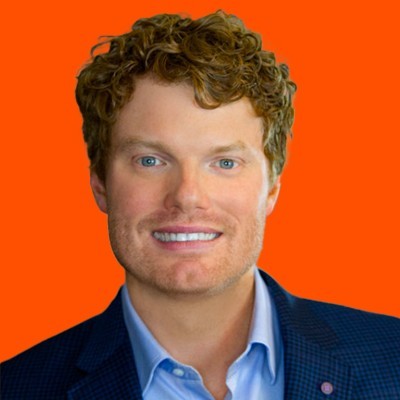
Cision hired Lynch as chief marketing officer in late 2016. The public-relations software company had its own box of puzzle pieces, including PR Newswire and a succession of media-monitoring and analytics acquisitions. Lynch ran global communications, product and digital marketing as the company sharpened a cloud-platform story. His tenure included Cision's 2017 public listing. The subject was familiar from his reporting days: the changing relationship among journalists, brands, social platforms and public trust.
There was a tidy irony in the former reporter marketing tools to communicators. During the panic over “fake news,” Lynch's response was more measured than fashionable. False information was not new, he argued; the speed of its spread was. He spoke about earned media, consistency and trust, but kept returning to the human on the other end. His shorthand for effective communication at the time was simple: human, emotive and original. Originality, he noted, was the hardest ingredient.
A detour through the wilderness
In 2020, Lynch changed both category and customer. KUIU sold technical hunting apparel directly to consumers. Its products were worn outdoors rather than deployed in a cloud, and the digital experience carried the commercial weight of a direct-to-consumer business. As CMO, Lynch helped build a data-driven marketing organization and worked on customer acquisition, site design and the path from rich wilderness imagery to the right product.
The move looks like an excursion from enterprise software. It also tested one of his central claims: people respond to strong stories in consumer and B2B settings alike because people make both kinds of decision. Enterprise marketers sometimes use the complexity of a buying committee as permission to write without pulse. Lynch's consumer chapter made that excuse harder to sustain. Emotion does not disappear when a purchase order gets larger.
Mindtickle brought him back to software in April 2021. The company sold sales-readiness technology, which made Lynch's own operating relationship with sellers part of the product conversation. He led product marketing, digital, demand generation, go-to-market strategy, brand and creative. In interviews, he described marketing and sales as parallel storytelling systems. A marketer could establish the narrative, but a seller had to believe it well enough to retell it under questioning.
“People respond well to strong storytelling, no matter if you're in a consumer context or you're in a B2B context because even in B2B, there are people making decisions.”Chris Lynch on Demand Gen Visionaries
His advice for working with sales was notably free of theater. Marketers, he said, spend too much time using positioning skills internally. Save the spin for competition. With colleagues, be honest about performance, gaps and trouble. It is an operating principle disguised as a communications preference. Shared reality is the first requirement for shared strategy.
Today's number, tomorrow's house
Lynch's clearest description of executive marketing is not a funnel or a flywheel. It is a construction problem. A CMO must deliver pipeline and revenue contribution today while building the house the organization will need later: a new website, a stronger brand, better infrastructure, cleaner processes. The same people are asked to pour the foundation and answer the doorbell.
Pull a team toward urgent work and long-term debt accumulates. Pull it toward the gleaming future and present metrics sag. Lynch offers no magic ratio because the judgment has to be made again each day. His practical productivity advice is more exact: use the hours between 6:30 and 9:30 in the morning. The schedule suggests a person trying to make room for thought before meetings begin consuming it.
He also carries a piece of counsel from Chandar Pattabhiram, a marketing executive he worked with. We inevitably see ourselves differently from the way others see us; the best one can do is reduce the number of clicks between those views. It is a fine rule for a person, and an even better one for a brand. Most weak positioning lives in the excess clicks.
Making tax visible
Sovos appointed Lynch chief marketing officer in February 2024. The company works in tax compliance, a domain with an almost comic resistance to easy summary. It spans sales and use tax, VAT, e-invoicing, reporting, withholding and regulated goods, across governments moving at different speeds and demanding different formats. Sovos itself had grown through both acquisition and internal development. Once again, Lynch arrived at a large portfolio while a market was shifting from point products toward a platform.
His remit covers demand generation, product marketing, brand, content, ecommerce, field marketing and partner marketing. The larger narrative is to make compliance visible as business infrastructure. In public comments, Lynch has described regulatory complexity as a strategic risk for finance leaders rather than a clerical burden. Discussing digital tax systems in Portugal, he connected transparency and reliable infrastructure with competitiveness. In Brazil, he framed artificial intelligence as an accelerator that can help teams keep pace with regulatory change while retaining human tax expertise.
These are not attempts to make tax regulation adorable. They arrange consequence. A company does not need to adore the machinery behind an invoice. It needs to understand that the machinery now sits inside the transaction, touches the enterprise resource-planning system and can stop commerce when it fails. “You need to message sight,” Lynch once advised marketers. The unusual phrase is revealing. Value is a claim. Sight lets a buyer picture the changed condition.
This is why the journalism origin matters without becoming a sentimental origin myth. A reporter is trained to approach an expert, locate the stakes and produce language a stranger can use. A product marketer does the same under different commercial conditions. A CMO must make the process repeatable across a department, then persuasive across a market.
Lynch's career has accumulated larger titles, bigger portfolios and more complicated nouns. The essential motion remains small: walk over to the people who know how the thing works. Ask them to explain it. Listen for the part that matters. Then carry it across the room without dropping the truth.