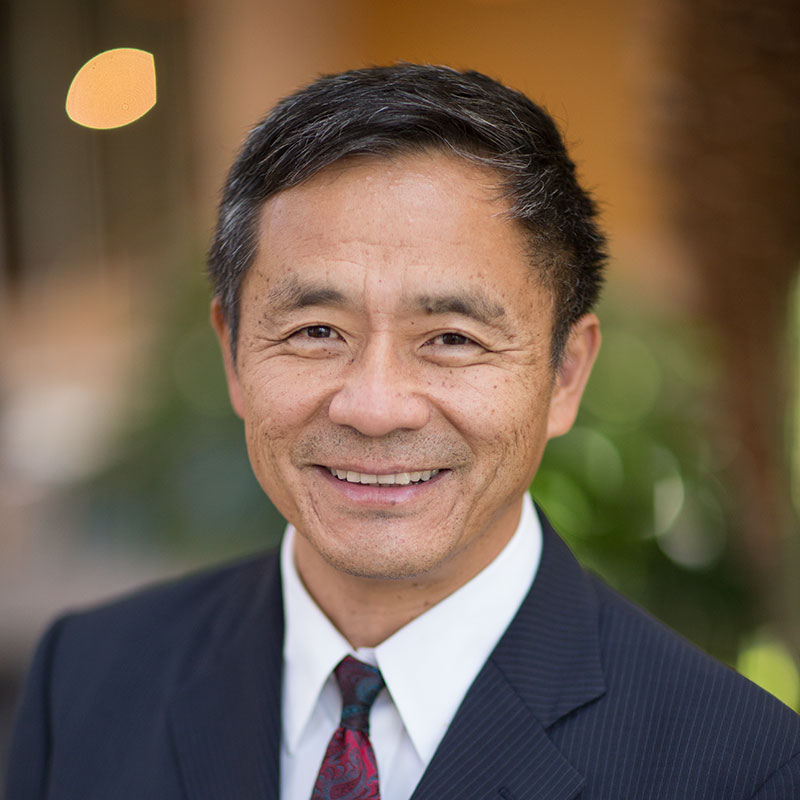
The Hunter of Hidden Antigens
Most cancer immunotherapy attacks what it can see on the surface of a tumor cell. Cheng Liu built an entire company around a different question: what if the real targets are inside?
That question, posed seriously in 2006 when Liu left a comfortable position at Chiron Corporation (soon to become Novartis) with two million dollars in angel funding, became Eureka Therapeutics. In January 2026, the US Food and Drug Administration answered him back with an RMAT Designation - Regenerative Medicine Advanced Therapy - for ECT204, Eureka's GPC3-targeting ARTEMIS T-cell therapy for advanced hepatocellular carcinoma. RMAT is one of the FDA's most accelerated pathways. They do not hand them out for incremental progress.
Liu trained as a molecular cell biologist, earning his B.S. from Peking University in cell biology and genetics before crossing the Pacific to complete his Ph.D. at UC Berkeley in 1996. The Berkeley years shaped not just his scientific vocabulary but his tolerance for problems that take decades to solve. He joined Chiron's antibody drug discovery group, where he spent ten years and, among other contributions, shepherded an anti-CSF1 antibody program for bone metastasis treatment all the way through human clinical trials. It was methodical, cumulative work. It also showed him the ceiling of what conventional antibody approaches could reach.
A Biological Library With 100 Billion Books
The scientific premise at Eureka is elegant and difficult in equal measure. Most cancer antigens - the protein flags that mark a cell as malignant - live inside the cell, invisible to standard antibodies or conventional CAR-T cells, which can only recognize targets on the cell's outer surface. Liu's insight was to go through the MHC class I complex: the biological machinery that every cell uses to display peptide fragments of its internal proteins on its surface, like excerpts posted from a private library.
To find antibodies that could recognize these peptide-MHC complexes with the precision of a T-cell receptor, Liu built the E-ALPHA phage display library - a collection of over 100 billion unique human-derived antibody clones. Think of it as the world's largest molecular detective agency, each clone trained to investigate a different suspect. From this library, his team isolates TCR mimic antibodies that bind to specific peptide-MHC combinations with enough affinity to redirect engineered T cells toward tumor cells displaying the target.
The resulting platform, branded ARTEMIS (named, fittingly, for the Greek goddess of the hunt), combines these TCR mimic antibodies with a novel AbTCR architecture that borrows signaling components from both conventional CARs and natural T-cell receptors. The goal is a T cell that hits harder with a better safety margin than existing CAR-T therapies - particularly relevant for solid tumors, where the microenvironment has historically been brutal for engineered cells.
Liu's approach targets antigens that would otherwise be completely inaccessible. Alpha-fetoprotein (AFP) - a protein normally present only during fetal development that reappears in liver cancer - is one such target. Glypican-3 (GPC3), overexpressed on hepatocellular carcinoma cells, is another. Both are intracellular or intracellularly derived, both are being targeted in active clinical trials.
What RMAT Designation Actually Means
The FDA's Regenerative Medicine Advanced Therapy (RMAT) designation is reserved for therapies that show "preliminary clinical evidence indicating the drug may offer substantial improvement over available therapies." It comes with rolling review, more frequent FDA meetings, and eligibility for accelerated approval. For ECT204, the designation specifically covers advanced hepatocellular carcinoma - the most common form of liver cancer, and one of the deadliest globally.
From Emeryville to the New England Journal
Eureka's clinical story reads like a portfolio of hard problems. The ARYA-1 trial treats adult patients with advanced hepatocellular carcinoma (HCC) using AFP-targeting ARTEMIS T cells. ARYA-2 extends that work to pediatric patients with hepatoblastoma and HCC - some of the rarest and most difficult-to-treat childhood cancers. Both programs hold FDA Orphan Drug Designation, and ARYA-2 carries an FDA Rare Pediatric Disease Designation as well.
The ARYA-3 trial, targeting GPC3 rather than AFP, treated its first patient at City of Hope in May 2022 and completed Phase I in December 2023. That's the program that earned the January 2026 RMAT Designation, now advancing toward Phase II.
Not every Eureka asset targets liver cancer. The company's GPRC5D-targeting CAR-T work - aimed at multiple myeloma - was published in the New England Journal of Medicine in 2022. The NEJM doesn't publish biotech results without serious clinical substance. Eureka contributed MCARH109, an anti-GPRC5D CAR-T construct, whose clinical data appeared alongside a broader study demonstrating GPRC5D as an active and druggable target in myeloma. That paper has become a reference point for the field.
And before any of this, Liu co-edited what became the definitive text on the subject: "Biosimilars of Monoclonal Antibodies: A Practical Guide to Manufacturing, Preclinical, and Clinical Development", published by Wiley in 2016. Running a clinical-stage biotech while producing a textbook is the sort of thing that happens when someone has genuinely been thinking about antibodies for thirty years.
The $2 Million Bet That Became $168 Million
The founding story of Eureka Therapeutics has the compressed drama of a good origin myth - but the details are specific enough to be real. Liu left Novartis in 2006 with a single angel investor, Sandy Chau, a Chinese-American investor with a chemistry background, who believed in him enough to write a $2 million check. There was no pre-existing venture syndicate. There was no guaranteed Series A waiting on the other side.
Liu has said the personal motivation for pursuing cancer treatment came from watching patients at his parents' hospital in China - a detail that appears in interviews rather than press releases, which is usually the more reliable kind. He spent the first years at Eureka building the E-ALPHA library and developing the conceptual framework for TCR mimic antibodies, work that would eventually underpin every program the company runs today.
Eighteen years later, total funding exceeds $168 million across multiple rounds, including a $60 million Series D and a $10.6 million CIRM grant awarded in June 2023 specifically to support the pediatric liver cancer trial. The CIRM grant - from California's state stem cell agency - signals institutional confidence in both the science and the team. A $20 million debt financing round closed in May 2023, keeping the machine running.
The company now employs over 50 people, operates from 5858 Horton Street in Emeryville, and holds more than 500 patents and patent applications across its technology platforms - a figure that reflects sustained, disciplined investment in intellectual property rather than opportunistic filing.
In 2007, Liu received a Special U.S. Congressional Recognition for his contributions to improving human health - an acknowledgment that came before the clinical programs that would define Eureka's second decade. By then, the work had already begun.
Where TCR Mimics Go From Here
The clinical pipeline tells a clear strategic story. Eureka is not spreading across every tumor type that will take a meeting. The programs cluster around cancers with high unmet need and specific antigen logic: liver cancer (AFP, GPC3), multiple myeloma (GPRC5D), neuroblastoma. The common thread is the ARTEMIS platform's ability to access targets that other approaches bypass entirely.
The RMAT Designation for ECT204 means the FDA's reviewers looked at the Phase I data from City of Hope and saw something that warranted a faster path to approval. That doesn't guarantee approval - but it changes the timeline and the conversation. For a 51-person company operating in one of biotechnology's hardest spaces (solid tumors), it's a significant signal.
Liu's scientific output continues alongside the clinical work. A 2022 paper in Scientific Reports documented a hepatocellular carcinoma patient achieving complete remission after nine months on AFP-targeting ARTEMIS T cells. That case report is not a Phase III trial - but in the language of proof-of-concept, it's a sentence that doesn't need translation.
The publication pipeline, patent portfolio, and clinical data points are converging on the same place: a platform technology that can do something genuinely new, in a field that generates genuine new things at roughly the rate that metastatic liver cancer generates survivors. Liu seems to be playing the long game with clear eyes.