ChatGPT is for anyone staring at a blinking cursor with a job to do and no appetite for the opening move. A student can ask for a patient explanation. A founder can interrogate a spreadsheet. A programmer can chase a bug. A parent can turn a photograph into a birthday invitation before the pasta water boils. The common benefit is momentum. You describe the task in ordinary language, attach what matters, and get something concrete enough to inspect, improve, or reject.
That last verb matters. ChatGPT is an eager collaborator with no skin in the outcome. It can make a neat argument from a crooked fact, invent a citation, miss the joke, or solve the wrong problem with admirable formatting. Used as an oracle, it is risky. Used as a workbench, with evidence on the table and a human checking the joints, it can remove a surprising amount of friction.
Who should put it on the payroll?
The best fit is a generalist with varied chores: the marketer who moves from interview notes to campaign copy, the analyst who alternates between research and CSV files, the developer who needs explanation as often as code, or the household organizer juggling travel, forms, meals, and messages. ChatGPT rewards people whose day has many small starts. Its strength is the number of useful doors behind one familiar input box.
Specialists may prefer specialist tools. Claude has a loyal following for long-form prose and coding. Gemini is convenient when the job already lives inside Google's orbit. Perplexity puts citations and search behavior nearer the center. Microsoft Copilot sits naturally beside Microsoft 365. ChatGPT's pitch is breadth: search, research, voice, images, files, data analysis, memory, projects, custom assistants, connected apps, and agent-style work live under one account. You do not have to crown a permanent winner. Many experienced users keep two or three and send each job to the tool that irritates them least.
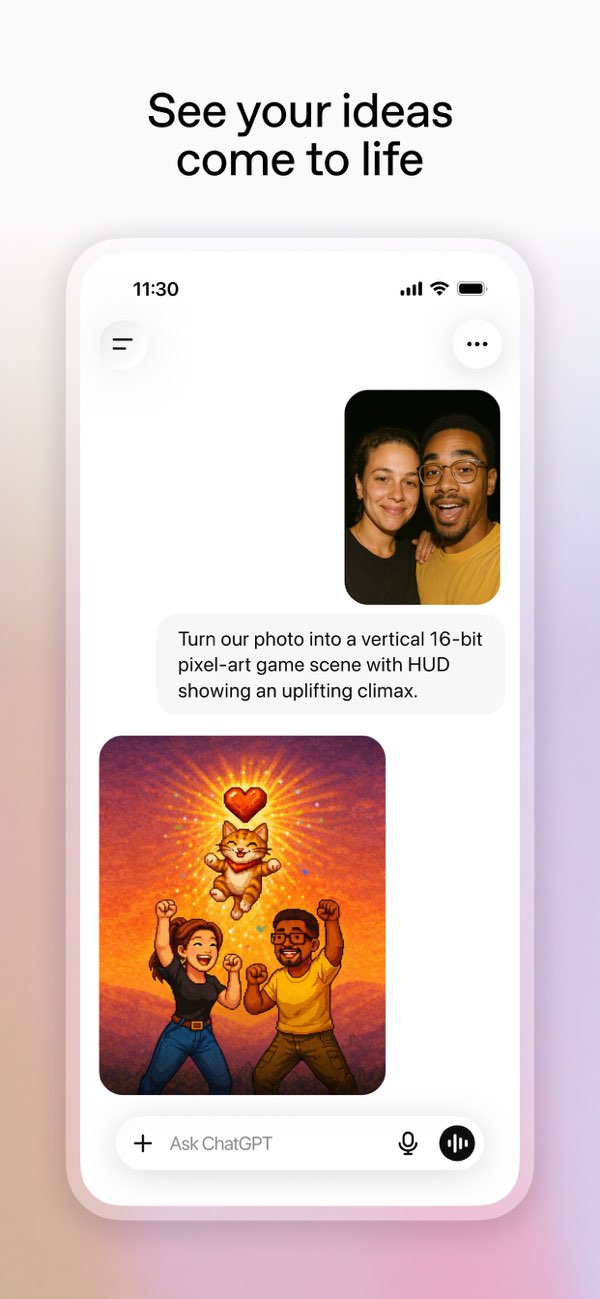
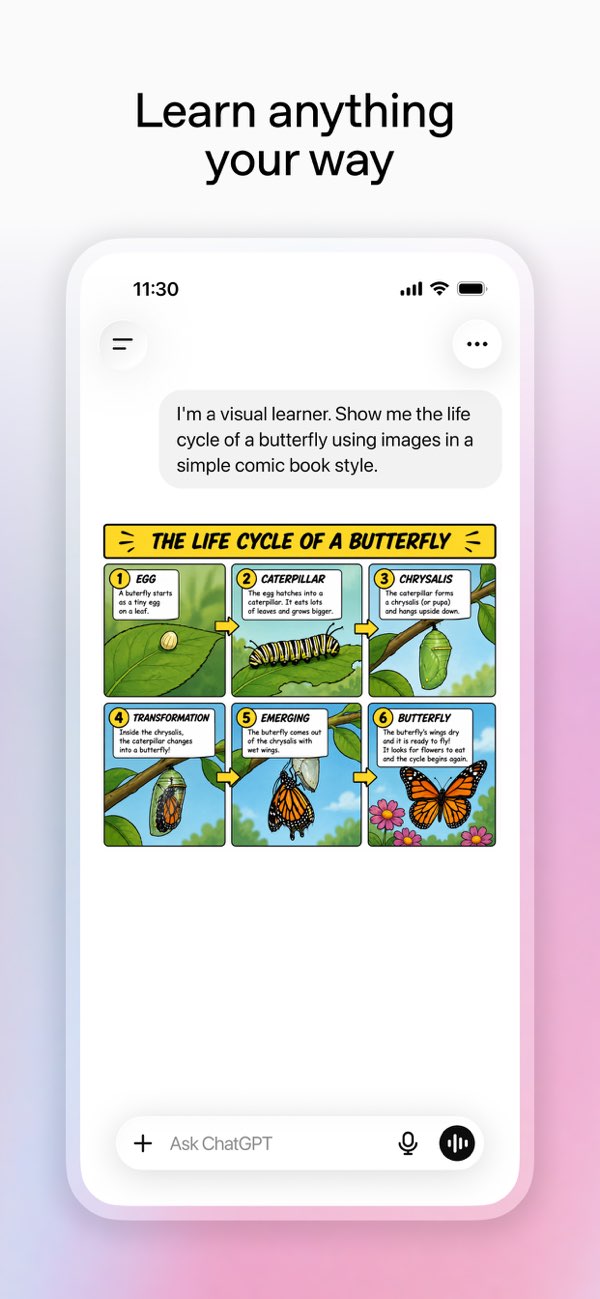
One cursor, many costumes
The chat box disguises a collection of systems. Search fetches current web material. Deep research works through a longer, multi-source question and returns a cited report. Data analysis can execute code against an uploaded spreadsheet. Voice makes the interface conversational while you cook, commute, or inspect something away from a keyboard. Image tools read pictures and generate or edit new ones. Canvas gives writing and code room to breathe outside a stack of bubbles.
Bring the evidence
Upload the contract, notes, PDF, screenshot, or spreadsheet. Answers improve when the source material is in the room.
Ask for the shape
Specify the audience, length, format, tone, constraints, and examples. “Make it better” leaves too much to chance.
Separate modes
Use quick chat for quick work. Reach for search, deep research, or higher reasoning when freshness or complexity warrants the wait.
Keep a project
Group the recurring files, conversations, and instructions. Rebuilding the same context in every new chat is unpaid clerical work.
ChatGPT's moat is not a single dazzling answer. It is how many annoying little jobs can begin in the same place.
Memory and projects push the product from one-off answer machine toward continuity. A project can hold related chats and files. Memory can retain useful preferences, and users can review or delete what is remembered. Custom GPTs package instructions, knowledge files, and selected tools into reusable specialists. The newer Work experience goes further by using a browser and connected services to carry out multi-step tasks, pausing for confirmation around consequential actions.
Give the job, audience, context, constraints, and finish line.
Attach source material and ask it to distinguish evidence from inference.
Check names, numbers, quotes, links, calculations, and hidden assumptions.
Point to the weak section and request a specific correction, not a total restart.
The plan before the plan
Start free. That is the cleanest buying advice. The Free plan covers everyday text chat and limited access to uploads, images, voice, research, memory, and other tools. Go increases common limits at a lower, locally priced tier. Plus costs US$20 a month and is the sensible step for regular writing, research, projects, advanced reasoning, and Codex use. Pro comes in US$100 and US$200 monthly versions, aimed at people who repeatedly hit the expensive tools; the core capabilities are similar, while usage allowances differ.
Do not buy Pro because the model picker has a glamorous label. Buy it only after limits interrupt paid work often enough to exceed the subscription difference. Business and Enterprise are separate decisions involving administration, identity, privacy controls, connectors, support, and contract terms. API use is also separate from a ChatGPT subscription. Prices, models, limits, and regional availability move quickly, so confirm the checkout page before budgeting.
| Plan | Best for | Editorial verdict |
|---|---|---|
| Free | Occasional questions, drafting, study, and testing tools | Enough to learn whether ChatGPT belongs in your week. |
| Go | More everyday messages, uploads, images, and memory | A capacity upgrade, not the full power-user package. |
| Plus · $20/mo | Steady research, writing, reasoning, projects, and coding | The practical consumer sweet spot for regular work. |
| Pro · $100/$200 | High-volume research, coding, images, and multi-step work | Let actual limit pain justify the bill. |
Where the spell wears off
Fluency is the central pleasure and the central hazard. A polished answer feels reviewed even when nobody reviewed it. Search and citations help, but a citation can be irrelevant, incomplete, or attached to a stronger claim than the source supports. For health, law, money, safety, or reputational decisions, trace the claim to a primary source and involve a qualified human. For code, run the tests. For arithmetic, inspect the sheet. For quotes, open the link.
The other tax is product churn. Models are introduced, rerouted, renamed, and retired. A workflow that felt warm and precise can become terse after an update. Limits can be hard to predict because different tools consume different resources. Reddit complaints repeatedly return to lost instruction fidelity, unwanted assumptions, flatter writing, and answers drifting away from the request. Those reports are anecdotal, but the pattern explains why model choice and stable project instructions matter to working users.
“It breaks trust in the basic interaction.”A Reddit user on answers that replace the written request with a guessed motive
Premium users gave ChatGPT an 80 satisfaction score, versus 73 for basic users.2026 American Customer Satisfaction Index survey
Privacy deserves the same boring attention you would give any cloud service. Consumer plans offer an opt-out for model improvement, while business products advertise different defaults and controls. Temporary chat can keep a conversation out of history, but settings and feature behavior should be checked before entering confidential material. Do not paste secrets, client data, unreleased results, or personal records merely because the interface feels private and conversational.
How people actually use it
OpenAI's large 2025 study of consumer conversations found that practical guidance, seeking information, and writing made up roughly three quarters of use. That is less science fiction than office drawer: edit this paragraph, explain that symptom, plan the trip, compare the options, teach me the concept. About 70 percent of consumer messages were classified as non-work related by mid-2025, a useful correction to the notion that every prompt is a productivity hack.
The most durable habit is asking ChatGPT to transform material rather than summon truth from fog. Give it five customer interviews and ask for disagreements. Give it a messy spreadsheet and request an audit trail for every cleanup. Give it your draft and ask which paragraph a skeptical reader will distrust. Ask a tutor to offer hints before answers. Ask a coding partner to explain the failing test before changing the implementation. Input quality is not everything, but visible evidence makes errors easier to catch.
Before paying, choose one recurring task you genuinely dislike. Run it three times on Free with real source material. If the output saves time after checking, you have a use case. If you spend longer repairing it than doing the job, keep your card holstered.
The verdict: a workbench, not a witness
ChatGPT remains the easiest general recommendation for someone who wants one AI account rather than a collection of specialist subscriptions. The interface is familiar, the range is broad, and the path from a sentence to a chart, image, researched memo, or working draft is short. Its expansion into connected apps, browser work, schedules, and reusable projects makes it more useful to people who have repeatable chores, not just questions.
Its weakness is equally plain: the product can sound finished before the work is finished. Keep sources close, define the finish line, make it show uncertainty, and inspect anything consequential. The blank page may have been eaten. You still have to decide whether dinner was any good.
Keep digging