Claude suits people whose work arrives as a heap: six PDFs, a half-finished brief, contradictory notes, a spreadsheet and one sentence from a boss that says “make this clear.” Anthropic’s assistant is built for the moment after the novelty wears off, when you need an answer to become a document, a decision, a prototype or a working patch. Writers, analysts, researchers, product teams and developers are the natural crowd. Casual question-askers can use the free plan happily, but they may never meet the product’s real personality.
The reason to choose Claude is continuity. A chat can become a Project with its own source material and instructions. An answer can become an Artifact you edit beside the conversation. Research can roam the web and connected work accounts. Claude Code can inspect a repository, run commands and keep going through a multi-step job. This arrangement feels less like consulting an oracle and more like clearing a large table for a colleague. You still own the result. Claude is persuasive even when it is mistaken, so the final fact check, test run and editorial decision remain stubbornly human.
Who should put it on the payroll?
The document wrangler
You live in reports, transcripts, policies and drafts. Claude is good at carrying a house style across a long document without forgetting page one.
The working researcher
You need a sourced map of a topic, then a memo built from it. Research mode and connected context reduce the tab-herding.
The software builder
You want an agent in the terminal that can read the codebase, edit files, run tests and explain what changed.
The tiny-team operator
You make briefs, charts, calculators and internal tools, often before lunch. Artifacts turn a conversation into something colleagues can actually open.
People who mainly want image generation or a generous message allowance should compare Claude with ChatGPT and Gemini. Claude understands images and creates visuals through code, charts and Artifacts, but it is not primarily an image studio. A tool-heavy agent run can consume far more allowance than a short chat.
The shy chatbot grew hands
Anthropic introduced Claude in March 2023 after testing it with Notion, Quora and DuckDuckGo. The early pitch emphasized a helpful, honest and harmless assistant that was steerable enough to follow tone and format. Underneath sat Anthropic’s Constitutional AI work: training models against a written set of principles, alongside other post-training methods, to shape behavior. The name is generally understood inside the company as a nod to information theorist Claude Shannon. Friendly first name, serious family tree.
Three years of additions changed the product’s center of gravity. Claude now lives on the web, mobile and desktop; its models also reach developers through an API and three large cloud platforms. The family runs from fast Haiku through Sonnet, Opus and Fable. The related Mythos models are limited to vetted programs because of their advanced cyber and life-sciences abilities.
Projects fix the blank-page tax
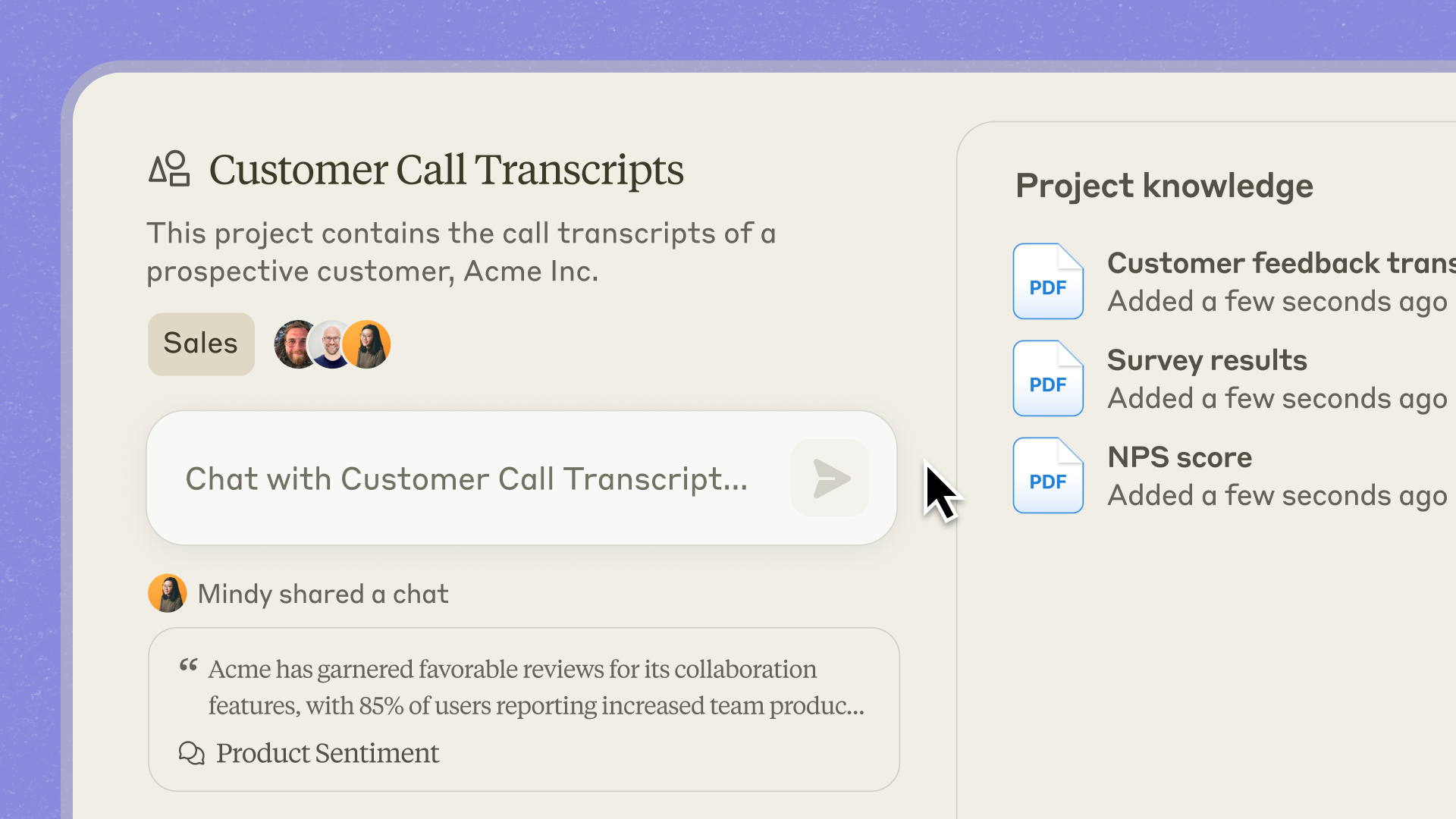
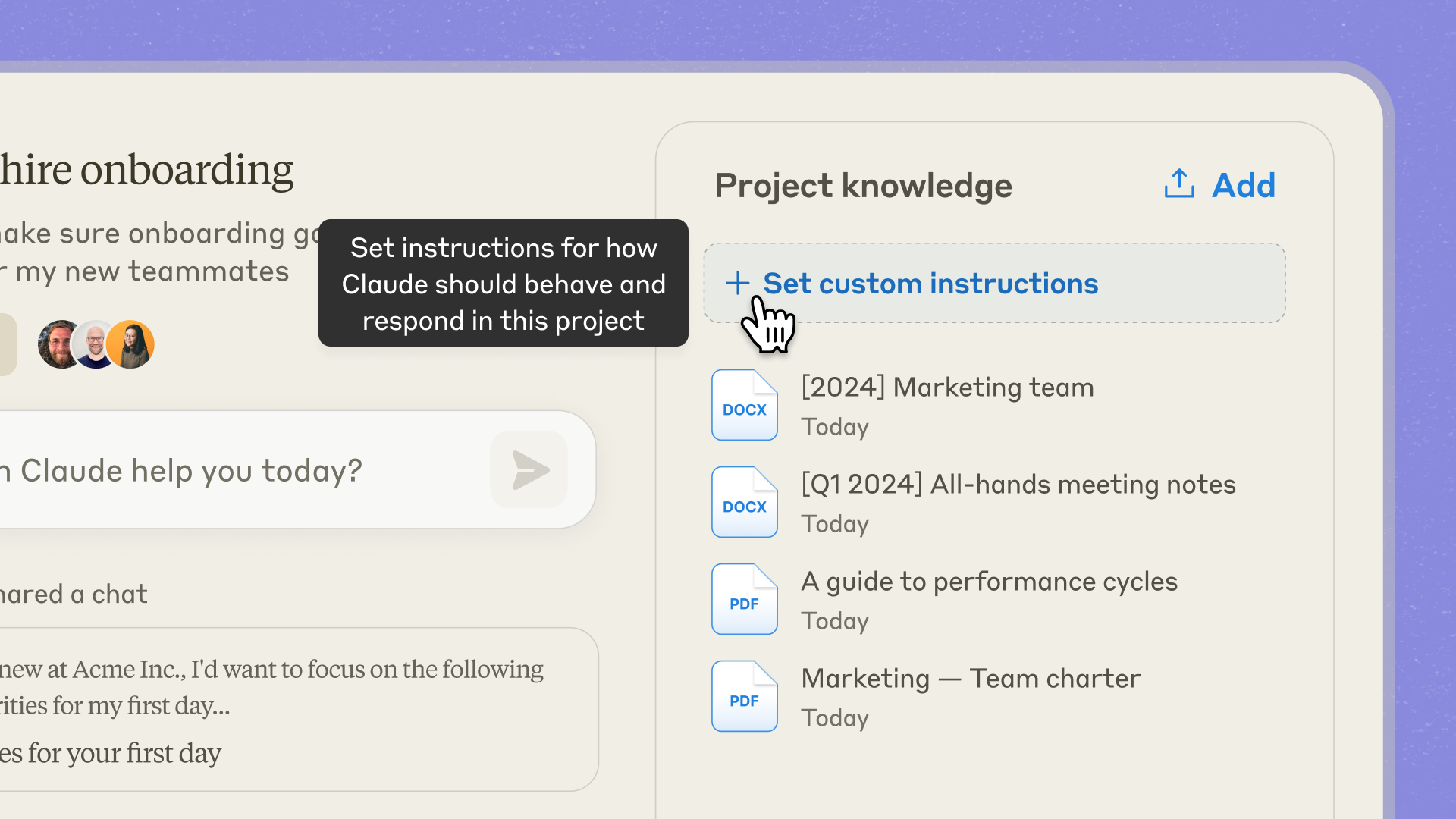
A Project is the sensible starting point for recurring work. Add the brand guide, research notes, representative examples and any rules that should survive from chat to chat. Then write custom instructions that describe the desired audience, standards and output. The current individual plans list a 200K-token context window, while some enterprise configurations list more on the default model. Capacity is not the same as comprehension, so curate the folder. Ten useful documents beat a digital attic.
This is where Claude’s reputation for writing earns its keep. In a highly upvoted 2026 Reddit comparison, one user who paid for Claude Pro and ChatGPT Plus side by side favored Claude for long-form writing, analysis and structured documents. That is one person’s field report, not a controlled trial, but the pattern recurs: users like Claude’s ability to hold voice and structure across a long piece. The productive move is to supply examples of your actual voice, then ask for a structural edit before a line edit. Otherwise any model will cheerfully laminate your prose.
Artifacts are the hinge
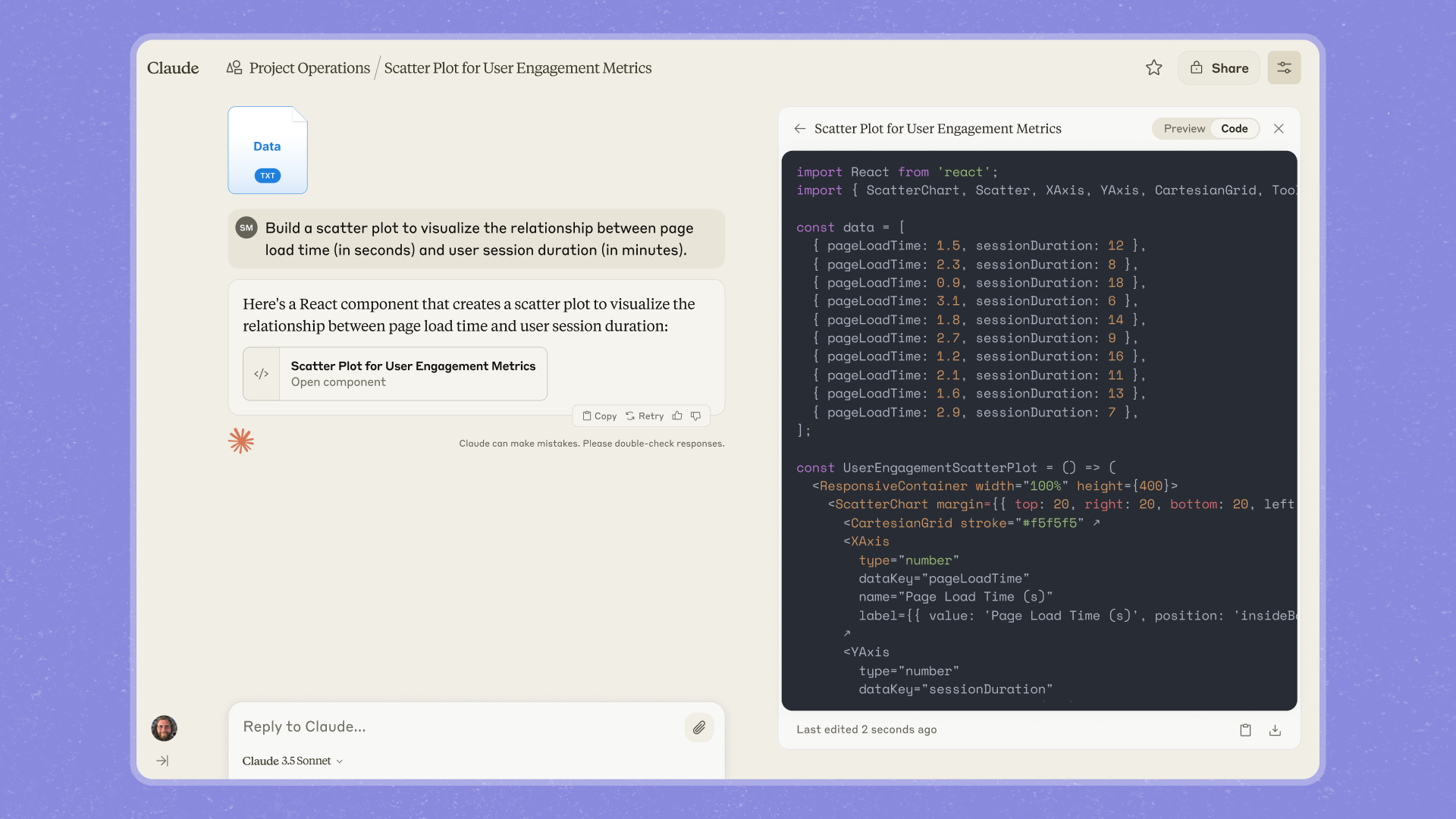
Artifacts open the work in a pane beside the conversation. Claude can place a document, code snippet, diagram, dashboard, prototype or small interactive app there while you revise it through chat. In June 2025 Anthropic said users had created more than half a billion of them. That number explains the feature better than a demo: people did not only want prose in bubbles. They wanted a thing with edges.
For non-developers, an Artifact might be a quiz, calculator, planning board or explorable chart. For a product manager, it can be a rough interface used to settle an argument before engineering begins. Claude Code added live, shareable Artifacts for Team and Enterprise organizations in beta in June 2026, turning an investigation or build session into a page that can update as the agent works. It is a fine bridge between “the agent says it found something” and “here is the evidence everyone can inspect.”
Claude’s signature trick is staying with the mess long enough to leave behind a usable object.YesPress review
A four-part working rhythm
Research mode follows that rhythm automatically: it runs linked searches, changes direction as it learns and returns citations. Connected sources can add Gmail, calendars, documents and other services through connectors. Those connectors use the Model Context Protocol, Anthropic’s open standard for giving AI applications tools and outside context. In a business setting, this can turn “summarize our launch” into a search across planning documents, email and public competitors. The same reach increases the blast radius of a vague instruction. Ask Claude to draft before it sends, list intended file edits before it makes them and stop at payment or publication.
Pick the job before the model
| Model | Use it for | Trade-off |
|---|---|---|
| Fable 5.1 | Long-running research, difficult coding and stubborn knowledge work | API price is above the other current general tiers; access depends on plan |
| Opus 5 | Complex agentic coding and enterprise workflows | Heavy reasoning can use allowance quickly |
| Sonnet 5 | Daily coding, agents, drafting and analysis | Less headroom for the hardest open-ended jobs |
| Haiku 4.5 | Fast, high-volume extraction, classification and routine chat | Choose a larger model when ambiguity or deep reasoning dominates |
Fable 5.1 is the current generally available flagship. Anthropic launched it on September 1 with lower cache-read pricing than Fable 5 and vendor-reported gains on coding, research and computer-use evaluations. Launch customers described it handling longer investigations with clearer updates. Those testimonials are useful signals, but they come from early-access partners on Anthropic’s own launch page. Your test set should resemble Tuesday afternoon at your company, not a benchmark designed for a model card.
The buying guide, without confetti
The Free plan is a real trial: chat across devices, web search, voice, Artifacts, memory, connectors and file creation appear in the current comparison. Pro costs $20 month to month or $200 annually and adds more usage, more models, unlimited Projects, Claude Code, Cowork, Design, Science, Chrome and Microsoft 365 features. Max begins at $100 monthly for five times Pro usage, with a 20-times tier above it. Team standard seats are $25 monthly or $20 per seat on an annual plan; premium seats cost five times that. Enterprise mixes a seat fee with metered model usage.
Do not buy from the multiplier alone. Claude’s limits depend on prompt length, files, model choice, tool use and conversation size. During peak periods in March 2026, Anthropic tightened how quickly session limits were consumed for some subscribers; an Anthropic engineer said weekly limits were unchanged and roughly 7 percent of users would hit a session limit they previously would not. Reddit threads about limits are plentiful and emotional because a long agent job can turn a seemingly generous plan into a blinking fuel light. Paid plans allow extra usage at metered rates, but that changes the budget.
Run your three costliest real tasks on Free, or for one paid month. Record the model, input size, elapsed time, edits required and whether you hit a limit. Quality per finished job matters more than messages per window.
| If your priority is… | Start with | Why |
|---|---|---|
| Long documents, writing voice and project context | Claude | Projects, long-context work and Artifact-based drafting form a coherent workspace |
| Broad consumer tools, media creation and a large custom ecosystem | ChatGPT | Its product surface is broad; confirm the current plan details for the features you need |
| Deep Google Workspace habits | Gemini | Native proximity to Google services may reduce integration friction |
| Source-first web answers as the main job | Perplexity | The research-and-citation experience is the product’s center |
| Repository-scale engineering in a dedicated editor | Cursor or GitHub Copilot | An IDE-native workflow may fit teams that do not want a separate general assistant |
Privacy needs an actual setting check
For consumer Free, Pro and Max accounts, Anthropic says chats and coding sessions may be used to improve models when the user enables model improvement, when a conversation is flagged for safety review or through another explicit opt-in. Incognito chats are excluded from model improvement. Content from connectors is not included as raw source material, though anything copied into the conversation may be. Commercial products have separate terms, and organization content is not used for model training by default. Before connecting a drive full of contracts, read the policy for your exact plan and have an administrator approve the source.
Your first week with Claude
- Start with one recurring burden. Choose the weekly brief, research memo, code review or meeting digest that already has a clear owner and output.
- Build a tidy Project. Add only current, authoritative material. Include one strong finished example and a short instruction file that says what “good” means.
- Separate evidence from invention. Ask Claude to label sourced facts, inferences and open questions. Open important citations yourself.
- Make review visible. Request a change log, a checklist, tests or an Artifact that lets another person inspect the work without replaying the chat.
- Watch the meter. Use Sonnet or Haiku for routine passes and reserve heavier models for problems where their added reasoning changes the result.
- Keep the human veto. Require confirmation before external messages, purchases, destructive file actions, production changes or publication.
Claude’s advantage is architectural as much as conversational. Projects hold the room together, connectors fetch the missing binder, Research scouts, Artifacts make the result inspectable and Claude Code handles the workshop. That system suits people who arrive with real material and a definition of done. It is less compelling as a novelty dispenser, and the shifting usage math can sour an otherwise productive day.
The verdict is simple: try Claude when the task is too large for a clever prompt and too specific for a generic answer. Give it the source pack. Ask for a plan. Make it show its work. Then keep your red pen nearby. The colleague with the tidy desk may be synthetic, but the signature at the bottom is still yours.