Before Ben Mann was worrying about machines that might outthink their makers, he was worrying about whether a phone could read Chinese without an internet connection. It was 2010. Mann, his brother, and a few classmates had read a textbook on character recognition and tried to turn the idea into an Android app. The software would identify a character and translate it on the device. The trouble was not imagination. The phones simply lacked the muscle. The project faded, as projects do when they arrive before their hardware.
It is an instructive little failure. Mann's career has been full of machines pressed against the edge of what they can manage: mobile phones asked to recognize handwriting, browsers asked to host a multiplayer console, giant language models asked to learn from a few examples, and agents asked to work alone without making a spectacular nuisance of themselves. He is interested in the place where a clever demonstration either becomes useful or meets reality.
On his own site, Mann introduces himself with three labels: software engineer, tinkerer, aspiring mad scientist. The order is good. The engineering comes first. The tinkering keeps it lively. The mad science remains aspirational, which is probably where one wants it.
A career changes its question
After studying computer science at Columbia, where he graduated magna cum laude in 2011, Mann spent six years at Google. His work stretched from interface design to infrastructure scaling. He managed a team of seven engineers and helped build Waze Carpool, an attempt to turn empty seats and overlapping commutes into a transportation network. This was large-company engineering in the most literal sense: take human messiness, express enough of it in software, and make the software survive scale.
Then he left. In an older biography, Mann says he departed Google to start a company. He was making side projects and looking for co-founders. The expected story would proceed neatly from secure job to brave founder to triumphant startup. Instead, a book interrupted it.
Nick Bostrom's Superintelligence persuaded Mann that advanced AI was not merely another market. If machines became broadly capable, the problem of directing them toward good outcomes could dwarf the ordinary business of software. Mann changed course. He moved toward AI safety, spending time at the Machine Intelligence Research Institute and then joining OpenAI.
“What I've learned has changed how I see the world and the role I want to play in it.”Ben Mann, writing in 2017 after nine months immersed in AI research
The shift did not require him to become less practical. It gave practicality a longer horizon. At OpenAI, Mann worked on the infrastructure, efficiency, and safety of GPT-3. The landmark 2020 paper, Language Models are Few-Shot Learners, lists him second among its authors. Its contribution notes that Mann and several colleagues implemented the large-scale models, training infrastructure, and model-parallel strategies. The model attracted attention for learning tasks from examples placed directly in a prompt. Behind that startling behavior sat a great deal of unromantic machinery.
Graduates from Columbia and begins a six-year chapter at Google.
Writes that immersion in AI research has changed the role he wants to play.
Appears as second author on the GPT-3 paper after helping implement its training systems.
Co-founds Anthropic with former OpenAI colleagues.
Builds experimental products in an expanded Anthropic Labs alongside Mike Krieger.
The safety argument becomes a product
Mann left OpenAI at the end of 2020 and became one of Anthropic's founding group in 2021. The departure is often packaged as a philosophical split, but Mann's subsequent work makes the distinction more concrete. Anthropic would research how powerful models behave, how to make their reasoning more legible, and how to train them around explicit principles. It would also put models into the hands of customers. Safety would have to survive contact with product deadlines.
Mann eventually led product engineering. His preferred phrase was that Anthropic was trying to create a “safety race.” The competitive idea is shrewd: caution rarely wins if it can only say no. It needs to yield systems that people choose because they are predictable, steerable, and pleasant to use. A model that follows the request, resists gratuitous edits, and knows when uncertainty matters is both safer and less annoying. Civilization may be at stake; so is the pull request.
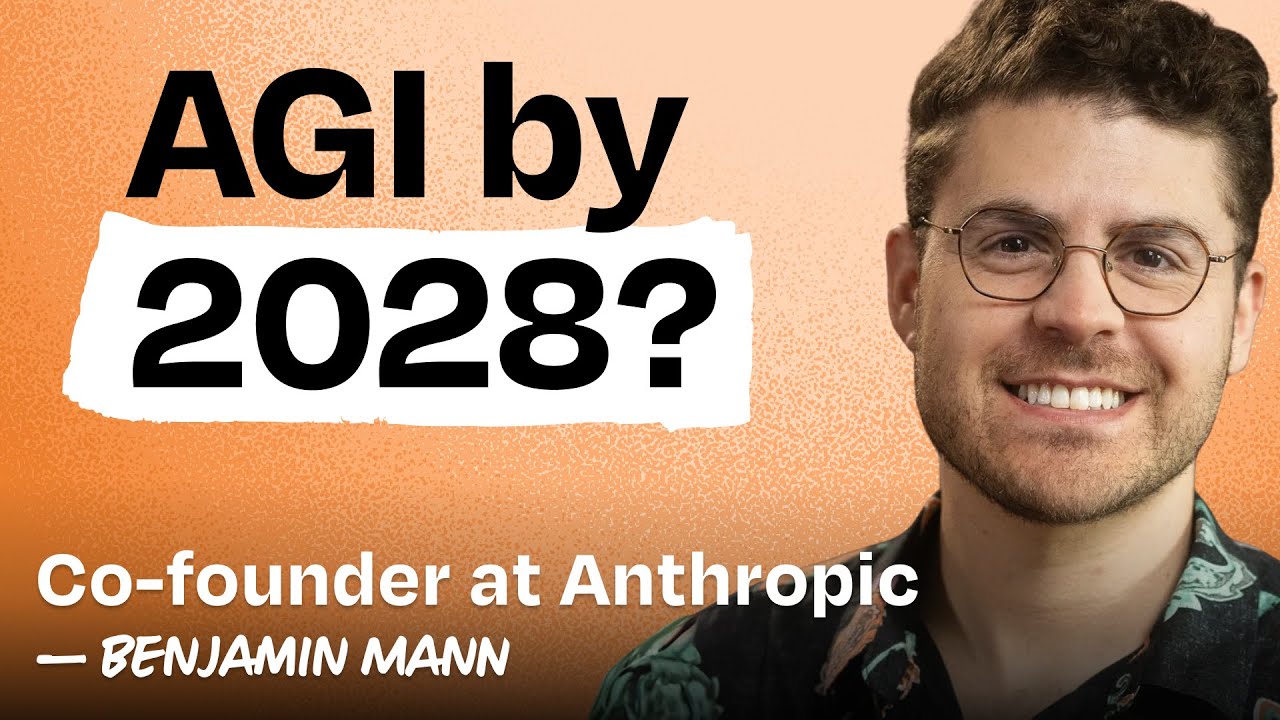
In a 2025 conversation about Claude 4, Mann described an earlier coding model's habit of making extra changes. His analogy was a server asking whether you wanted fries and a milkshake with the change you ordered. “No, just do the thing I asked for,” he said. It is a small joke with a serious premise. An autonomous system earns trust by resisting the temptation to be “helpful” in ways that create fresh work or risk.
The loop Mann's work keeps tightening
This feedback loop explains why product work belongs inside the safety story. Claude's use in coding exposes reward hacking, over-eagerness, and the complications of long-running tasks. Computer-use experiments reveal another class of problem. Give an agent a browser full of credentials and a mistaken click can send an email, leak information, or take an action that cannot be recalled. Mann has said Anthropic held back a broad consumer application because it did not yet trust the system with those consequences.
“The new models, they just do the thing.”Ben Mann on reducing unwanted coding changes in Claude 4
The tinker's workshop gets enormous
Anthropic Labs is the institutional version of Mann's workbench. The team incubates experiments around capabilities that have arrived before product conventions have caught up. It tries unpolished versions with early users, watches what works, and hands mature ideas to teams that can make them dependable. In January 2026, Anthropic expanded the group and moved Mike Krieger, Instagram's co-founder and Anthropic's former product chief, into Labs to build alongside Mann.
The workshop has already produced conspicuous results. Claude Code went from a research preview to what Anthropic described as a billion-dollar product in six months. The Model Context Protocol, an open method for connecting AI systems to tools and data, reached 100 million monthly downloads. Labs also incubated Skills, Claude in Chrome, and Cowork. These are no longer charming side projects. They are experiments whose successful form can become infrastructure.
The numbers are impressive mostly because of what they do to the old image of AI safety as an academic seminar conducted far from users. Mann occupies the awkward middle. He believes transformative systems may arrive soon. He also spends his time making those systems easier to use. Urgency pushes in both directions: build fast enough to understand the technology, and understand it well enough not to hand over the keys carelessly.
His older projects make the pattern easier to see. Webtendo turned a laptop into a local game console and phones into controllers. Mann obsessed over keeping latency below 30 milliseconds, chose a simple networking architecture, and wrote about the first time friends played together. They shouted, cheered, and groaned. The technical success was measured in human noise. Years later, he still judges AI in terms of what people can reliably do with it, only now the room is much larger and the stakes refuse to behave.
What to teach when the syllabus may expire
Mann's public mission is blunt: ensure that transformative AI has a positive effect on humanity's long-term future. The phrase can sound grand enough to float away. His personal account brings it down to earth. In conversation about raising children amid rapid technical change, he emphasized happiness, consideration, curiosity, and kindness over optimizing for conventional academic status. Memorized facts may lose value when a machine can supply them. Character remains stubbornly difficult to automate.
There is a quiet consistency here. Mann's career did not progress by clinging to the skill that had already paid off. He left Google, reconsidered his startup plan, entered a young research field, left OpenAI with colleagues, and moved inside Anthropic from research-adjacent engineering to products and then a lab built for uncertainty. Each turn exchanged a settled map for a more consequential question.
The title “engineer of last resort,” which Mann has used on LinkedIn, is partly comic and partly a job description. When the prototype is temperamental, the model is over-eager, or the organization needs a bridge between research and users, someone has to enter the untidy middle. The useful machine is rarely the clean diagram. It is the one that behaves when real people arrive.
Mann began with a phone that could not quite read a character. He now works on machines that can read, write, code, call tools, and occasionally do more than anyone sensibly requested. His problem has reversed. Capability is no longer the only scarce thing. Restraint is part of the engineering brief.
“My mission is to ensure transformative AI has a positive impact on humanity's long term future.”Ben Mann
A mad scientist may ask whether the machine can be made. A tinkerer wants to open the case. An engineer must also ask how it fails, who cleans up, and whether it should be switched on outside the workshop. Ben Mann has arranged his career so that all three characters keep showing up to the same meeting.