The fans at Gills Onions had a job: cool the onions arriving from the fields. There were six of them, each rated at 50 horsepower. They ran continuously. During a walkthrough, Cascade Energy asked a question with an awkwardly obvious answer: when no onions were in front of the fans, what were the fans cooling?
- Cascade pairs industrial engineers with energy coaches.
- Its Gazebo software connects projects to measured savings.
- Utilities, factories and public agencies buy the help.
Finding that question was the easy part. Turning it into a dependable operating routine took longer. That gap explains this company better than any catalogue of climate services.
Six fans. Two years. One new habit.
Gills put the idea on its list. Over the next two years, the team completed easier projects while Cascade’s engineer and coach stayed involved. Then came a choice: buy automation, or first test whether people could switch the fans as needed. Gills tried the manual approach.
Cascade’s case study credits that routine with approximately 1.2 million kilowatt-hours and $259,000 in annual savings. Training, signs beside switches and runtime monitoring help preserve the result. Savings also supported the team’s ability to invest in future automation.
The lesson is less about switches than permission. A familiar process can look inevitable until somebody asks what would happen if it changed. The sensible next move is a controlled trial that protects production, followed by measurement. Buying equipment can come later.
Approximate avoided energy costs reported in Cascade’s case study. One facility, one operating change.
The engineer brings a coach
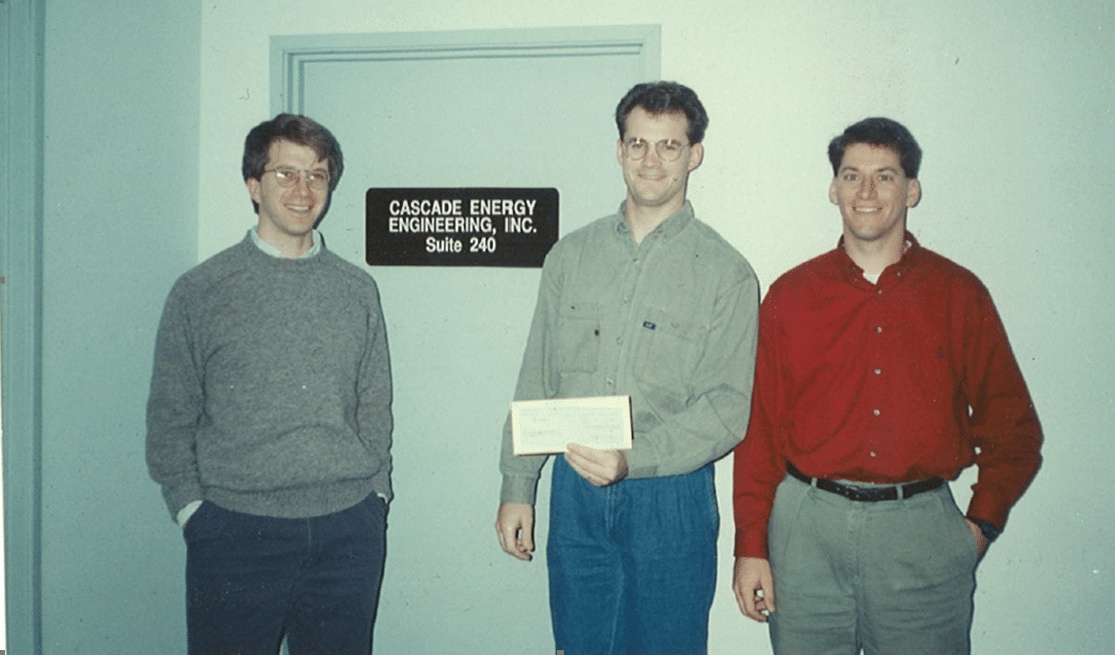
Cascade began in 1993 with Marcus Wilcox, Mike McDevitt and Rob Morton. Its early specialty was industrial refrigeration, a useful education in systems where small adjustments can matter and careless adjustments can threaten production. Dan Brown arrived in 1998 as the founders’ first full-time hire. He became CEO in January 2022.
Today, Cascade designs and runs utility efficiency programs, advises corporate energy teams and works with public agencies. Its expertise includes refrigeration, water and wastewater, food production, industrial heat pumps and retrocommissioning: finding ways to make existing systems perform better.
Its strategic energy management programs, or SEM, pair technical knowledge with workshops, site visits and coaching. An engineer can identify a better setpoint. A coach helps people agree who will change it, record the result and keep the next shift informed. Both jobs matter.
An energy project has to survive the next shift.The practical challenge
That combination gives Cascade a specific place in the market: between an engineering recommendation and a continuing management practice. Other firms deliver SEM, too. Cascade’s distinguishing mix is its industrial background, hands-on program delivery and software built around the same work.
A dashboard with unfinished business
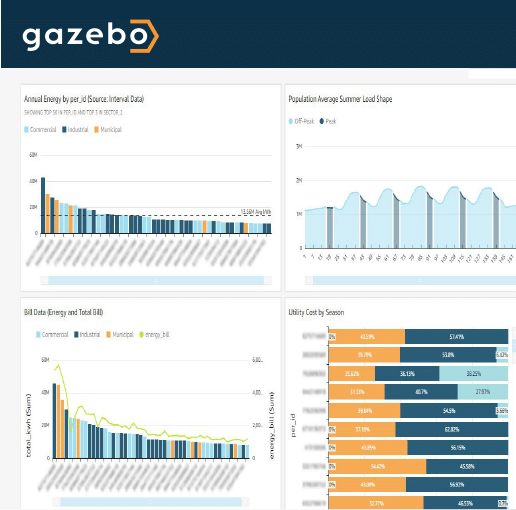
Gazebo, Cascade’s cloud platform, tracks energy performance, models savings and organizes projects. For a facility manager, that means keeping the opportunity list beside the evidence of what happened after implementation. For a utility, it means seeing activity across many participating sites.
Energy Trust of Oregon selected Gazebo in 2021 as its meter-based programs grew to hundreds of active participants. The administrative problem was concrete: managing models, project implementation and continuous savings measurement at increasing scale.
The business combines utility implementation contracts, engineering and consulting services, and recurring software subscriptions. A participant may receive services funded through a utility program; the San Diego SEM program described by the regional economic development corporation is one example. Eligibility and the effort required still matter.
Gazebo Connect makes one part of the price visible. It bundles metering hardware and software, with readings every 15 minutes. Published monthly prices are $245 per meter for Monitor, $375 for Optimize and $475 for Partner. Installation labor and utility metering fees are additional; optional integrations can also cost extra.
Smaller customers, less paperwork
Not every business can assemble an energy team. Cascade’s streamlined programs use simpler assessments, targeted incentives and pre-approved upgrades to reach smaller industrial and agricultural customers.
In one program launched in 2008, small-project implementation rose from fewer than 30 projects a year in 2007 to 700 in 2016. Cascade describes a statewide network of growers, vendors, industry groups and irrigation districts. Removing administrative friction was part of the engineering problem.
The practical buyer is often somebody already carrying several jobs: a maintenance manager, an operations leader, a utility program administrator. Cascade sells expertise and follow-through to people whose savings opportunities compete with today’s production schedule.
From saving electricity to shifting it
Two additions have widened that proposition. Fresh Coast Climate Solutions joined in January 2025, adding greenhouse gas inventories, climate planning and sustainability services. In August 2026, Cascade acquired Yield Energy, bringing an automated distributed energy resource management platform and a 200-megawatt agricultural demand flexibility portfolio.
Flexibility addresses a different question from efficiency: when should equipment draw power? Yield’s work lets growers earn payments for adjusting irrigation loads around grid needs. Extending that approach across industrial customers is the acquisition’s stated ambition, rather than an outcome already demonstrated everywhere.
There are limits. A process with no safe operating flexibility cannot simply copy a fan shutdown. A dashboard needs usable meter data and people able to act on it. Behavioral savings need training and checks as staff and schedules change. The transferable idea is to test assumptions within the actual constraints of the plant.
The people who own the follow-through
Cascade transferred full ownership to an employee stock ownership plan in November 2021. Its explanation was unusually plain: “We are doing this so we can keep Cascade as Cascade.”
Employee ownership does not prove an energy project will succeed. It does fit a business whose work stretches across repeated visits, operating changes and years of measurement. Cascade’s most useful proposition is patient and practical: help the people running a facility find the waste, change the routine, and keep checking whether the change holds.