Consider two ways to sell an egg. Put twelve in a carton and the price is pulled around by the supply of eggs everywhere else. Cook it, fold it and put it into somebody’s breakfast routine, and you have added something else to the transaction: time saved. Cal-Maine Foods is spending hundreds of millions of dollars on the difference.
- Cal-Maine supplies fresh eggs to major retailers and foodservice buyers.
- A $258 million acquisition added a substantial prepared-breakfast business.
- More products offer new ways to earn, but falling egg prices still hurt.
There is a pleasing joke in its stock symbol, CALM. The company operates in a market that rarely promises calm. Bird flu can remove production. Rebuilt flocks can bring supply back. Prices move; a hen continues to need feeding. The question behind Cal-Maine’s expansion is whether an egg company can capture more of breakfast without inheriting an equally troublesome collection of new problems.
A truck, a merger, a machine
The business began in 1957 with Fred Adams, Jr., a used truck and feed deliveries around Jackson, Mississippi. A chicken farm followed. In 1969, Adams Foods merged with Dairy Fresh Products of California and Maine Egg Farms. The resulting name was practically a map: Cal-Maine.
What grew from that combination was an operating system for a perishable product. Cal-Maine’s business reaches through breeding, hatcheries, feed milling, raising young hens, egg production, grading, packaging and distribution. The unglamorous connections matter. A supermarket needs the right eggs, in the right carton, arriving reliably enough that shoppers never have to think about the machinery behind them.
Its customers include grocery chains, warehouse clubs and distributors. Foodservice channels carry its output toward restaurants, hospitals, schools and hotels. The problem it solves is partly agricultural and partly logistical: keep a fragile, everyday protein moving through a large commercial system. Cal-Maine went public in 1996 and first sold more than a billion dozen eggs annually in 2014.
The shelf contains several versions of that service. There are conventional eggs, private-label cartons and specialty choices such as cage-free, organic and pasture-raised. Eggland’s Best and Land O’ Lakes appear through licensed arrangements; Farmhouse Eggs is another offering. A shopper chooses a carton. The retailer chooses a supplier capable of supporting that choice repeatedly.
The $258 million breakfast order
A raw egg leaves the cooking to somebody else. Cal-Maine has increasingly bought businesses that do more of the work. MeadowCreek began operating in 2023 with hard-cooked eggs. In September 2024, Cal-Maine put $6.75 million into a new Crepini venture for a 51% interest, funding equipment, assets and working capital while its partner contributed the existing business.
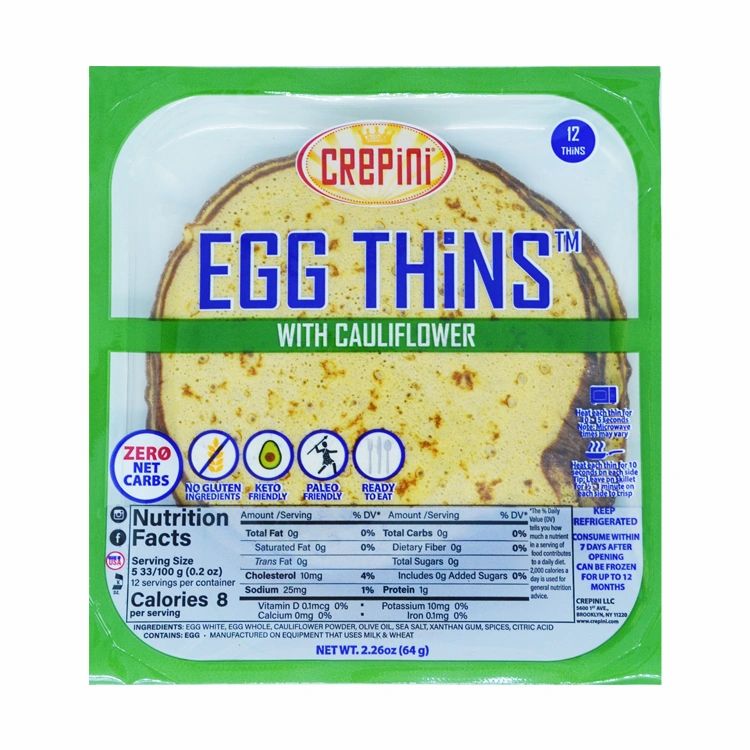
Crepini makes the shift easy to picture. Its wraps can stand in for tortillas; its broader range includes crepes and protein pancakes. The customer is buying a format that fits a meal. Cal-Maine brings supply-chain scale and established buyer relationships to a business that already knows how to make that format.
Then came Echo Lake Foods. The June 2025 acquisition carried an announced cash price of approximately $258 million, with an expected $28 million tax benefit. Echo Lake brought ready-to-eat egg products and breakfast foods, including omelets, egg patties, waffles and pancakes. It had generated about $240 million in 2024 revenue. This was a functioning manufacturing business with customers, rather than a breakfast concept waiting for a factory.
The purchases kept connecting the chain. In March 2026, Cal-Maine announced approximately $128.5 million for Creighton Brothers assets, including Crystal Lake, adding shell eggs, egg products and prepared foods. In May it acquired selected Van’s Foods assets, bringing frozen waffles and pancakes into the portfolio. A subsequent filing put that purchase at approximately $24.8 million.
Management’s stated direction is more predictable earnings through a different product mix. In July 2026, the company announced another $54 million investment in prepared-foods capacity. The practical distinction from a specialist egg farm is widening: Cal-Maine can supply an ingredient, a branded carton or part of a finished breakfast.
The part scale cannot fix
Integration does not confer immunity. In April 2024, highly pathogenic avian influenza at a Texas facility led to the depopulation of approximately 1.6 million laying hens and 337,000 young birds. Production stopped temporarily. The company sought supply from other facilities. Here was a concrete limit on the machine: a biological event could interrupt it before a sales team had anything to negotiate.
“Conventional Shell Egg pricing remains under pressure from an industry supply imbalance”
Sherman Miller, president and CEO · September 2026
Customer scale has its own limits. Walmart, including Sam’s Club, accounted for 30% of fiscal 2026 sales. That relationship gives Cal-Maine substantial reach, alongside substantial dependence. Alternative egg producers compete on price, service and quality. Prepared foods introduce competition from established manufacturers and private-label suppliers, too.
Pricing also brought legal scrutiny. In June 2026, the Justice Department and 17 states alleged coordinated manipulation of egg-price benchmarks. Cal-Maine agreed to compliance measures, a 30-million-egg donation and $1.5 million in payments to the states, without admitting wrongdoing. The announced resolution was subject to court approval. The allegations deserve that distinction; they also belong in any account of the company’s pricing environment.
The latest results put the diversification argument under pressure. First-quarter fiscal 2027 sales fell 41.5% to $539.6 million, and Cal-Maine recorded a $58.6 million attributable net loss. Specialty eggs and prepared foods together represented 54.1% of sales. A larger share of a shrinking total is useful context, not proof that earnings have become dependable.
Follow the egg one step further
The lesson is available to businesses much smaller than Cal-Maine: find the next task your customer would gladly hand over. Use relationships and operating knowledge already earned. Buy capability when building it would take too long. Then check whether the new activity pays for its factories, integration and complexity. Cal-Maine’s breakfast expansion offers a test of that logic. The egg has moved beyond the carton. The results still have to follow.