In June 2021, a meat company announced that it had paid computer criminals $11 million. The interesting detail was the timing. By the time JBS USA paid, the vast majority of its facilities were already operating. The ransom, the company said, addressed the risk of further trouble. Getting the machinery moving and getting comfortable enough to promise customers their deliveries were two different problems.
That distinction is a useful introduction to JBS USA. A shopper encounters a steak, bacon or a bag of chicken. Behind it sits a system of purchasing, processing, packaging, refrigeration and transport. Its value depends on all those activities arriving at the same conclusion: dinner will be available when somebody wants it.
- JBS USA supplies fresh meat, poultry and prepared foods to retail and foodservice buyers.
- Its American platform began with the 2007 Swift acquisition.
- Convenience is driving its next manufacturing investments.
A company assembled, one factory at a time
The Brazilian parent began in 1953 with José Batista Sobrinho. The American operation has a different birthday. In 2007, JBS bought Swift & Company and established the platform that became JBS USA. Buying Swift supplied an operating business and a presence in the United States and Australia. This was expansion through acquisition, with production capacity attached.
More purchases broadened the menu. A controlling interest in Pilgrim’s Pride followed in 2009. Cargill’s pork business joined in 2015; Plumrose USA in 2017; Empire Packing in 2020. Each deal added a different piece: chicken, pork, prepared meats, retail packaging. The resulting business can participate at several points between livestock and lunch.
Its customers include grocers, foodservice distributors, restaurants and further processors. Some want fresh cuts. Others want something portioned, packaged or cooked. JBS Prepared Foods supplies both its own brands and private-label offerings. A manufacturer can therefore earn a place in a shopping basket even when the name printed most prominently on the package belongs to a retailer.
- 01Source
- 02Process
- 03Prepare
- 04Deliver
Retailers and restaurants can buy at different stages. More preparation means fewer steps in their own kitchens.
The product is also a smaller to-do list
Consider case-ready meat. Cutting and packaging happen before the product reaches the store. For a buyer, that changes who performs the work. Fully cooked bacon takes the same principle further. The customer purchases food with another task already completed. The economic proposition extends beyond the meat’s weight to the time and handling removed downstream.
That is the logic behind the prepared-foods push. In August 2025, JBS USA announced an agreement to buy and expand a 186,000-square-foot facility in Ankeny, Iowa. The proposed investment was $100 million, with approximately 400 jobs when all phases were finished. The planned output: fully cooked bacon and sausage.
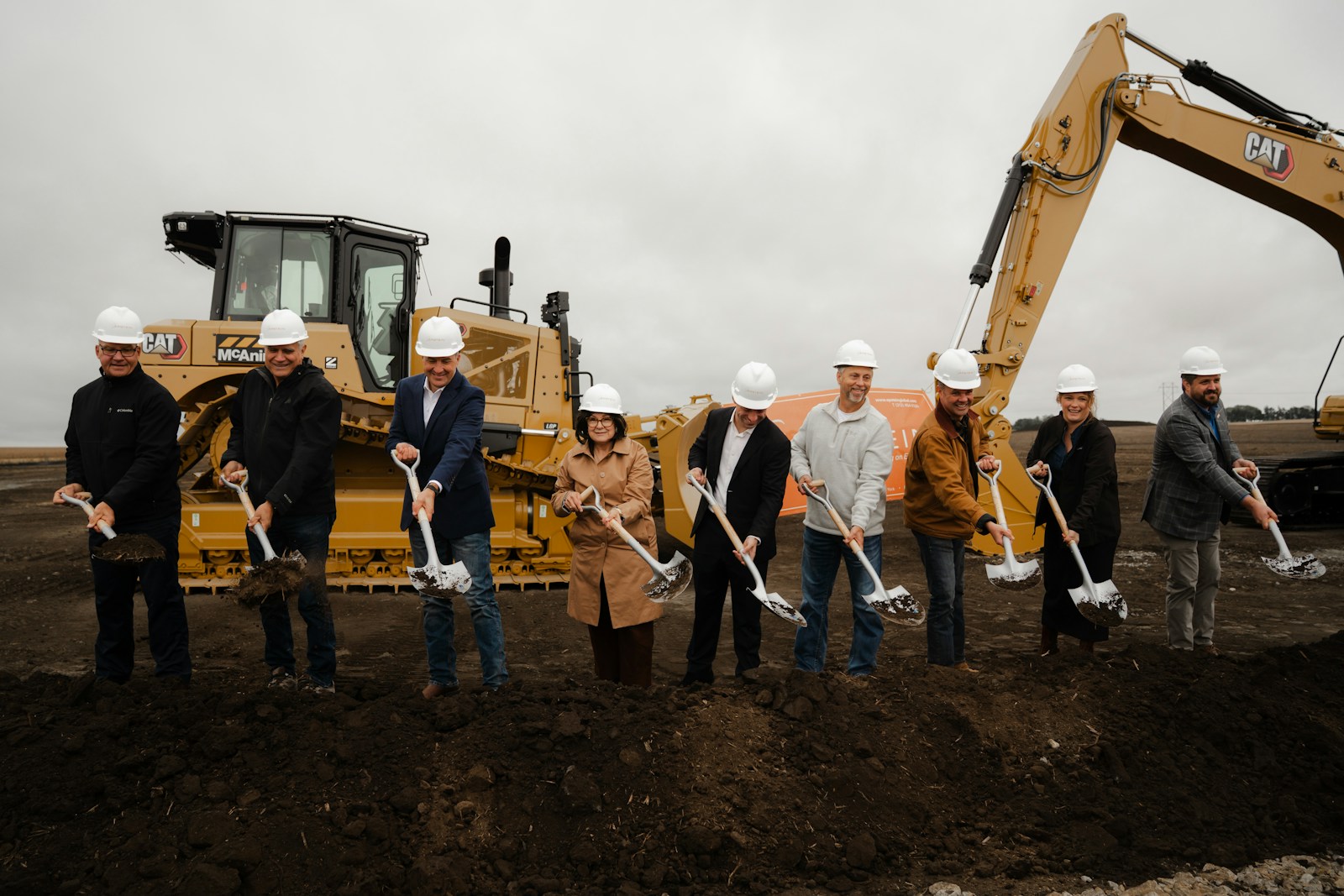
Perry, Iowa, illustrates the fresh-sausage side. At its October 2025 groundbreaking, JBS described a $135 million project designed for 130 million pounds annually. It outlined 250 initial jobs, eventually rising to 500. Those were project plans, not a report of finished output. An announced factory still has to become a dependable supplier.
By October 2026, prepared-foods president Sergio Nahuz was describing convenience as a central growth priority. He reported that Pilgrim’s Just Bare had passed $1 billion in annual retail sales in 2025. That figure measures retail sales of the brand, rather than revenue booked by JBS USA. Still, it helps explain the interest in products that shorten the journey from freezer to plate.
Scale comes with a dependency problem
There are alternatives. Tyson and Cargill overlap with parts of the meat business; Smithfield competes in pork; Hormel in selected prepared-food categories. JBS USA’s breadth offers buyers several proteins and formats within a connected operating network. The practical test is whether that network delivers the right specification, consistently, at an acceptable price.
The 2021 cyberattack showed how that proposition can fracture. Computer systems failed before physical capacity disappeared. JBS credited redundant systems and encrypted backups with helping its recovery. The episode suggests a lesson for any operator: recovery plans need to restore the customer’s service, including ordering and delivery confidence, alongside production.
“This was a very difficult decision to make for our company and for me personally.”Andre Nogueira, then CEO, on the 2021 ransom payment
Nor does having a large network guarantee demand for every new product. JBS closed Planterra, its American plant-based business, in 2022, roughly two years after launch. Its spokesperson said the company would focus on plant-based operations in Brazil and Europe. The decision narrowed a geographic bet; it did not abandon the category everywhere.
The promises have operating costs, too
In November 2025, New York’s attorney general announced a $1.1 million settlement over allegedly misleading climate claims. JBS USA agreed to reform environmental marketing and submit annual compliance reports for three years. The attorney general said its net-zero advertising lacked substantiation. For buyers assessing responsible sourcing, a distant target needs present evidence.
The workforce story also requires specifics. Better Futures, launched in 2021, helps eligible employees and their child dependents attend community or technical college. Its published terms describe last-dollar assistance after grants and scholarships, capped at $1,750 per semester, $3,500 annually and $7,000 total per student. Additional job-related funding may be approved. Books, fees and scheduling still matter.
Those benefits sit alongside accountability obligations. A January 2025 Labor Department agreement committed JBS USA to $4 million for people and communities affected by unlawful child labor, plus stronger oversight of contractors and suppliers. A distributed production network requires scrutiny of the people doing the work, including those employed by someone else.
What can another business copy? Start with the customer’s unfinished task. Package it, remove a preparation step, make delivery dependable. That approach works only when customers value the saved work enough to support its cost, and when demand can keep the equipment useful. JBS USA’s factories make food. Their commercial purpose is to make somebody else’s day easier.