Greeley keeps turning up in Wesley Batista Filho’s life. In 2011, it was where he joined JBS as an intern on a beef production line. In 2016, it was the base for a return with responsibility for the U.S. fed-beef business. In 2023, he came back as chief executive of JBS USA. An executive career usually looks tidier when drawn as a ladder. His makes more sense with a return ticket.
The repetition gives his story a useful scale. A plant, a business unit, a North American platform: each visit put a larger operation around the same Colorado starting point. Now JBS has announced another appointment. In January 2027, Filho is scheduled to succeed Gilberto Tomazoni as global CEO. For the moment, he is still doing the American job while preparing for the wider one.
The first return starts on the line
There is a family name to account for before any discussion of apprenticeship. Filho is the son of Wesley Batista and grandson of José Batista Sobrinho, who founded JBS. He arrived at the business with a connection most interns cannot put on an application. That fact belongs beside the production-line beginning. The two details explain different things about the same career.
His education had already taken him abroad. At fifteen, he wanted to study in Switzerland; his father agreed on the condition that he study in German. He chose Lyceum Alpinum Zuoz, then later attended Colorado State University. He left university to concentrate on his internship. It was an early decision to make the company his principal classroom.
There are lighter details in his recollections of school: skiing, friends at Walther’s Café-Restaurant, the independence of learning to travel alone. His account of leadership was equally plain. Asked what a successful CEO needed to do, he answered, you focus on people!
That is a short sentence with a long list of practical obligations attached.
A map instead of a ladder
The first Greeley chapter gave way to beef export sales in São Paulo and then responsibility for beef operations in Uruguay and Paraguay in 2012 and 2013. Canada followed. He served as president of JBS Canada in Calgary in 2014 and 2015, before returning to Colorado to run JBS USA Fed Beef in 2016 and 2017.
Look at that itinerary and the family business becomes several businesses. Selling exports and running a plant put different questions on a desk. A Canadian operation and a South American one introduce different producers, customers and working arrangements. The transfers gave him repeated changes of setting within an organization whose name stayed the same.
- 2011Production-line intern
- 2016U.S. fed-beef leader
- 2023JBS USA chief executive
Same city. A wider operating brief each time.
Back in Brazil, he took on JBS Brazil and subsequently added Seara in 2020. That expanded the product education beyond beef into poultry, pork and value-added foods. In 2022 came global operations responsibilities spanning North America, South America, Oceania and Europe. By his third Greeley arrival, the route had crossed both borders and product categories.
The 2023 appointment also had an ordinary corporate detail behind the family narrative: a retiring predecessor. Tim Schellpeper’s decision to retire opened the JBS USA role that Filho took that May. Succession inside the American business preceded the announced succession at the global company. Read together, the two appointments show how his operating responsibilities widened in stages, even as the family connection remained a constant part of the picture.
A bell, a surname and a handover
In June 2025, three generations of the family story converged at the New York Stock Exchange. José Batista Sobrinho rang the opening bell to mark JBS’s U.S. listing. He had started the business in Anápolis, Goiás, in 1953. The company still carries his initials. Some businesses spend considerable money searching for a name; this one kept the founder’s.
Filho participated in the accompanying investor presentation alongside his father, Tomazoni and chief financial officer Guilherme Cavalcanti. It placed him in a different setting from the production floor, explaining the business to analysts and investors. The questions around a listed company include what it earns, where it invests and how leadership answers for those choices.
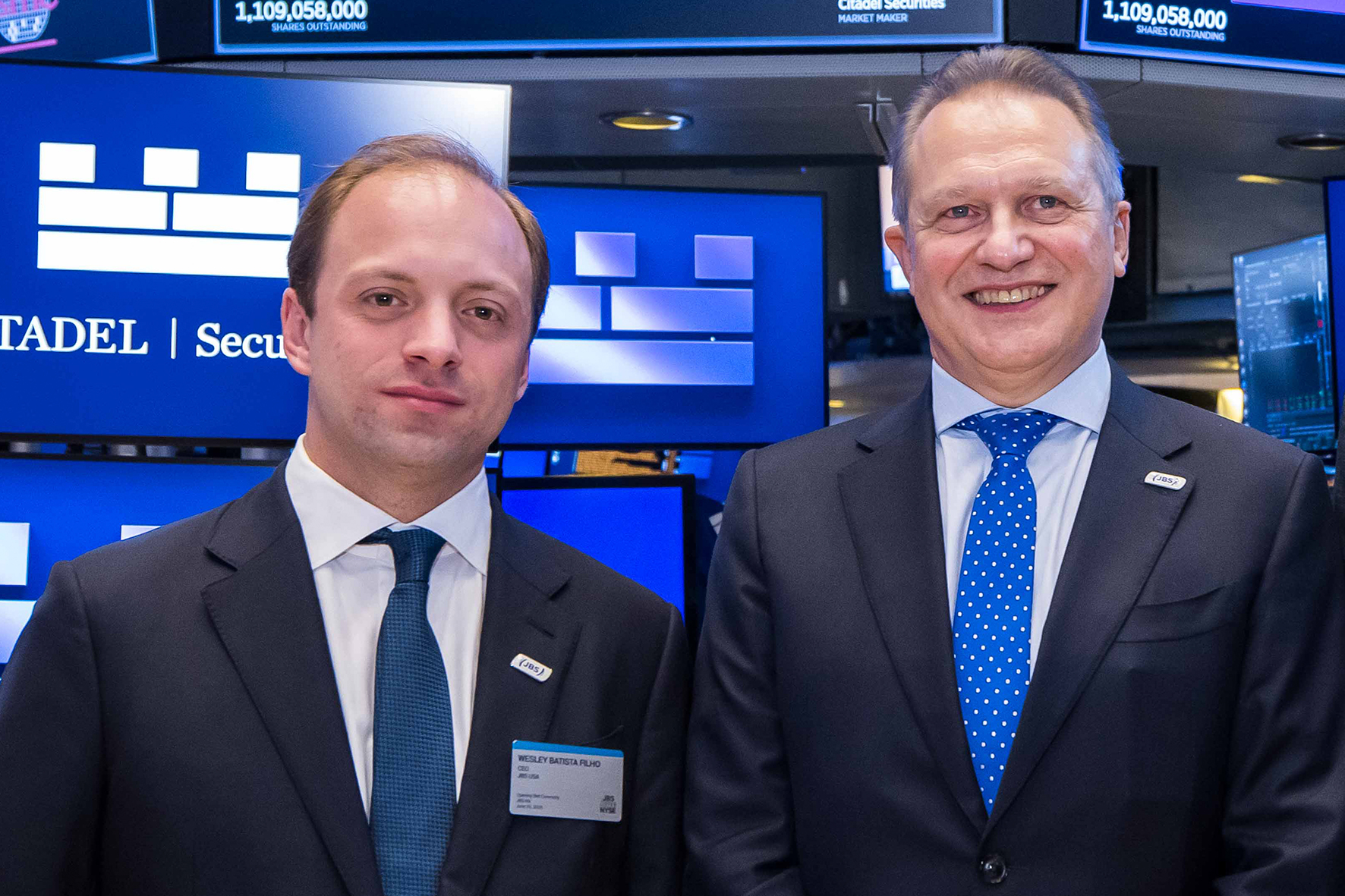
The August 2026 succession announcement made the next responsibility explicit. Tomazoni would oversee the transition, then become vice-chairman and senior advisor. The arrangement preserves an experienced colleague’s involvement while moving executive responsibility to Filho. It also makes the timing important: an incoming chief executive has been named, with several months of work before the appointment takes effect.
The strategy comes with a shovel
For a less formal view of Filho’s work, go to Perry, Iowa. At the October 14, 2025, groundbreaking for a planned sausage facility, executives and public officials stood with shovels in front of construction equipment. The setting is obligingly literal. A capital-investment plan eventually needs somewhere to put the building.
JBS committed $135 million to the Perry project, with plans for 500 direct jobs at full staffing. The proposed annual output was 130 million pounds of sausage. Those are plans for a particular factory, with consequences for a particular town. Perry had lost a Tyson pork plant in 2024; a new employer mattered beyond the boundaries of the construction site.
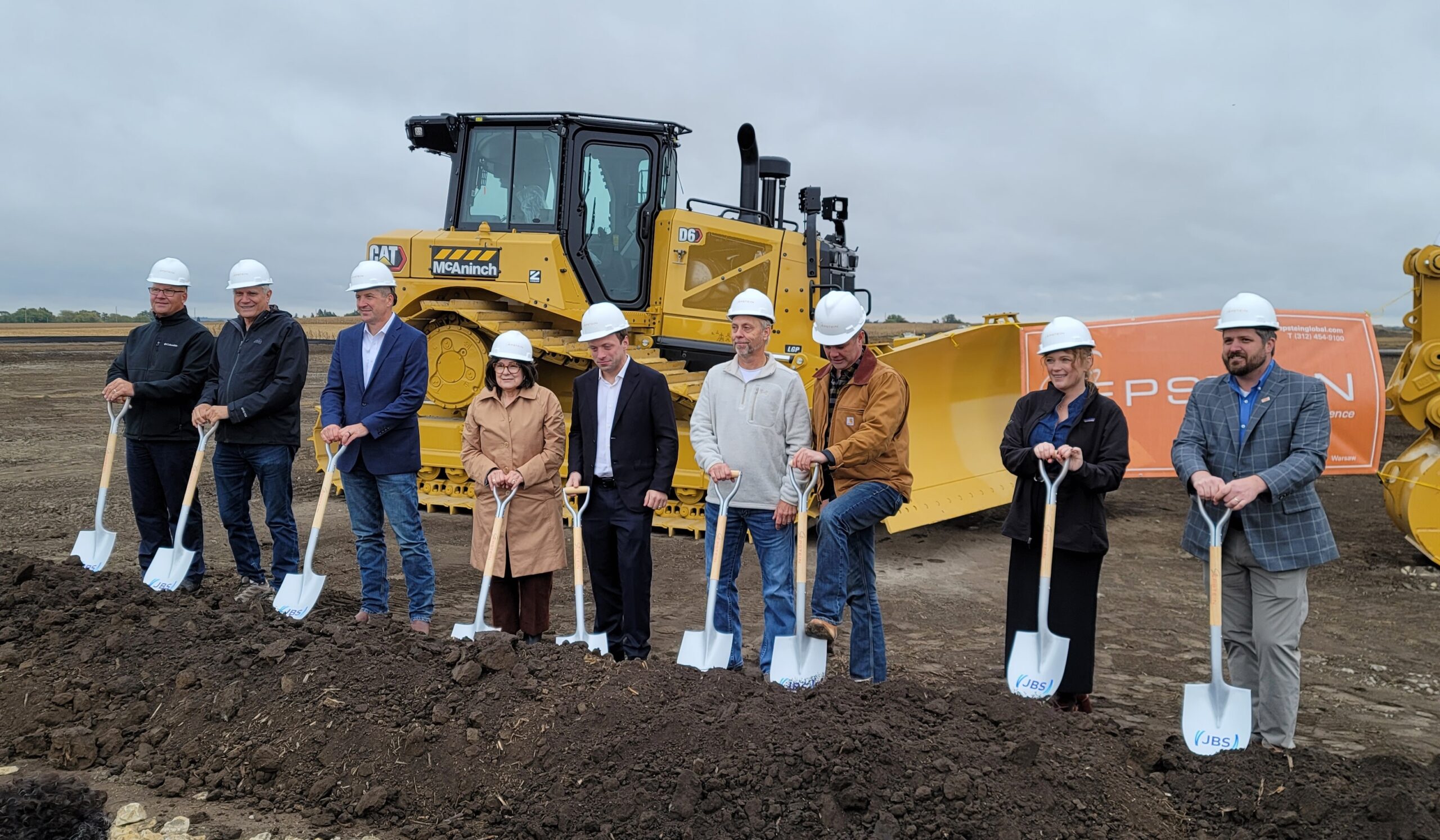
The companion investment was in Ankeny, where JBS announced a $100 million plan for a former Hy-Vee facility making ready-to-eat bacon and sausage. The two sites were intended to work together, with Perry supplying sausage for further preparation. The commercial idea is understandable without a spreadsheet: perform more of the preparation before the product reaches the customer.
That puts some substance into the phrase “value-added foods,” which otherwise sounds as though it escaped from a presentation. Cooking, processing and preparing products require their own facilities and customers. Filho’s earlier Seara responsibilities make that part of his operating history relevant to the American expansion. The product on the truck changes, and so does the work behind it.
The less ceremonial part of the job
Groundbreakings are the photogenic side of running a production network. Closures have a different audience. In June 2026, JBS USA announced planned shutdowns of its Souderton, Pennsylvania, beef facility and a value-added facility in Memphis, Tennessee. Filho acknowledged the direct effects on employees and communities. The company outlined transfers, support and plans to move production elsewhere in its network.
Then the Souderton story changed. In August, JBS announced a conversion to dedicated value-added operations that would preserve approximately 400 jobs. Beef harvesting and processing were still scheduled to end. More than $30 million of investment over the next decade would develop the site’s value-added and case-ready capabilities. A factory could remain an employer while doing different work.
Under the August 2026 conversion plan, with more than $30 million of investment planned over the following decade.
The revised plan involved Pennsylvania officials, labor representatives and local stakeholders. It gives a concrete meaning to an executive’s promise to work with people. A decision had to address products and customers, but also a workforce and a place. Anyone judging the tenure should keep both the closure announcement and the subsequent revision in view.
A future built in rooms and pipes
Greeley itself received another investment promise in February 2025: $50 million for a new distribution center, part of a $200 million beef-facility program. The other $150 million was allocated to Cactus, Texas, for a fabrication floor and an expanded ground-beef room. These are practical settings for a chief executive’s ambitions. Food businesses need rooms that work and a dependable route out of them.
Filho said the company saw an opportunity to invest in the United States. The announced projects were intended to improve efficiency and provide potential for additional capacity. Their proportions are revealing: the larger allocation went to changing processing space in Texas, while the Colorado project focused on distribution. Growth involves deciding where the next dollar does useful work.
Announced investment, February 2025. Allocations, not reported spending.
Another project addressed what comes out of production. JBS and GreenGasUSA announced plans to capture biogas from wastewater and upgrade it to pipeline-quality renewable natural gas. The initial sites were in Nebraska, Utah and South Carolina. Filho supported the approach as a way to use a byproduct and reduce fossil-fuel use. The mechanism is more useful to understand than any broad environmental slogan.
Wastewater, gas upgrading, distribution centers, sausage preparation: the nouns accumulate. They are a fair description of the operating detail beneath the international title. An ambition to serve more customers ultimately has to survive contact with machinery, deliveries, investment decisions and the people who keep a facility running.
For Filho, these projects also put his work on a different timetable from the promotions. An investment announced during one assignment may be built, expanded or assessed during the next. Moving to the global role will leave him connected to American decisions he helped introduce. His route through the company has repeatedly brought that kind of continuity: a former operating brief becomes part of a larger one.
January is still ahead
“I look forward to working with our teams around the world as we continue building an even stronger JBS”
Wesley Batista Filho · August 2026
In his succession statement, Filho set out priorities covering employees, customers, producer partners, operations and long-term shareholder value. That list spans groups whose interests do not automatically move together. A plant investment takes time; a customer needs a delivery; an employee needs to know what a change means. Managing the company means working across those different clocks.
For now, the latest return to Greeley remains his base for the American assignment. The next job expands the map again. His surname supplies a connection to the beginning of JBS; his operating assignments supply the route through it. January will bring the title. The work will still require decisions about what happens inside each plant, and what happens to the town outside.
Follow the story
Interviews, announcements and the people behind the business.