An office suite can be a small act of autobiography. When Monfort Companies moved into 1900 Lawrence Street in Denver, it chose Suite 1930, a number that remembers the founding year of the family’s cattle business. Kenneth Monfort’s company now works in real estate, private investments and operating businesses. Still, the old date gets a room of its own. In a business devoted to deciding what comes next, the past has apparently negotiated a very reasonable lease.
Monfort became chief executive on January 1, 2026, succeeding Alon Mor, who moved to executive chairman. The promotion gave the founder responsibility for the company’s overall strategy, operations and investment activity. It also put a familiar Colorado surname at the center of an unfinished argument: how do you give downtown Denver a future while keeping enough of its past for people to recognize the place?
His answer has involved country music, commercial property, housing and a considerable number of meetings. On the 1900 block of Market Street, near Coors Field, the ambitions have been visible enough to invite both applause and objections. A bar can open. A club can close. A beloved corner can resist the neat logic of a redevelopment drawing. For Monfort, all three have happened within a few doors of one another.
Greeley stays in the picture
Born and raised in Greeley, Monfort grew up with a family history rooted in agriculture. His grandfather, Kenneth W. Monfort, helped build the cattle and meatpacking enterprise that was sold to ConAgra in 1987. The younger Kenneth carries the name into a different kind of business, but the connection to Northern Colorado remains part of his public account of himself.
He studied finance and real estate at the University of Denver’s Daniels College of Business. The combination is a useful clue to the work that followed: the financial arrangement and the physical place belong in the same conversation. He founded Monfort Companies in 2011, beginning with commercial real estate projects across Colorado before helping expand its presence in Denver’s LoDo and Ballpark neighborhoods.
The family’s baseball connections make that geography particularly legible. His father, Charlie Monfort, and uncle, Dick Monfort, are Rockies owners. Coors Field is a family landmark as well as a neighborhood anchor. Kenneth’s own public work, however, has concentrated on the properties and businesses around the stadium, where the question is what people do before the first pitch and after the final out.
In 2017, the company leased 4,000 square feet on Blake Street, across from the ballpark. Monfort made an unusually appealing case for office location: the move would let the team “catch a few innings throughout the week.” There are solemn ways to explain a real estate decision. Proximity to baseball has the advantage of being comprehensible to almost everyone.
“catch a few innings throughout the week”
Kenneth Monfort, on the company’s 2017 office move
A block, with several ambitions
By 2019, Monfort was working with Jason Marcotte and Matt Runyon on a change at 1946 Market Street. They had acquired the property occupied by LoDo’s Bar and Grill, a longstanding neighborhood drinking spot, with plans to bring in Dierks Bentley’s Whiskey Row. Bentley and Riot Hospitality Group supplied a recognizable entertainment concept; the local partnership supplied a Denver setting.
The redevelopment called for renovation of existing buildings, an addition and a rooftop component. At the 2021 groundbreaking, the project brought together the country singer, city leadership and the development team. It was an example of the relationships these places require: an entertainer’s name, an operator’s experience, architects, builders and financing, all attached to one street address.
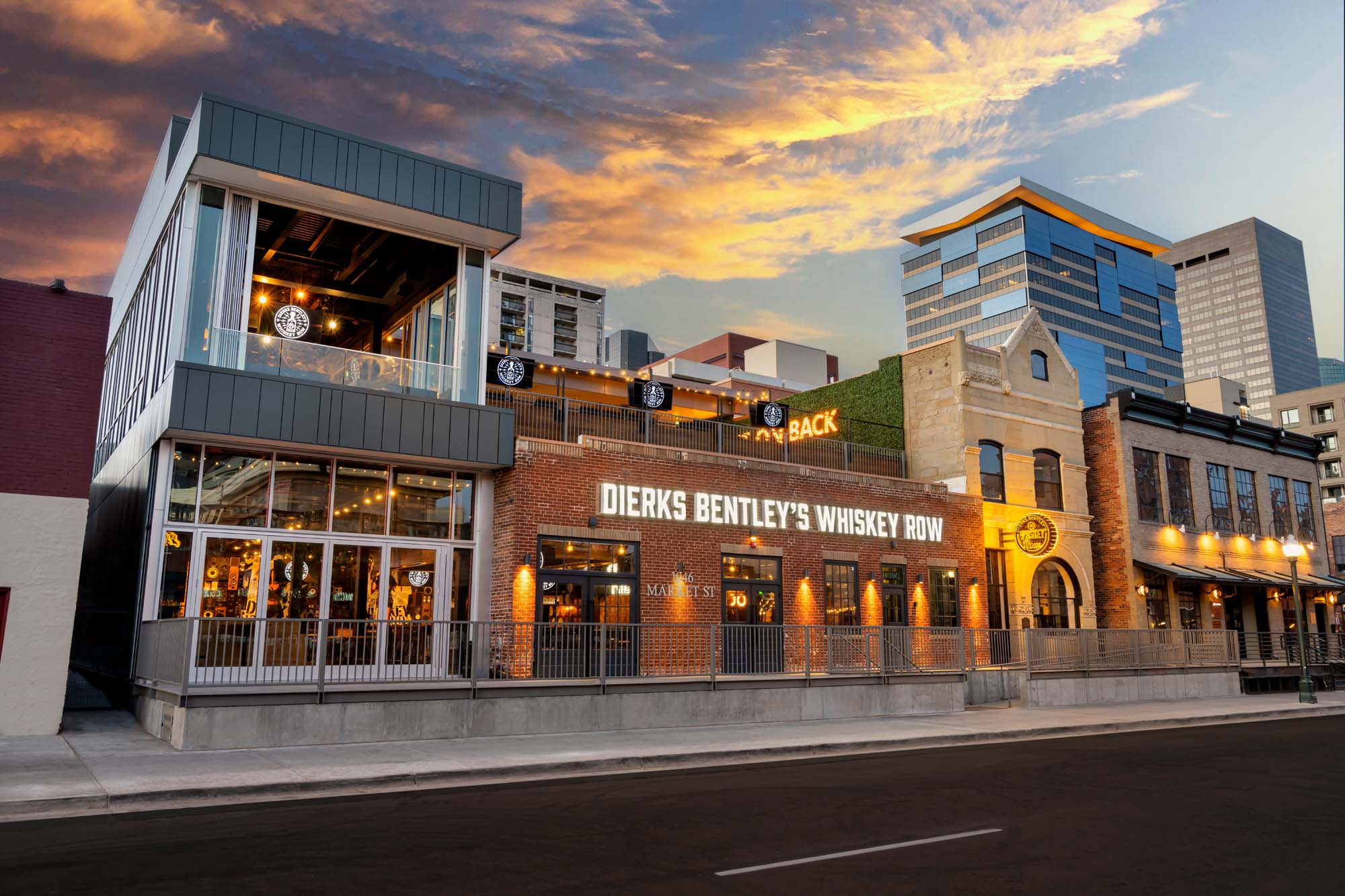
Whiskey Row opened on New Year’s Eve in 2021. The partnership sold the real estate for $24 million in 2022. That distinction matters in Monfort’s story: the property and the hospitality business have separate lives. Selling a building does not necessarily end an investor’s involvement in the business inside it; Monfort retained a stake in Whiskey Row’s operation.
The next venue was Riot House, a redevelopment at 1920 Market Street in a building that had once appeared on MTV’s The Real World. The address had already endured one form of entertainment; another arrived with a restaurant, bar, dance floor and rooftop ambitions. The partnership’s November 2022 groundbreaking also announced the acquisition of the nearby former El Chapultepec and Giggling Grizzly properties.
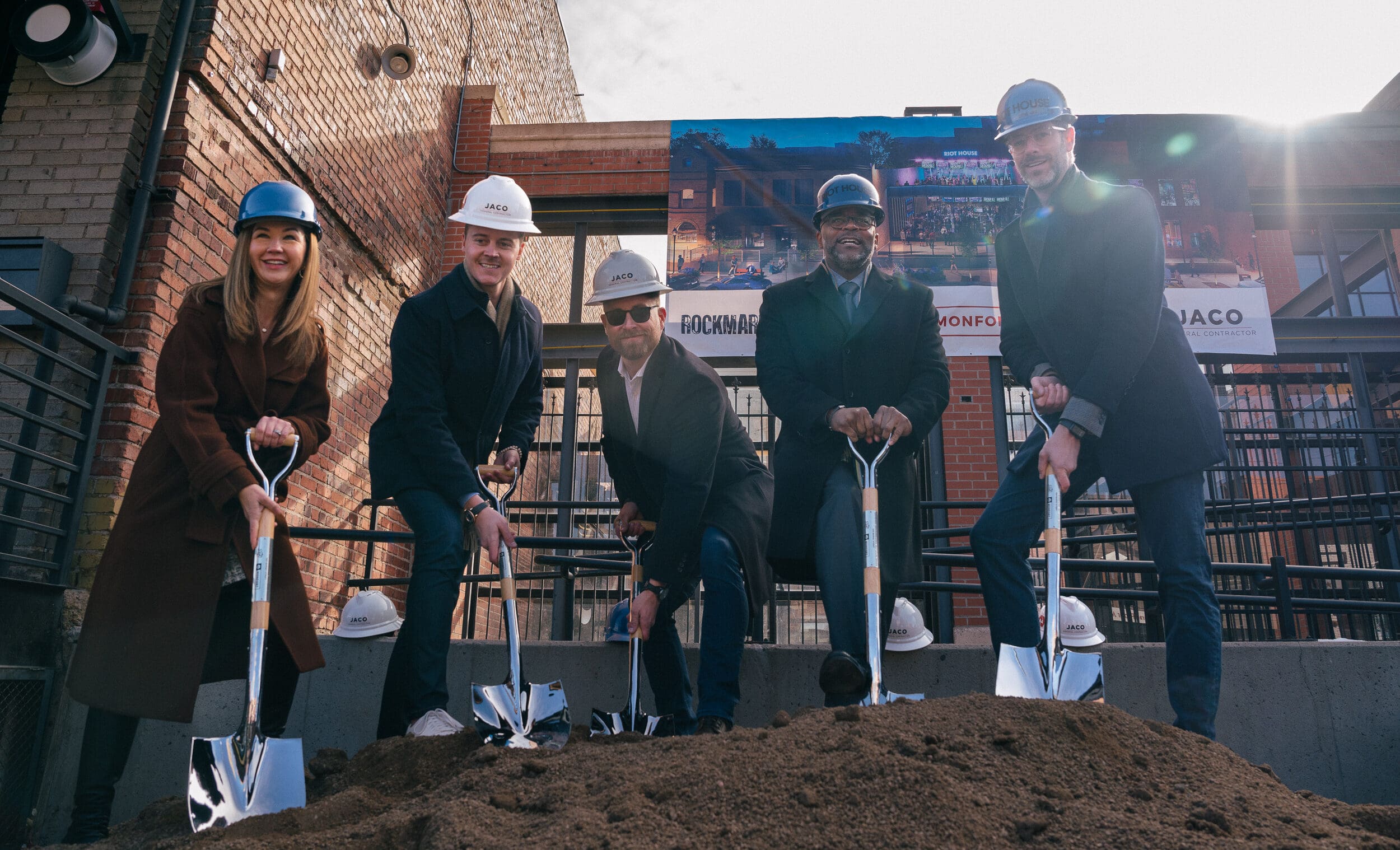
These were connected investments, intended to help make the Ballpark neighborhood a destination. Their proximity made the strategy easy to see. Someone visiting one venue might spend time elsewhere on the same block. The business proposition depended on a street becoming more than a collection of individually improved interiors.
The corner that answered back
El Chapultepec brought a different kind of inheritance into the picture. The jazz club had closed in 2020, before Monfort Companies bought the building in 2022. Its former home at 1962 Market Street nevertheless retained a cultural identity that reached well beyond its current use. A closed business can leave a surprisingly crowded room behind it, populated by everybody who remembers being there.
Monfort’s team initially intended to renovate the property, then argued that its condition made preservation of the full structure impractical. The proposed demolition drew opposition. Historic Denver sought landmark designation, and residents protested. The disagreement exposed two versions of the same corner: a difficult construction problem and a piece of the city’s memory.
In June 2024, the company and Historic Denver announced a revised design. It would retain the brick corner, two signs and a canopy while introducing new construction. The preservation organization withdrew its landmark application. Monfort also acknowledged that involving more community members earlier could have shortened the process. That admission gives the episode its personal significance: the developer was willing to identify something he would do differently.
The result remained a proposal, with approvals and construction still to follow. Yet the change in design was meaningful. It showed how public attachment could alter a private project. The building’s past had become a practical constraint, alongside condition, cost and function. For someone whose office suite commemorates 1930, the challenge of deciding which fragments deserve to survive was especially close to home.
The work beyond the evening crowd
The downtown venues are only part of his record. In Greeley, the company’s real estate expansion included Boomerang Ranch, described in 2022 as a 27-acre mixed-use development. A convenience-store acquisition announced that December added 19 locations in southwest Oklahoma to an affiliated operating portfolio. The rural and urban investments share his stated interest in businesses that create jobs and local economic activity.
He established Monfort Investment Corp, or MIC, in 2024 to give investment activity a dedicated platform and capital-formation infrastructure. In December that year, MIC and Mayfly Capital announced three workforce housing acquisitions in Longmont, Lakewood and Commerce City, totaling 49 residential units. The addresses were dispersed across the Front Range, away from the concentration of nightlife on Market Street.
For Monfort, that move connected the firm’s investment work with housing people use every day. The partners described purchases below replacement cost. The project’s scale was specific and modest enough to understand: three properties, 49 homes. It widened the picture of an investor often associated with entertainment, showing that his portfolio could include an apartment building as readily as a venue with a rooftop.
His networks extend into early-stage companies, too. He is co-founder and chairman of Denver Ventures and co-founder of Equity Capital Groupe. In May 2024, he discussed fifth-generation family business leadership with Elizabeth Ledoux at a University of Denver roundtable. The setting, the Rally Hotel, placed a conversation about succession back in the downtown neighborhood so closely associated with the family.
A long horizon still has short bills
The Market Street story did not proceed in a straight line. Riot House opened on New Year’s Eve 2023 and closed in December 2025. Its operator attributed the closure to market challenges. Around the same time, Monfort scaled back the planned redevelopment at the former El Chapultepec and Giggling Grizzly corner, removing its rooftop component and reducing the proposed footprint by about 4,000 square feet.
He said the offered public financing terms were financially impractical for the project. The revised direction emphasized a “daytime-forward destination.” That shift brought a new question into his entertainment strategy: could the corner support a steadier pattern of activity across the day? The announcement of a smaller plan was also a reminder that patience must coexist with arithmetic.
His venture relationships have faced scrutiny as well. A March 2026 civil complaint by Paul Foley’s company named Monfort and other defendants in a dispute concerning Denver Angels and Denver Ventures, alleging improper transfers of business assets. Denver Ventures rejected the lawsuit, and defendants sought dismissal. Those claims are allegations, not established findings. The dispute belongs alongside the ventures’ public ambitions in any account of this period.
Give people a reason to return
By the time he took the CEO role, Monfort had a record that included completed projects, sold property, contested designs and revised plans. Alon Mor’s continuing role as executive chairman preserved a leadership connection through the transition. Monfort’s public priorities included strong teams, disciplined growth and investments with lasting value, with downtown Denver remaining central to the company’s direction.
In his firm’s January 2026 market outlook, repeat visits and consistent foot traffic were practical tests of downtown demand. A gathering place earns its place through use. That standard is less photogenic than a groundbreaking and more demanding than a crowded opening night. It asks whether the doors keep attracting people after the occasion has passed.
The new chief executive carries a long family history into that everyday test. Suite 1930 can honor an earlier enterprise with four digits on an office address. Market Street asks for considerably more: usable buildings, workable economics, neighbors willing to join the conversation and reasons to come back. Monfort’s next chapter will be written in how those places are used, one ordinary day at a time.