Alon Mor saw something in the hummus aisle. During a visit to Whole Foods, he noticed that the small selection he remembered had multiplied. More brands. More varieties. A familiar food from his childhood was claiming more American shelf space. For a restaurant operator thinking about his next business, this was useful information disguised as grocery shopping.
He had been considering how to share the flavors he grew up with in Israel with his children, in the quick, orderly restaurant format he knew from Panera Bread. The supermarket supplied a clue that other families might be ready, too. “I figured, something’s going on here,” he recalled. The business that followed was Garbanzo Mediterranean Grill.
There is a pleasingly modest scale to that beginning. No elaborate prediction about the future of dining was necessary. A man with operating experience noticed a change in what people bought. He brought that observation together with family recipes and a restaurant format already familiar to American customers. The chickpea did not require a reinvention. Lunch required a place to happen.
The distance between Haifa and lunchtime
Mor was born in Haifa and built restaurant experience in Israel before becoming a Colorado entrepreneur. His later account of Garbanzo's beginnings put his family at the center: the business gave him a way to bring food from home to his children and to a wider community. Recipes from his mother and grandmother became part of a commercial proposition.
That personal connection mattered, but so did the education supplied by running restaurants. Before Garbanzo, Mor worked as a Panera district manager and director of special projects. He helped open more than 20 Panera cafes in Colorado between 2002 and 2007. The work meant learning what happens between a concept and an actual opening: finding premises, preparing staff, arranging suppliers and keeping budgets under control.
A restaurant idea can be described over coffee. A restaurant opening has to accommodate everyone who turns up afterward. Mor's background placed him close to that practical difference. It also brought him into contact with Panera founder Ken Rosenthal, whom he approached with his idea for a Mediterranean fast-casual business.
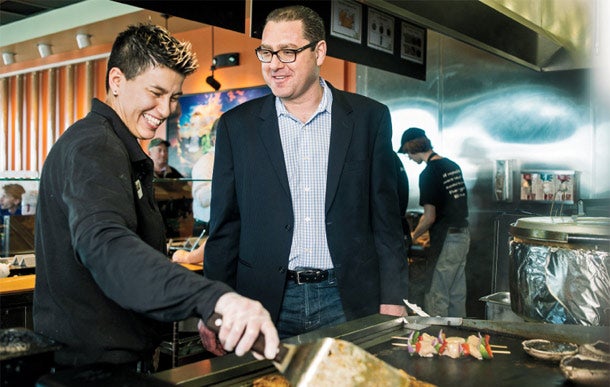
Rosenthal liked it. The two opened the first Garbanzo in Greenwood Village in 2007. Colorado offered a useful setting for the experiment, with established fast-casual businesses giving customers experience of choosing ingredients and watching a meal assembled. Mor could introduce different flavors within a familiar routine. The ordering process had already done some of the explanatory work.
A chain learns to leave home
By December 2011, Garbanzo had 14 company-owned restaurants in Colorado. Mor was preparing a franchising program and the first corporate locations outside the state. A restaurant that worked near home was about to face a different examination: could other teams deliver the same experience in places where its founders were less available?
The menu let customers build a meal around pita, laffa or salad, adding items such as shawarma and falafel. Choice made an unfamiliar cuisine approachable. Someone could begin with recognizable ingredients and return for something different. A chain's repeated visits are built one lunch at a time, even when its expansion plan is written in states.
Mor's attitude toward other Mediterranean restaurants was unusually roomy. He expected competing concepts to help customers understand the food. A diner who encountered hummus elsewhere might know what to order at Garbanzo next time. In his view, the category could grow through the work of several operators, while individual businesses would still have to earn their customers' return visits.
The early expansion happened amid a difficult economy. In 2010, Mor pointed to available construction capacity and labor as factors helping the company open restaurants. That observation is characteristic of an operator's perspective: economic conditions appear in the cost and availability of the things a business actually needs. A gloomy national picture can contain a practical opening for a particular enterprise.
Recognition followed the operating work. Mor received a Denver Business Journal Forty Under 40 award and ranked ninth in Fast Casual's 2014 Top 100 Movers & Shakers. Those distinctions belong to the restaurant chapter of his career. They help explain the experience he later brought to investment businesses whose assets also depended on many locations functioning well.
The unglamorous things that travel
Mor's restaurant responsibilities extended through budgeting, hiring, training, payroll, accounting and sales forecasting. These are the items that rarely make a founder's origin story sparkle. They are also the items that allow the origin story to acquire a second address. A recipe travels more easily when someone has arranged who will make it and how the ingredients will arrive.
Technology was part of that work. In 2010, Garbanzo selected a video system integrated with point-of-sale data for its existing restaurants and planned expansion locations. Mor described the value of seeing transactions alongside video of actual operations. The system gave his team a way to examine exceptions and identify problems without watching every transaction individually.
It is a useful detail in a career that can otherwise look like a collection of industry changes. Restaurants, retail portfolios and real estate finance ask different questions. Each also requires attention to the machinery that sits underneath an attractive idea. In Garbanzo's case, that machinery included information about what happened at the register.
From opening stores to deciding when to sell
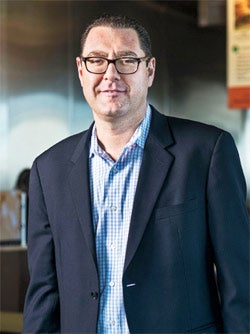
At Monfort Companies, Mor's remit widened beyond food. The Denver investment business works across commercial real estate, entertainment venues and multi-site retail. His experience organizing restaurant operations had a practical connection to a portfolio in which individual locations, local teams and repeated customer transactions still mattered.
Convenience retail became one substantial part of that portfolio. Monfort acquired its first Denver convenience stores in 2013 and expanded into other markets. Before its exit, the business owned and operated approximately 80 stores across Colorado, Minnesota, Oklahoma, Texas and Wisconsin. Some locations also included car washes, quick-lube operations or restaurants.
The eventual sale was a sequence rather than a single handover. Between 2023 and 2026, geographic groups went to buyers including Azan Petro, 7-Eleven, Kent Kwik and Diamond Jubilee Oil. Matrix Capital Markets Group advised on the transactions. The final result was a full exit from convenience retail, closing a chapter that had involved both acquiring and operating stores.
“Monfort has always invested with purpose.”Alon Mor, commenting on the convenience-retail sale
Mor's accompanying explanation looked ahead to redeploying the capital. An investment career includes that decision as well as the opening-day decisions he knew from restaurants. A portfolio can grow through acquisition, then change through a sale. The skill of building an operation and the judgment involved in releasing it meet at that point.
Giving someone else the daily decisions
January 1, 2026 brought a change in Mor's own responsibilities. Kenneth Monfort became Monfort Companies' chief executive, and Mor moved to executive chairman. The announcement assigned day-to-day leadership to Kenneth while keeping Mor involved in strategy, relationships and longer-term growth. The company also reaffirmed its interest in downtown Denver's development and mixed-use future.
Mor described the transition as planned and reflected on a 12-year journey. His account included risks, mistakes, wins and the accumulated experience of continuing to work together. When he considered what stood out, he gave relationships particular weight: late nights, difficult conversations and occasions when partners had to trust one another and proceed.
This is a more revealing account of leadership than a list of transactions. It acknowledges the ordinary discomfort within a long business partnership. A successful handover also changes who gets to make the daily calls. Mor's new role retained his experience while giving Kenneth responsibility for the next period of operations and investment activity.
The next obstacle is on a signature page
Mor now also serves as CEO of Augmentiv. Its business addresses a specific obstacle in commercial real estate: a borrower may have a transaction a lender wants to finance while lacking the financial profile required to support certain guarantees. Augmentiv offers co-guarantees on non-recourse carveouts, backing selected borrowers at that point in the process.
The distinction matters to understanding his latest work. The property and the sponsor are evaluated separately. Augmentiv's stated approach adds a co-guarantor with the necessary net worth and liquidity, alongside protections in the organizational structure and loan documents and ongoing monitoring. It is a business built around a relatively narrow point where a transaction can get stuck.
- BorrowerSeeks financing for a real estate transaction
- Credit supportAugmentiv provides a co-guarantee for specified carveouts
- LenderEvaluates the added guarantor and transaction protections
Mor published a LinkedIn article about this lending bottleneck in April 2026. The subject extends his operating interests into the arrangements that allow real estate transactions to proceed. Augmentiv's leadership team includes Steve Cho as president and chief credit officer and Scott Bois as principal and head of originations.
A familiar taste, a different kind of work
Alongside business, Mor has served on the Israeli-American Council's national board. His account of that involvement connected it to his family's Israeli and Jewish heritage, much as Garbanzo had connected family food with his life in America. Community, in that telling, had places to gather and familiar things to share.
He has described his approach to business in terms of preserving roots, persisting, learning, seeking other perspectives and adopting technology. The career gives those ideas tangible settings: a restaurant kitchen, a point-of-sale system, a portfolio of stores and a financing structure. The settings have changed. The problems remain specific enough to work on.
The supermarket episode makes a fitting beginning because it captures an observation before it became a company. Mor saw customers getting more choices and considered what a restaurant could do with that change. Today the question concerns a different kind of access: how selected property borrowers can meet a lender's requirements. Somewhere between the grocery shelf and the signature page, a restaurant operator acquired a rather different menu.