Company Logistics / Craft Beer Infrastructure
The Man Who Built the Keg Empire, Then Built Its Rival
A brewer's cash gets trapped in steel that spends half its life empty. Chris Sapyta helped invent the fix at one company, then spent a decade out-flexing it at his own.
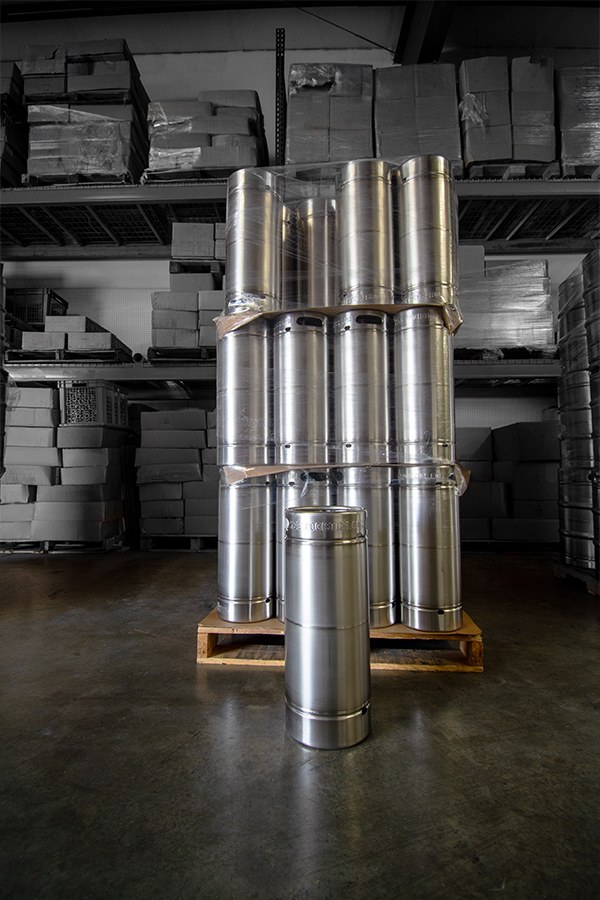
Walk into any brewery and you will find its most expensive asset stacked in a corner, doing absolutely nothing. Not the fermenters. Not the canning line. The kegs. A stainless steel keg costs well over a hundred dollars, and for large stretches of the year it sits empty in a distributor's warehouse, or a bar's basement, or the back of a truck - capital frozen in metal that only earns its keep when it is full and moving. Chris Sapyta spent 25 years learning exactly how much money is trapped in that steel. Then he built a company to unfreeze it.
That company is Keg Logistics, founded in 2011 near Denver and now serving roughly 2,800 breweries, cideries, and wineries across the United States, Canada, and the United Kingdom. Its pitch is almost aggressively simple: you should not have to own the kegs you fill. You should be able to rent them, lease them, pay by the fill, or sell the ones you already have and lease them right back. The kegs stay full and moving; your cash stays in the business.
The problem, stated plainly
Kegs are a brutal line item for a growing brewery. Buy a fleet outright and you sink tens or hundreds of thousands of dollars into hardware before you have sold a single extra pint. Under-buy and you cannot fill orders during peak season. Over-buy and you are paying to store idle steel in the slow months. And kegs walk off - they get lost, stranded at accounts, or simply never come back. For a young brewery trying to fund tanks, staff, and marketing, a keg budget is money that could be doing almost anything else.
01What Keg Logistics actually does
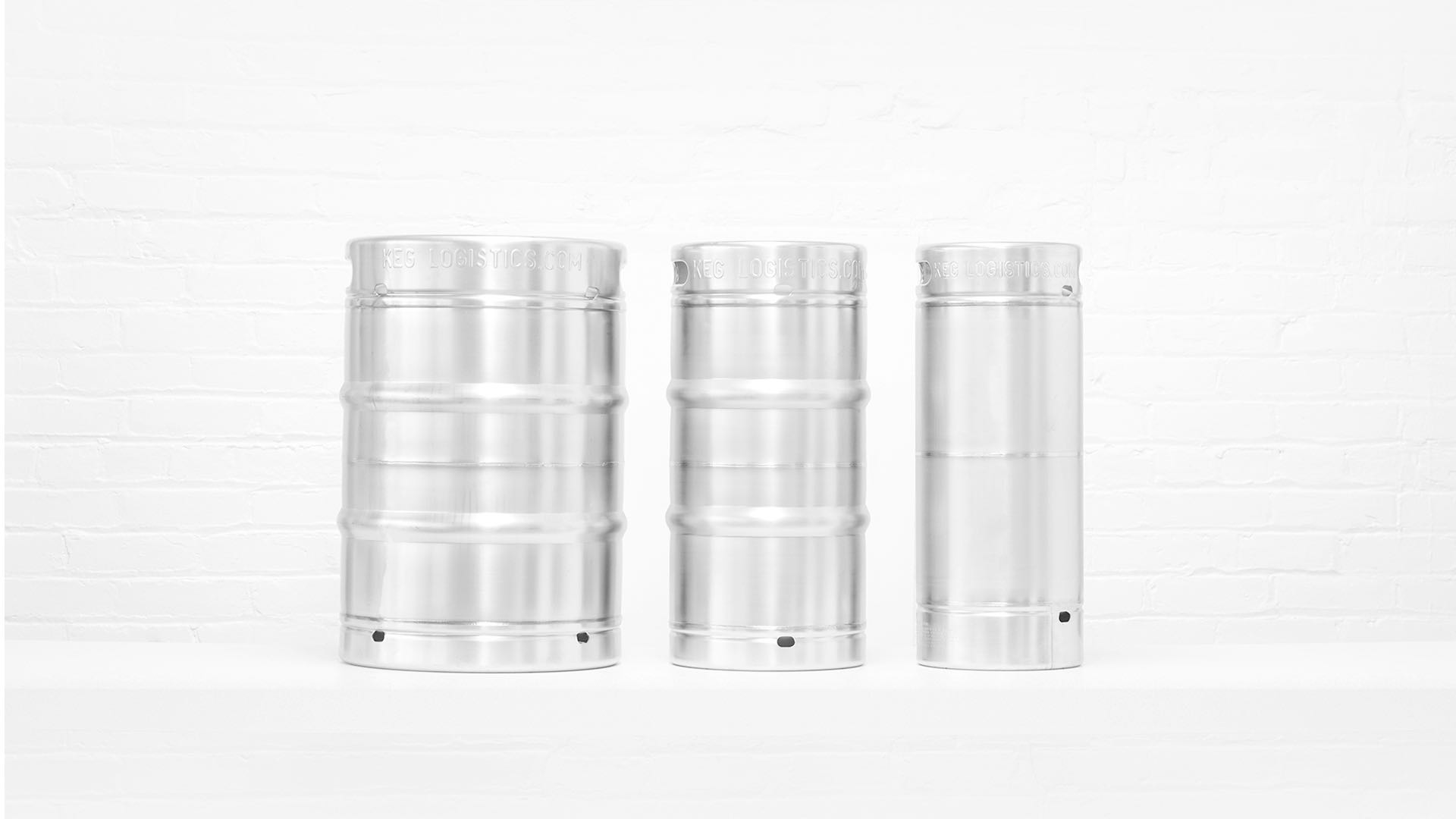
Strip away the jargon and Keg Logistics is a keg-as-a-service business. It owns the steel and lets breweries access it however suits their balance sheet. The trick that sets it apart is not a better keg - the kegs are standard, durable, brandable stainless in the usual sizes, from the 1/6-barrel sixtel up to the half-barrel and 50-liter. The trick is the menu. Most keg companies sell you one relationship. Keg Logistics sells four.
Pooled kegs
Draw from a shared fleet and pay a fee each time you fill and ship. No deposit, no lost-keg fee, no long contract. Fill it, ship it, forget it.
TruFlex
Rent at a fixed rate and scale keg counts up or down. Short-term (~4 months) or longer (~18 months), with free custom branding.
Lease-to-own
Multi-year lease of up to roughly eight years with buyout options, so you build equity in a fleet you will eventually keep.
Free the cash
Sell the kegs you already own, take the capital back, and lease the same steel right back on one monthly rate.
There is a fifth lane for brewers shipping overseas: an export program of one-way stainless kegs, RFID-tagged so a brewery can watch its steel travel across an ocean, with Keg Logistics handling the recovery of empties in the destination country. It is the same "fill, ship, and forget" promise, stretched to international scale.
02The founder's twist
Here is the detail that makes the story fun. Before Keg Logistics, Chris Sapyta was one of the original co-founders of MicroStar Logistics - the company that helped bring keg pooling to America and helped popularize the sixtel keg in the first place. In other words, the founder of Keg Logistics helped build the very giant that Keg Logistics now competes against. He left, looked at the market he had helped create, and decided it was leaving something on the table: flexibility.
That is not marketing filler; it is the entire strategy. Where the incumbents tended toward long, rigid arrangements, Keg Logistics went the other way. Its programs come with no exclusivity agreements and no personal brewer guarantees - meaning a brewery owner does not have to put their own name on the line to rent kegs. Rates are locked in rather than climbing every year, deposits are waived, and the mandatory seven-year contract that haunts parts of this industry is simply not part of the deal. In a commodity business, the terms became the product.

03Who actually uses it
The customer list runs from a taproom filling a few dozen kegs a season to regional breweries pushing volume into multiple states. It also reaches beyond beer - cideries, wineries, and specialty beverage makers use the same programs. The common thread is a business that would rather spend its cash on liquid than on the containers that carry it. For a new brewery, rental and pay-per-fill mean you can scale keg count with demand instead of guessing a year ahead. For an established one sitting on a large owned fleet, the sale-and-leaseback deal is a way to convert that steel back into working capital and clean up the balance sheet in a single stroke.
"At Keg Logistics, sustainability drives everything we do. We offer high-quality, reusable stainless steel kegs."
- Keg LogisticsThe sustainability angle is real and largely unspoken elsewhere: a stainless keg can be filled hundreds of times over its life. Pooling and reuse are a circular economy that happens to also be cheaper than buying and losing your own - the greenest asset in the drinks industry is the one nobody has to manufacture twice.
04How it grew
Keg Logistics did not grow purely on organic sign-ups. It bought its way bigger at key moments, folding competitors and adjacent businesses into the fleet. Atlas Keg came in 2016, pushing the combined base past a thousand brewers. In 2017, Seaport Capital took a majority stake, and a private-credit facility was upsized to $177 million to fund the acquisition of Keg Credit - the kind of debt that a capital-heavy, asset-owning business like this one runs on. HopGistics followed in 2022, carrying the customer count past 2,500. A Canadian operation, North Keg, joined the North American side.
The most recent chapter is the biggest. In April 2026, Evaaro - backed by MML Keystone - acquired Keg Logistics and North Keg and combined them with the UK and Ireland's ekeg, financed by an Invesco Direct Lending facility. The result is a multi-jurisdictional keg pooling platform serving roughly 3,000 brewers across three continents. The Denver company that started as a flexibility play against a single US giant is now part of an international one.
05Where it sits in the market
The keg-pooling business in the US effectively comes down to a short list: MicroStar (with its Kegstar brand), Keg Logistics, and Global Keg, alongside smaller players like American Keg, NDL Keg, and Konvoy. MicroStar is the scale leader. Keg Logistics carved its position not by underpricing but by widening the menu and softening the terms - the one that says yes to short leases, no deposits, and no exclusivity. In a market where every competitor ships broadly the same steel, that positioning is the moat.
There is a lesson here for anyone running a capital-heavy business, and it is worth stealing: your customers usually do not want to own your product. They want the outcome your product delivers. Keg Logistics figured out that a brewery does not want kegs - it wants full kegs leaving the door and empty ones coming back, without the cash and the contract getting in the way. Turn the asset into a service, price the flexibility, and let the balance sheet be the pitch.
The honest caveat
None of this is free lunch. The model works because Keg Logistics carries the capital and the risk that the brewery used to. That means the business is heavily asset-owning and historically financed with private equity and large debt facilities - the flexibility a brewer enjoys is paid for by leverage upstream. And the flexible programs make the most sense for brewers whose volume actually fluctuates; a very high-volume producer with steady, predictable throughput might still pencil out cheaper owning its own fleet outright. Flexibility is a feature you pay for, and not everyone needs it.
Still, the through-line is clean. Chris Sapyta helped invent modern keg pooling, decided the version he built could be more flexible, and spent 15 years proving it - one four-month rental, one pay-per-fill, one sale-and-leaseback at a time. The empty steel in the corner of the brewery is still the most expensive thing nobody wants to own. Keg Logistics just made sure they no longer have to.