Chris Sapyta was sitting at a railroad crossing near College Station, Texas, waiting for a freight train to finish being a freight train. Boxcar followed boxcar. He had been delivering Abita Turbo Dog in old Hoff-Stevens kegs, and the delay presented him with an unusually useful comparison: a beer keg was a boxcar. The cargo was the important bit. The vessel did not need to be loved, owned and shepherded home by the same company after every trip.
It was the sort of observation that makes an industry look faintly ridiculous once spoken aloud. Brewers wanted their beer in bars across the country, yet each brewery also owned a traveling collection of stainless-steel cylinders. Those cylinders went out full and came back empty, eventually, expensively, or not at all. A perfectly good asset could spend months sightseeing in someone else's warehouse.
In the 1990s, Sapyta managed the beer division of a statewide Texas wholesaler. Local craft brewing was sparse. To sell interesting beer, the wholesaler represented producers from California, Oregon, Colorado and Louisiana. Their empties accumulated in Texas, occupying space and quietly asking who would pay for the trip home. The question had no glamour. It had pallets.
“In the 90s, to sell craft beer we had to represent brewers from all over the country and returning kegs long distances back home was a challenge.”Chris Sapyta
The boxcar lesson
Sapyta helped launch MicroStar Keg Management in 1996. The pooled model let breweries use shared kegs and leave the return journey to a network designed for it. Instead of dragging each empty vessel back to its brewery of origin, the network could move it to a useful nearby point. Sapyta also helped spread the 1/6-barrel keg, the compact “sixtel” that gave bars and brewers more flexibility than a half-barrel monopolizing a tap line.
Pooling made an ownership problem into a routing problem. That distinction is the small hinge on which Sapyta's career turns. He notices containers that people need to use but would rather not chase. He then joins the physical movement, the financing and the tracking into one operating system.
The useful route beats the sentimental route
After MicroStar, Sapyta tried the same intellectual tool on a different life event: moving house. Smart Move, founded in 2004, rented large portable storage boxes equipped with GPS tracking. Customers packed the container; the company handled its motion. He told a Denver newspaper in 2006 that he hoped to do for moving what he had done for beer. The setting changed from taprooms to driveways. The asset still traveled.
Give the brewer a choice
By 2011, craft beer had changed. A young brewery often started locally, with quick keg turns between its taproom and nearby accounts. If it expanded across states, the same keg took longer to return. Seasonal demand produced short, sharp needs for extra steel. Exporting introduced the possibility that an empty might never make economic sense to retrieve.
Sapyta and former MicroStar operations manager David Webster founded Keg Logistics around those differences. Their original rent-to-own program did not require exclusivity agreements or personal guarantees. The menu grew to include straight rental, flexible short-term supply, pay-per-fill, sale-and-leaseback and export kegs. One vessel, several jobs, several sensible contracts.
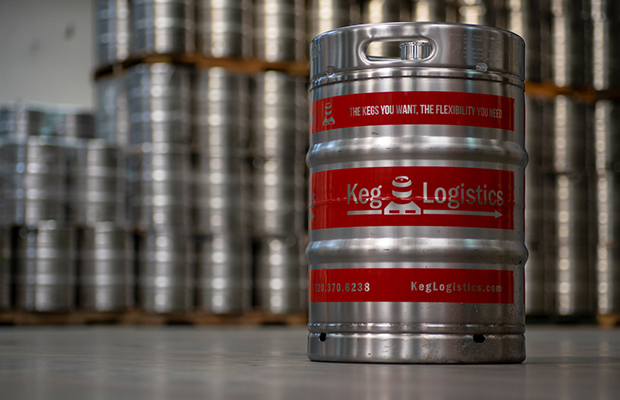
The rent-to-own idea addressed an awkward fact about durable equipment. Sapyta has said a keg can last more than 30 years. Renting forever can turn longevity into a very long bill. Buying hundreds at once can consume cash a small brewery needs for tanks, ingredients, people and distribution. An ownership pathway tries to place the cost somewhere between those two discomforts.
“From the beginning, I've focused on truly listening to what our customers need - not just today but years down the road,” Sapyta said when Keg Logistics acquired Atlas Keg Company in 2016. Listening, in this case, had paperwork attached. A taproom brewer with rapid turns did not need the same price structure as a regional brand whose kegs vanished into distant distribution. An exporter did not need a stirring speech about repatriation. It needed a one-way option.
That menu also turned growth stages into operating choices. A local producer could begin with rent-to-own kegs and build equity while the vessels circulated close to home. Expansion into slower, distant markets might favor pay-per-fill, because the network took responsibility for a longer journey. A sudden festival season could call for a flexible rental rather than a permanent fleet increase. Sale-and-leaseback could release cash already sitting inside a brewery's own steel. Keg Logistics did not invent the fact that breweries change. It made the changing part visible in the contract.
There is a quiet courtesy in that approach. The brewer is allowed to care about recipes, quality and sales while someone else becomes fascinated by dwell time. Sapyta's companies sit in the backstage machinery of craft beer, the place where an empty vessel has to be counted even when nobody wants to look at it. The consumer sees a pint. The brewer sees a package. The logistics operator sees an asset beginning another trip.
Growth by addition
Keg Logistics expanded by adding both customers and capabilities. Atlas brought more keg and brewery-equipment financing reach in 2016. Seaport Capital acquired the company in 2017 while the management team stayed in place. Keg Credit joined later that year, taking the company's stated customer count above 2,000 across the United States, Canada and the United Kingdom.
North Keg came into the fold in 2021, extending options for Canadian brewers. The 2022 HopGistics acquisition added people and density; at that point Keg Logistics reported more than 2,500 customers and 1.3 million kegs in place globally. The pattern was less a series of trophies than an assembly of routes, contracts, stock and local knowledge.
The customer network widened
Reported company milestones, not a continuous annual series
There was also the less photogenic work of explaining the business to government. In 2019, Sapyta testified before the U.S. International Trade Commission during its investigation of refillable stainless-steel keg imports. His testimony described Keg Logistics as the capital provider that bought in volume, held U.S. inventory and could add kegs to a customer's fleet on short notice, sometimes in fewer than seven business days. Leasing, in his account, gave breweries access to equipment without the upfront purchase.
The testimony reveals the operator's view. A keg is simultaneously a pressure-rated vessel, a capital expense, a tracked asset, a contract and a freight problem. Miss one identity and the business becomes expensive somewhere else.
It also explains why Sapyta's story is more about supply than beer. He has worked around brewing for more than 25 years, but his recurring subject is access: access to enough containers, to short-notice inventory, to financing that does not drain the production budget, and to a return system that reaches beyond the brewery's own vehicles. Beer supplies the industry. Scarcity and motion supply the plot.
The same perspective informed an earlier attempt to improve tracking. Years before smartphone scanning became routine, Sapyta asked the asset-location company Rapid ID to look at tracking kegs. The resulting Keg Manager program used phones and two-dimensional barcodes so participants could report a vessel's location. The technology was modest by current standards. The social premise was more interesting: anyone who encountered a stray keg could become part of its route home.
“Kegs can last over 30 years - brewers without a pathway to eventually owning their fleet through a financing and logistics solution like ours are pouring valuable money down the drain.”Chris Sapyta
A larger pool
In April 2026, the map widened again. Evaaro, backed by MML Keystone, announced the acquisition of Keg Logistics and North Keg and combined them with ekeg in the United Kingdom and Ireland. The resulting group operates across the United States, Canada, the UK, Ireland and the European Union, with a customer base approaching 3,000 brewers. Sapyta remained the leader of Keg Logistics in the United States.
His public language around the deal was characteristically operational: growth capital, international infrastructure, pooling expertise, scale. Those nouns have no foam on them. They do, however, describe what a brewer needs when a keg crosses a border and becomes someone else's empty-container puzzle.
The combination also completes a geographic circle around the original observation. The young Texas wholesaler struggled because independent breweries wanted national reach without a national return network. Evaaro's premise is that a shared platform can operate across several jurisdictions, giving local teams access to a wider system. The railroad metaphor still fits. A network becomes more useful as its handoff points multiply, provided the handoffs remain legible.
The environmental logic follows the economic one. A reusable vessel does more good when it lasts, moves fewer unnecessary miles and spends less time idle. Pooling can reduce redundant return trips. Tracking can improve use. Maintenance can extend asset life. Circularity here is not an abstract halo placed around a product; it is a schedule, a depot and a decision about which truck should carry which empty.
Sapyta's most revealing recent line may be the shortest. Commenting on his team's 2026 announcement, he wrote: “Lets go team, Customers First!” The punctuation is brisk and the hierarchy is clear. Decades after that train passed through Texas, the boxcars are larger, the routes cross more borders and the pool contains more steel. The job remains pleasingly plain: keep the container useful, keep the customer's cash working, and get the empty to somewhere it can be full again.