At a scientific meeting, the smallest disaster can fit on a memory stick. A presentation is missing. A speaker has changed a slide. Somewhere, a volunteer is trying to work out which file belongs in which room. The audience sees a lectern and a screen. Behind them sits a surprisingly delicate delivery system.
- The job: connect conference operations with continuing education.
- The customer: associations, medical societies and professional learning teams.
- The bet: an event’s content can keep teaching and earning afterward.
The trouble begins with the slides
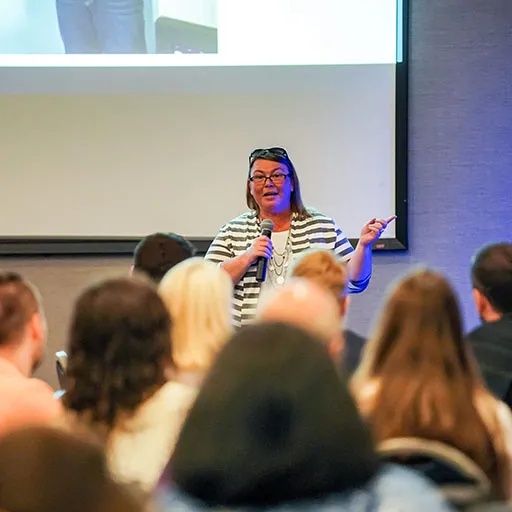
The Entomological Society of America gives that problem useful dimensions. Its annual meeting, described in a Cadmium case study, brought together nearly 3,400 attendees and more than 30 concurrent breakout rooms. Manual file handling and aging servers made it difficult to know which sessions were ready. The bottleneck was partly visibility: who had uploaded what?
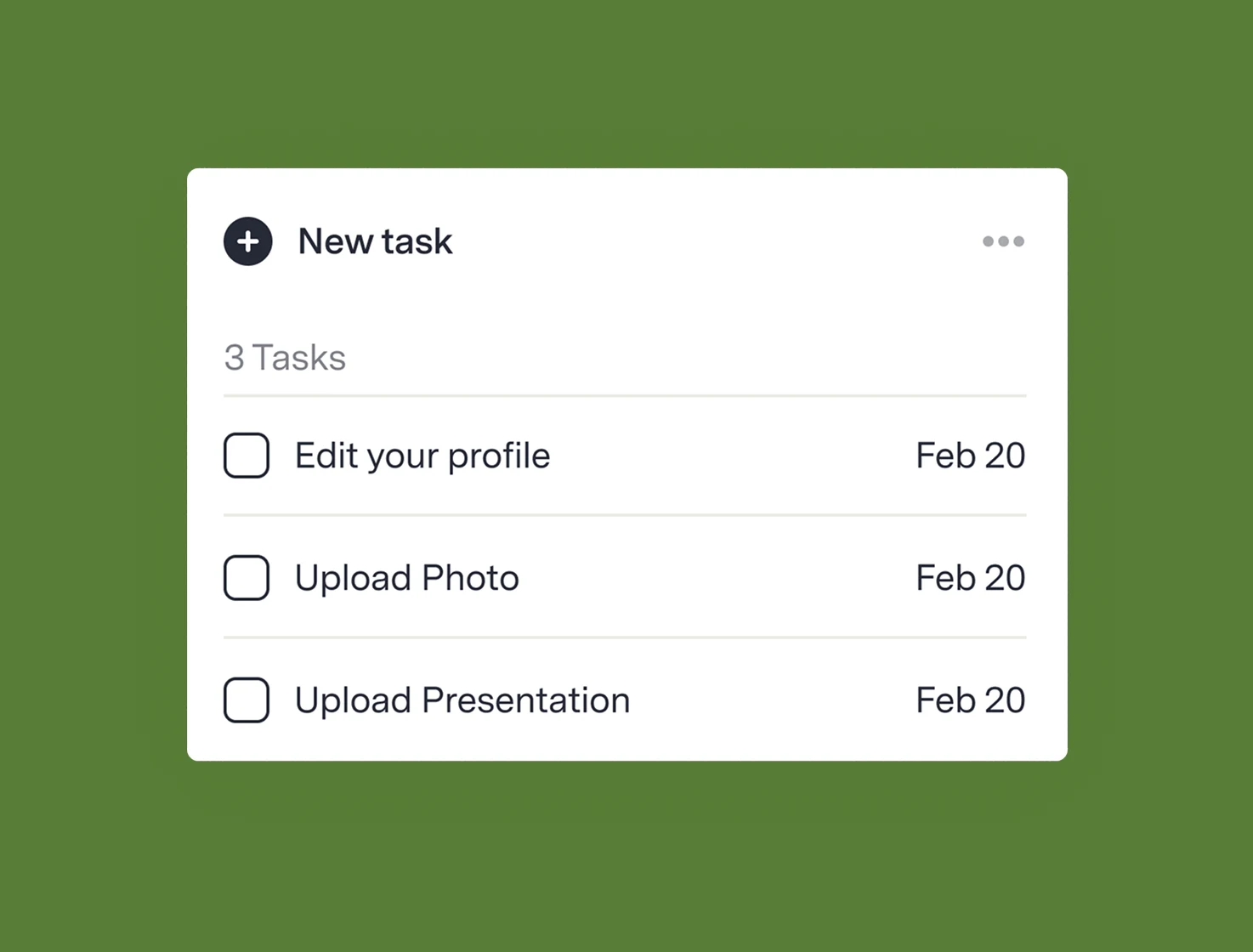
ESA adopted Eventscribe’s Speaker Ready System. Speakers could upload directly and make late changes; reporting gave staff a clearer picture of readiness. The case study describes shorter lines and less administrative work. It offers no stopwatch measurement, but the operational change is concrete: fewer files depended on someone physically shepherding them through the room.
“Our moderators, volunteers, and speakers adapted instantly”
Becky Anthony, ESA
In Cadmium’s customer case study
That is a useful entrance to Cadmium. The company sells software for the unglamorous coordination that lets professional knowledge travel. Its expertise is especially relevant when a meeting must do several jobs: assemble a community, deliver education, record attendance and help people earn credits.
Give the keynote a second job
Eventscribe handles the event machinery: abstracts, reviews, speakers, registration, sponsors, scheduling, websites and mobile apps. The pitch becomes more interesting when the last session finishes. A presentation already collected for a conference can become material for an ongoing education program, rather than another recording stranded in a folder.
Elevate is Cadmium’s learning management system for associations and nonprofits. It packages webinars and courses with assessments, certificates and commerce. Its documentation describes importing conference presentations from Eventscribe, including recordings, slides, handouts and speaker information. Administrators choose what to import and how to price access. The reuse is a documented workflow, with decisions still required.
- 01CollectAbstracts + slides
- 02ConveneSessions + attendees
- 03RepurposeCourses + recordings
- 04RecognizeCredits + certificates
An illustrative workflow across the suite. Configuration and product scope determine the actual connections.
EthosCE addresses the added complexity of healthcare continuing education: accreditation workflows, credit tracking, reporting and course sales. Warpwire provides secure media management and livestreaming. Together, the four products put Cadmium between the event management market and the professional learning market. Cvent, Swoogo and Bizzabo are event alternatives; Cadmium’s particular argument is the relationship between the meeting and the education business surrounding it.
Consider the American Thoracic Society. In another Cadmium-published case study, ATS used EthosCE Learning Groups to give CME and non-CME offerings distinct branded environments within a central system. Its learning and marketing teams standardized the design. The lesson extends beyond software: a coherent catalog requires people to agree on its structure before publishing more material.
Cadmium’s website reports 1,030 customers and more than eight million learners. The intended audience is clear: organizations whose relationship with a learner continues after checkout. For a professional society, the same person may submit an abstract, attend a meeting and return months later for another course. Connecting those encounters is the business opportunity.
Buying the pieces was the easy part
Cadmium’s own history has a similar coordination problem. Michelle and Peter Wyatt founded predecessor CadmiumCD in 2000. STG made a majority investment in February 2020, then acquired healthcare learning business EthosCE that July. By July 2021, STG described CadmiumCD, EthosCE, Warpwire and CommPartners being unified under the Cadmium name.
Putting companies together did not make their relationships obvious to buyers. Branding agency Focus Lab reports that legacy websites were still converting better than Cadmium’s, and customers struggled to understand the integrated offering. That was the evidence for changing the presentation of the business. The agency recommended clearer product architecture and descriptive feature names. Hermes, for example, became Speaker Ready System. A classical messenger lost his job to a label people could understand.
The bill has more than one line
Cadmium sells business software through contracts, with modules and service scope shaping the purchase. Eventscribe uses custom pricing based on event size and feature requirements. A buyer should therefore specify the workflow before comparing quotes: abstract collection alone is a different purchase from registration, onsite delivery and a continuing education program.
Implementation can carry its own bill. Certified partner SB Expos & Events publicly lists a new mobile-app build at $7,500 and a repeat build at $5,000, with the required Cadmium module purchased separately. Those are that partner’s implementation prices. They illustrate why a software budget also needs room for setup, training and support.
A useful quote should make those boundaries visible. Ask which modules the event needs, who configures them and what support is available during the meeting itself. Put content migration and post-event publication on the same list. Otherwise, a cheaper purchase can leave the original coordination problem sitting with the staff.
For an association selling courses, the commercial logic is straightforward: existing educational content can support paid access, subscriptions or certification offerings. The constraint is equally practical. An integrated suite earns its keep when there are repeated handoffs to remove. A simple gathering with no course library or credit requirements gives buyers fewer reasons to take on that scope.
The software also sits inside a physical event operation. Cadmium’s partner directory spans production, equipment and managed services; its Hartford Technology Rental partnership links the platform with trained hardware support. That matters at a registration desk, where an elegant screen is only one dependency. For teams evaluating the suite, the practical exercise is to assign an owner to every handoff: software setup, presentation delivery, recording, course publication and credit reporting. Shared branding does not make those responsibilities disappear.
A future measured in fewer handoffs
Cadmium’s October 2026 releases show where the work continues. A Schedule Builder add-on generates agendas around rooms, speakers and availability. Another fix prevents a long presentation title from blocking a bulk download. Cadmium Identity is rolling out in stages across attendee-facing products. These changes suggest a business still joining its systems while smoothing daily administrative friction.
On October 19, Cadmium announced professional education LMS recognition for Elevate and EthosCE in Talented Learning’s 2026 awards. Buyers can apply a more personal test: follow one speaker, one attendee and one certificate through a demonstration. Count every repeated entry and manual transfer. The closing keynote may be memorable. The work that follows determines how useful it remains.