The revealing detail at Spear Education’s Scottsdale campus is the working front office. A dental training center needs chairs, instruments and somewhere to practice. But a front desk? That little piece of infrastructure points to a bigger problem: a dentist can learn something useful while the organization around the dentist carries on exactly as before.
Spear sells help with that mismatch. Its customers include practice owners, associates, recent graduates, specialists and dental support organizations. The offering stretches from restorative dentistry to the conversation about scheduling treatment. The person holding the instrument matters. So does the person answering the telephone.
- The craft: online learning and hands-on clinical instruction.
- The follow-through: peer clubs, team training, coaching and analytics.
- The catch: annual commitments, plus time to put the lessons to work.
Start with the face
Frank Spear’s father was a mechanic. His mother taught second grade. In a 2013 interview, he recalled telling a friend on graduation day, “Someday, I’m going to have a teaching institute.” There is a pleasing fit between those parents and that ambition: understand how things work, then help someone else understand.
Spear’s current origin story locates a pivotal collaboration in 2008, when the clinician and dental business strategist Imtiaz Manji set out to help dentists who felt isolated and stuck. Their clinical anchor was Facially Generated Treatment Planning. It asks dentists to consider the face and the desired result while evaluating airway, esthetics, function, structure and biology.
That framework gives the curriculum a common starting point. The workshop catalog moves through treatment planning, restorative design, occlusion, worn dentition and more complex care. A dentist can study how teeth meet, practice a restoration, then return to the larger question of how a treatment fits the patient.
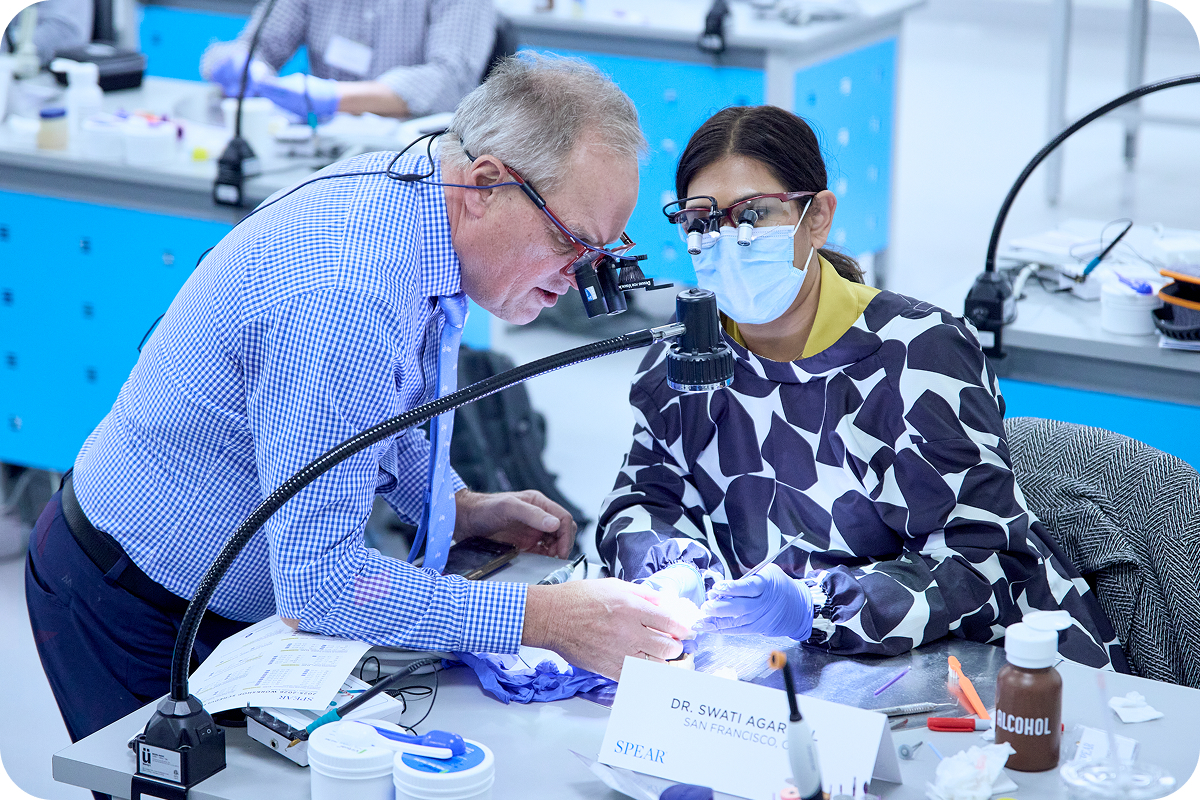
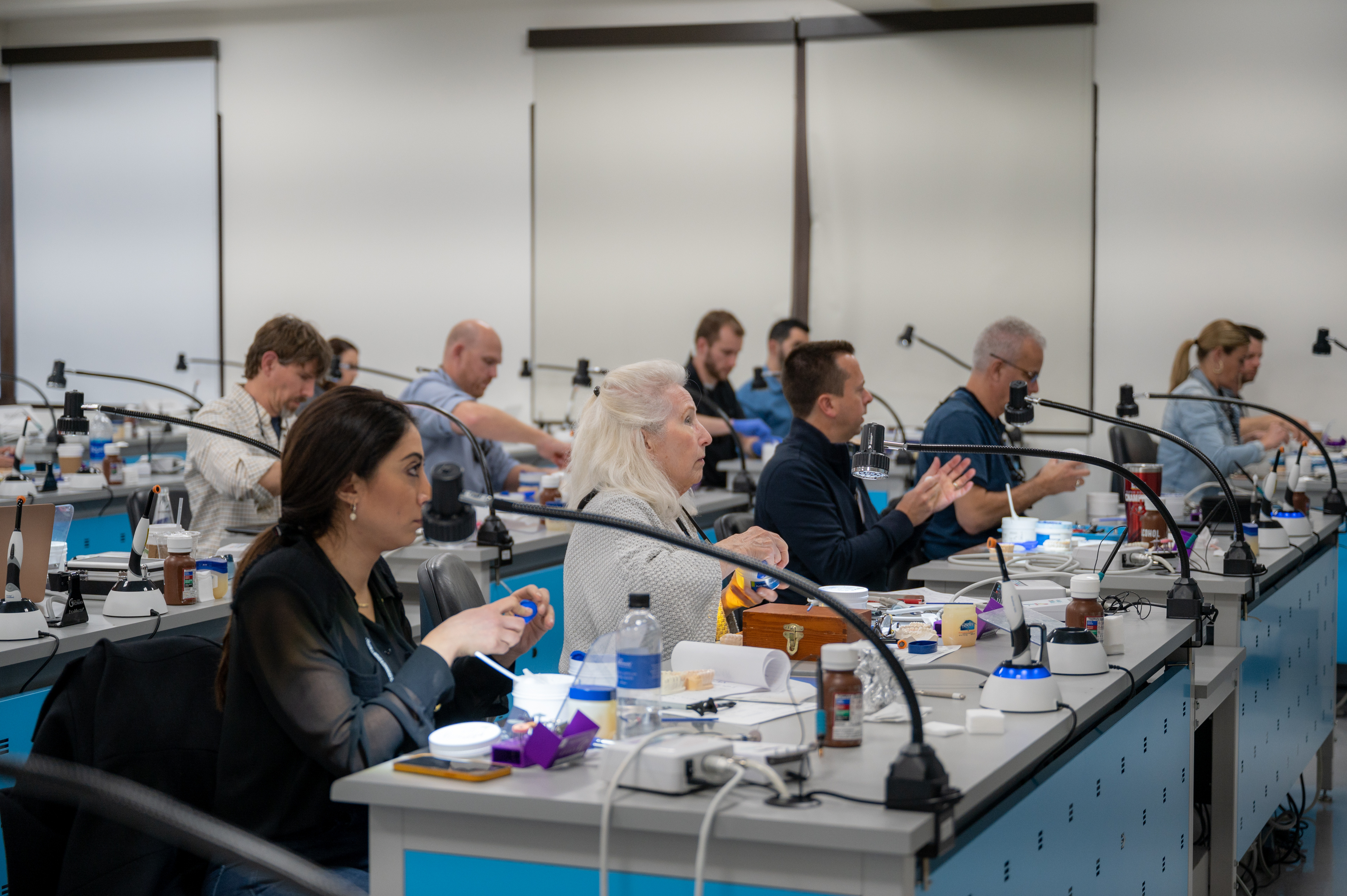
The physical setting supports repetition. Spear describes four clinical labs, more than 130 workstations and a six-chair operatory suite. Digital scanners, mills and printers sit alongside the human work of showing, trying and correcting. Equipment helps make a lesson tangible; the instructor can see what a participant actually does.
The office has to learn, too
By 2013, Spear was already describing a connected method: attend a seminar, review the content online, discuss it with a local study club. The sequence mattered. A difficult concept could come around again, in a different setting, with a real case attached. Education had somewhere to go after the classroom emptied.
In June 2026, Spear brought study clubs into Practice Membership. Its formats include referral clubs connecting specialists and general dentists, groups focused on clinical mastery, and clubs organized around an interest or career stage. The company says it has more than 700 clubs worldwide. The appeal is easy to see: a dentist can bring the awkward case that does not quite resemble the example in the lecture, then hear how colleagues would approach it. The discussion gives the lesson a second life.
Today, Spear Online advertises more than 1,500 courses. Individual membership serves one dentist; Practice adds role-based training, centralized continuing education tracking and patient education tools. Animated explanations give staff a way to discuss conditions with patients. The aim is a shared vocabulary across the people who diagnose, explain, schedule and follow up.
“Metrics alone don’t solve problems - they highlight them.”Dr. Dan Butterman, chief dental officer / 2025
A 2025 partnership with Dental Intelligence supplies another part of the sequence. Analytics identifies practice performance gaps; Spear’s Navigator training supplies material for addressing them. The distinction is useful: a dashboard can reveal a weak number without explaining how tomorrow’s team meeting should change.
- 01LearnCourses + cases
- 02RehearseLabs + peers
- 03ApplyTeam routines
- 04ReviewData + coaching
One clinical idea, several chances to make it routine.
The partnerships now reach both ends of the patient visit. January 2026 brought an Overjet collaboration linking AI-assisted diagnostic insights to education. In August, Spear announced that selected front-office courses would enter VoiceStack’s communication platform. That pairing connects call-handling insights with training on scheduling, fee presentation and patient conversations.
A membership with homework
This arrangement also explains the economics. Linden invested in 2014. When it announced the sale to Avista Capital Partners in December 2022, Linden described Spear’s evolution from a primarily campus-based business toward recurring digital memberships. The acquisition terms were undisclosed. Matthew Coggin succeeded co-founder Kaleim Manji as CEO in September 2023.
The current price ladder makes the ambition visible. Annual payment is $995 for Individual, $3,200 for Practice, $4,500 for Faculty Club and $33,000 for All Access. Monthly billing costs more and still involves an annual commitment. These packages ask buyers to choose how much of the practice they want involved.
Published annual-payment range, Individual through All Access. Checked October 2026.
All Access bundles workshops, online learning, coaching and analytics for up to two doctors and 10 team members. The commercial logic is straightforward: the more places learning touches, the more reasons a practice has to renew. For the buyer, that breadth needs to justify both the fee and the staff time.
The market has other serious teaching traditions. Pankey and Kois offer advanced clinical education. Dawson combines clinical courses with online learning, study clubs and consulting. Spear’s position rests on its particular clinical framework and packaging across the practice. Buyers have alternatives; the useful comparison is how well each approach fits their actual learning habits.
Put one lesson on the calendar
The practical lesson readers can borrow is modest: pick one recurring problem, teach the people involved, rehearse the response and review what changes. That is an editorial takeaway from Spear’s design. A practice could begin with a confusing treatment conversation and agree on one clearer explanation before buying a larger program.
The arrangement needs protected learning time, an owner willing to change routines and teammates who participate. Someone seeking only a few inexpensive CE credits may find the broader packages excessive. Spear advertises a 90-day All Access opt-out, but attending a workshop during that window activates the full contract. Trying the system deserves a plan.
The front office is the clue worth remembering. A clinical idea travels through many hands before it becomes a patient experience. Spear has built its business around teaching those hands to work together.