ONE API connects to 400+ practice management systems~96% of the retail healthcare market on a single platformDentalLLM trained on de-identified data from 30,000+ practicesOptimizer X ships as the 10th generation of the practice optimizer2025 CloudX Best Platform-as-a-Service award35,000+ practice installations and millions of patient recordsFounded 2004 in San Jose by Vijay Sikka
Company Profile / Retail Healthcare Infrastructure
Sikka.ai
The connective tissue under dental, veterinary and the rest of retail healthcare - one API instead of four hundred.
AI & API platformHealthcareSaaSSan Jose, CAFounded 2004
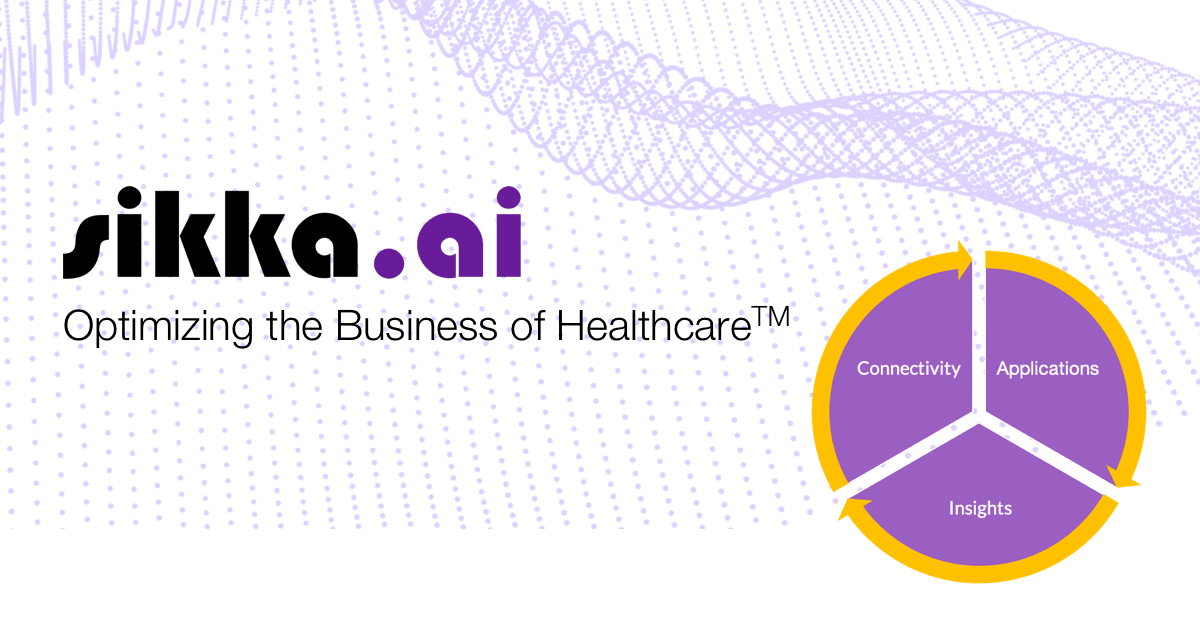
SIKKA.AI // The banner that travels with every link they share. Twenty years of plumbing, one tidy rectangle.
Who they are now
The most important company you've never noticed
A patient sits in a dental chair. The hygienist taps a screen, an insurance claim files itself, a payment posts, an analytics dashboard updates three time zones away. None of that says "Sikka" anywhere. That is exactly the point.
Sikka.ai is the layer almost nobody sees and almost everybody touches. It is an AI and API platform for retail healthcare - the part of medicine that happens in strip malls and main streets rather than hospitals: dentistry, veterinary, optometry, audiology, chiropractic, orthodontics. The company's pitch is unglamorous and, when you sit with it, slightly unreasonable in its ambition: build to one platform, and you reach roughly 96% of that market.
It is the kind of business that wins awards for "Platform-as-a-Service" rather than magazine covers. And yet it sits underneath tens of thousands of practices, moving the data that keeps the lights on.
Healthcare's hardest problem was never the AI. It was getting two systems to agree on what a patient record means.
- The premise Sikka has been chewing on since 2004
The problem they saw
Four hundred systems that refuse to talk
Retail healthcare runs on practice management systems - the software that schedules patients, tracks treatments and chases payments. There are hundreds of them. They were built in different decades, by different vendors, with different ideas about how a tooth or a Labrador should be recorded in a database. Most were never designed to share.
For anyone who wanted to build something useful on top - an analytics app, a payments tool, an AI assistant - this was a wall. You could integrate with one system and reach a sliver of the market, or integrate with all of them and spend your life maintaining brittle connections. Neither is a business plan. It is a tax on every good idea in the industry.
A single integration that reaches 96% of a market is not a feature. It's a moat that took twenty years to dig.
// On why nobody has casually cloned this
Sikka's answer was to absorb the mess so customers wouldn't have to. One API. One contract. One place where the chaos of 400+ systems gets translated into something an engineer can actually use.
The founder's bet
An AI researcher walks into a dental office
Vijay Sikka did not come up through dentistry. He spent more than two decades on AI and decision systems at Intel, the National Institutes of Health, GlaxoSmithKline, Roche and UCSF affiliates - the sort of resume that usually ends in a research lab, not a billing screen. In 2004 he founded Sikka Software Corporation on a contrarian read: the bottleneck in healthcare wasn't smarter algorithms, it was connection.
The bet was patient and a little stubborn. Instead of chasing the prestige end of medicine, Sikka aimed at the "retail" end - the practices most software companies found too fragmented to bother with. The company spent years building connectors nobody else wanted to build, one practice management system at a time, until the boring work itself became the product.
Founder, Chairman & CEO
Vijay Sikka
25+ years in AI and decision systems across Intel, NIH, GlaxoSmithKline, Roche and UCSF affiliates before founding Sikka Software in 2004. Named "AI-Driven Healthcare Solutions CEO of the Year" for 2024. Backed by a board that includes investors from Sierra Ventures, Moneta Ventures and OrbiMed - and his brother Vishal Sikka, founder of Vianai and former Infosys CEO.
The unglamorous work - the connectors, the compliance, the twenty years - is the part competitors can't shortcut.
- The shape of Sikka's advantage
The product
What you can actually build on it
Sikka is really three things stacked on one foundation: a pipe, a brain, and a dashboard.
The pipe
ONE API
A single cloud API into 400+ practice management systems with 100+ endpoints - pull patient data, post payments, read 300+ KPIs. SOC 2 and HIPAA compliant, audited regularly. It won the 2025 CloudX Best PaaS award.
The brain
DentalLLM
A dental-specific large language model built on de-identified data from 30,000+ practices over 15 years. Developers reach it through the same ONE API, so dental-aware AI becomes a feature you call, not a model you train.
The dashboard
Optimizer X
The 10th generation of a practice optimizer that has shipped since 2006. Built for solo practices, groups and DSOs: production, collections, scheduling, hygiene and new-patient metrics across 300+ KPIs.
The lens
Sikka Insights
Data products spanning dental, veterinary and optometry - clinical benchmarking and even applications reaching into life insurance, where de-identified oral-health signals carry surprising weight.
400+PMS CONNECTED
~96%MARKET REACH
300+KPIs EXPOSED
100+API ENDPOINTS
Milestones
Two decades of patient plumbing
2004
Vijay Sikka founds Sikka Software Corporation in San Jose.
2006
The first Dental Practice Optimizer ships - the seed of Optimizer X.
2015
Raises ~$10.5M Series C to fund growth (Sierra Ventures, Moneta Ventures).
2019
$4.2M Series D, ~$23M raised across four rounds to date.
2024
Launches DentalLLM; announces Optimizer X; Vijay Sikka named CEO of the Year.
2025
ONE API wins the CloudX Best Platform-as-a-Service award.
The proof
The numbers that do the arguing
Infrastructure companies are easy to doubt and hard to fake. The tell is scale: you cannot quietly serve tens of thousands of practices without the data eventually showing up. Sikka's does.
Sikka.ai by the numbers
Figures drawn from company materials and public profiles; treat as approximate, not audited.
Practices
35k+
Market reach
~96%
Revenue
~$35M
Total raised
~$23M
Read it the way an investor would: roughly $35M in revenue on about $23M ever raised is unusually capital-efficient for a healthcare platform. The supply side tells the same story - more than 50 companies have built their own applications on top of Sikka, which is the clearest signal that the pipe is real. Developers vote with their integrations.
Fifty companies built their products on your platform. That's not a customer list - that's an ecosystem admitting it can't do this itself.
// On the supply-side moat
The mission
AI that doesn't ask you to change anything
Sikka frames its purpose modestly: connect the retail healthcare market and bring AI to it without disrupting the workflows practices already use. That last clause matters more than it sounds. The graveyard of healthcare software is full of products that were brilliant and required a busy front desk to learn a new religion on a Monday morning.
By meeting practices inside their existing systems, Sikka turns AI from a migration into a feature - something that shows up in the tools staff already open, rather than a platform they have to be sold on. The mission is less "disrupt healthcare" and more "stop making good ideas wait for an integration."
Why it matters tomorrow
The data nobody else has
There is a reason DentalLLM is hard to copy. Models are increasingly commoditized; the de-identified data behind them is not. Twenty years of connection gave Sikka a corpus of dental practice data that a well-funded newcomer simply cannot buy. In an era where everyone has access to the same base models, the company's edge isn't the algorithm - it's the two decades of plumbing that fill it.
The same logic stretches outward. Oral-health signals turning up in life-insurance underwriting, veterinary data feeding procedure categorization, payments riding the same rails as analytics - each is a new business that only exists because the connection was already there.
Everyone will have the model. Almost no one will have twenty years of the data that makes it useful.
- Where Sikka's next decade is hiding
Back to that dental chair. The claim still files itself, the payment still posts, the dashboard still updates - except now an AI trained on thirty thousand practices is quietly suggesting what comes next, and the patient still has no idea any of it is happening. Sikka spent twenty years making itself invisible. On the evidence, that was the smart bet.