One API, and a third of a country's patients behind it
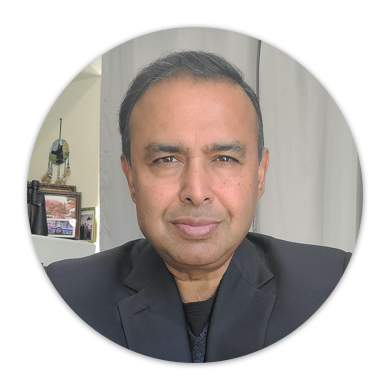
There is a dental office somewhere in America right now, pulling up a patient's history, running a payment, flagging a no-show before it happens. Underneath the click sits a single API. That API belongs to Vijay Sikka, and versions of it now sit under more than 35,000 practices and roughly 120 million patient records. That is north of a third of the United States, routed quietly through software most patients will never see and never name.
Sikka calls the category retail healthcare: the dentists, the vets, the optometrists, the small practices that together add up to a market he pegs near a trillion dollars. It is the unglamorous middle of medicine, the part nobody writes magazine covers about. He went there on purpose. The interesting frontier, in his telling, was never the hospital. It was the front desk.
In early 2025 Sikka.ai launched what it describes as the first agentic framework and no-code AI-API++ platform aimed squarely at that retail healthcare market. The pitch is deceptively plain: let the people who actually run practices assemble their own AI workflows, without waiting on a vendor's roadmap. The same month, an industry panel named him AI-Driven Healthcare Solutions CEO of the Year for 2024. He has the rare distinction of having his recognition and his product launch land in the same news cycle.
Before "AI" was a logo on a pitch deck
Sikka started studying artificial intelligence in the mid-1980s, when the field was a fringe academic pursuit and "neural network" was a phrase that emptied rooms. He took a master's in electrical engineering and AI at Syracuse, then went to Stanford for doctoral work in neuroscience. He did not finish the Ph.D. He did something founders tend to do instead: he left to build.
The resume reads like a tour of places where hard decisions get automated. Intel, where he led an AI group on the fab side. The National Institutes of Health. GlaxoSmithKline. Roche. UCSF affiliates. More than 25 years of large-scale decision systems before Sikka Software became the thing his name is attached to. Along the way he kept publishing, presenting at IJCNN, SPIE, IEEE, AAAI, and the conference that would eventually become NeurIPS, back when it was a smaller affair.
Two companies, two clean exits
In 1996 he founded IBrain Software, a data company that, by his own account, lined up against Informatica, Hyperion, and Cognos. Two years later Entigen Corporation bought it; Entigen later folded into Roche. Then he co-founded Bodha.com, which Peregrine Systems and Remedy acquired before that lineage became part of BMC Software. Both companies disappeared into giants. Both, by the math of acquisitions, worked.
That pattern matters for understanding Sikka.ai. This is not a first-timer learning the shape of a company in public. It is a third act, built by someone who has already watched two of his bets get absorbed into the infrastructure of larger firms. He wrote a book about it too, more or less: "Maximizing ROI on Software Development," published by Taylor and Francis International. The title is the thesis. Software is only interesting if it pays.
The bet on the boring middle
The genius of the retail healthcare bet is its modesty. Hospitals are slow, regulated, and crowded with incumbents. The small practice is fragmented, underserved, and drowning in administrative friction. Sikka built the connective layer: one API that practices plug into on the demand side, and more than 50 companies build applications on the supply side. He did not try to be the application. He tried to be the road every application drives on.
It is a platform strategy borrowed from the parts of Silicon Valley that printed money, applied to a corner of healthcare that most of Silicon Valley ignored. The company now stretches its AI-API beyond dentistry into veterinary work, fintech, and life insurance, the adjacent industries that all need the same thing: clean, real-time, consent-based data and predictions built on top of it.
Roche, twice
His first company's acquirer became part of Roche. Decades later, Roche shows up again on his list of large-scale AI projects. Some orbits are hard to escape.
A third of America
120 million patient records is not a vanity metric. It is roughly a third of the U.S. population, sitting behind a platform almost nobody outside the industry can name.
Sikka is a regular on the conference circuit, an invited keynote at the Digital Health World Conferences in 2019 and 2020, the AI Global Forum in 2020, and the Biohacking Congress in London the same year. He is also, usefully for California, a Registered Continuing Education Provider, which means he is licensed to teach the practitioners his software serves. Builder, teacher, and the guy holding the microphone. It is a tidy loop.
What makes him worth watching now is timing. The agentic AI wave that the rest of the industry discovered in 2024 is, for Sikka, the natural extension of work he started forty years earlier. He is not pivoting toward the moment. The moment arrived where he was already standing.