The machine a dental patient notices is the chair. It rises, reclines, and provides an excellent opportunity to reconsider flossing. The machine the practice depends on may be somewhere else entirely: a compressor supplying air, or a vacuum carrying material away. DENTALEZ makes equipment on both sides of that divide. Its history becomes more interesting when you stop looking only at the chair.
- The business: equipment for dental treatment, utilities, laboratories, and education.
- The connecting idea: make the work around the procedure easier to manage.
- The new bet: TotalOp packages equipment and ongoing support into a monthly subscription.
01 First, let the dentist sit down.
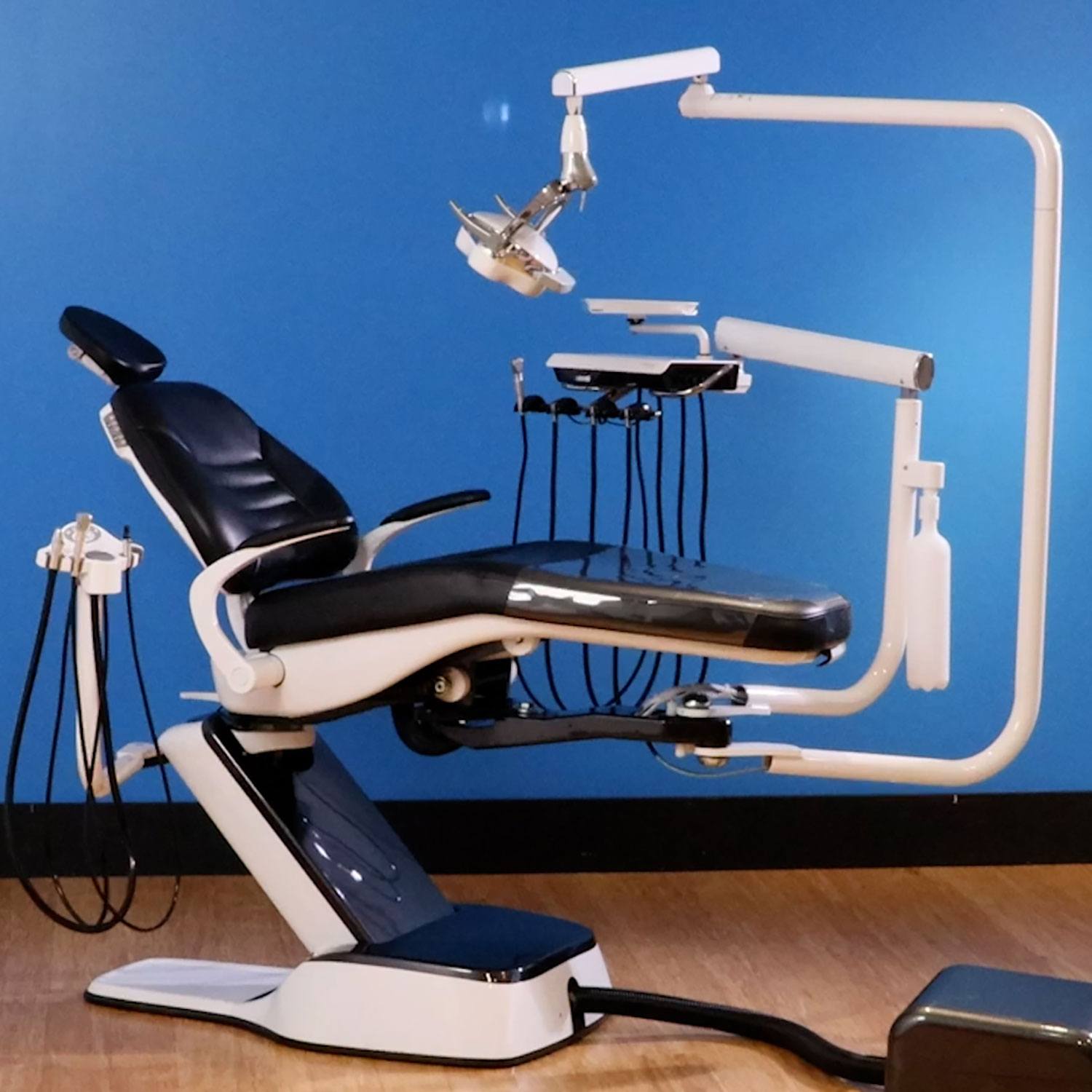
In 1958, John Naughton introduced the chair associated with DENTALEZ’s beginnings. He worked with dental collaborators, including Dr. John Anderson, on a design that let a seated practitioner treat a reclining patient. A Radio Iowa account describes its appearance at that year’s Iowa Dental Convention. The innovation changed the relationship between two bodies trying to occupy one small working space.
A later account by dentist William T. Brown supplies the wonderfully odd detail: Naughton transported an early chair in a used hearse. It also describes a pricing intervention. Naughton thought he could sell for $300; a dental supplier advised a $900 price, allocating $300 each to manufacturing, the dealer, and the business. The lesson was distribution. Someone had to make the invention available, explain it, and earn a living doing so.
02 Then, buy the rest of the room.
DENTALEZ expanded by gathering businesses with different specialties. Its historical catalog dates Star Dental and Columbia Dentoform to 1990, Ramvac to 2002, and Nevin to 2007. Forest followed in 2018. Read those names as a map: tools in the clinician’s hand, models in the classroom, machinery in the utility room, benches in the laboratory, and furniture around the patient.
01 / STARThe hand
02 / FORESTThe chair
03 / RAMVACThe utility room
04 / NEVINThe laboratory
05 / COLUMBIAThe classroom
That breadth gives the company several customers: independent practices, dental service organizations, laboratories, universities, and training programs. Columbia Dentoform supplies manikins and typodonts for rehearsing procedures. Its catalog also includes veterinary models. Even imaginary teeth need the right anatomy.
Forest adds an unusually visible dimension. Paint, upholstery, and surface choices let practices configure their surroundings. The 6400 chair offers heat and massage; its CareGlide feature allows repositioning for wheelchair access, cleaning, and X-rays. These details serve different people. A patient wants comfort. A clinician needs access. An equipment purchase has to accommodate both.
03 Give the machinery something to say.
The Aeras platform arrived in 2020 with a Star handpiece and a Ramvac compressor. Its practical proposition was communication: collect equipment information and make it available before a problem becomes an interruption. Current Ramvac literature describes cellular connectivity, browser access, maintenance notifications, and scheduled switching. It says smart monitoring comes standard at no charge on compatible equipment.
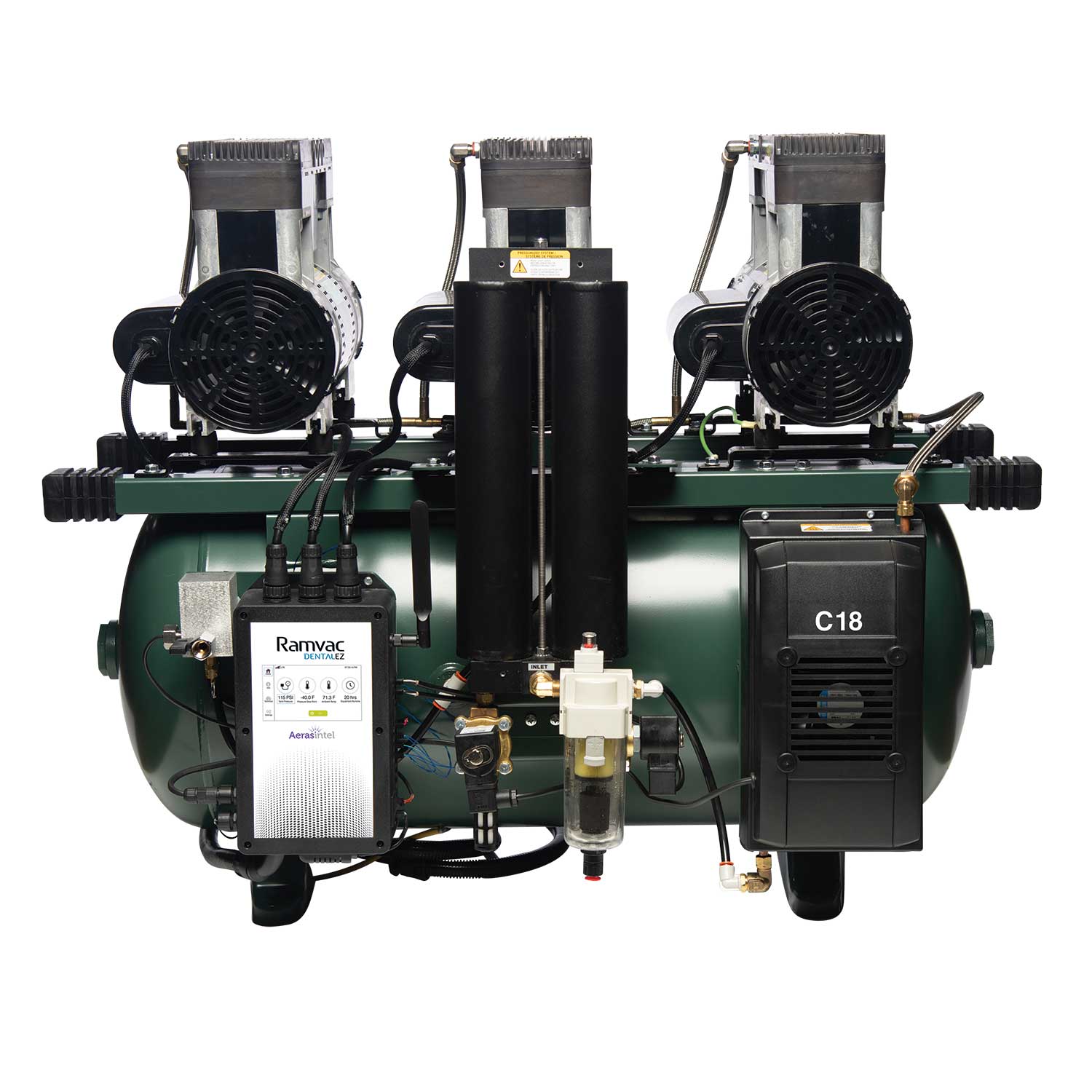
The distinction matters because a dashboard cannot repair a compressor. The useful chain runs from sensor to notification to somebody capable of responding. That is also the limit of the idea: compatible hardware, working connectivity, and a maintenance response still matter. Handpiece tracking requires compatible readers. Product literature identifies AERAS, Inc. as a separate corporation from DENTALEZ.
Hardware development continues alongside the connectivity. In February 2026, DENTALEZ announced the Star E900 electric system and Star 440 air-driven handpieces. The E900’s 1:5 attachment monitors head temperature and can trigger an alert and motor shutdown. The 440 permits in-office turbine replacement. Both address specific interruptions rather than asking the clinician to admire a screen.
04 Selling the equipment is another design problem.
DENTALEZ launched DSX in January 2024, bringing its brands together with offerings such as Porter nitrous systems and ILS cabinetry. The announcement argued that shallow product knowledge can produce poor purchasing decisions. That is a revealing concern for a manufacturer with so many categories to explain.
“Product knowledge is a key component of consultative selling”
Carlos Martinez, Senior Director of Sales, 2024
Against alternatives such as A-dec, DENTALEZ’s pitch combines portfolio breadth, configurable Forest equipment, and connected monitoring. That describes its positioning, rather than proving superiority. A practice still needs to compare the actual package, the installer, repair access, and the way its team works. For a new office, that means treating the room as a set of dependencies: the chair needs space, the instruments need support equipment, and the people need a workable routine. Buying those pieces together can simplify the conversation. It also makes careful questions about compatibility and service more valuable. The company’s expertise sits in these everyday equipment decisions.
Its public mission stresses practical solutions for patients and professionals. Its stated values emphasize collaboration, accountability, and respect. Those promises become testable in a fairly ordinary setting: the sales discussion before installation and the service call afterward. A sophisticated catalog means little if a practice cannot get a useful answer about the equipment it already owns.
05 Finally, put the upkeep on the bill.
In February 2026, DENTALEZ, Darby, and UptimeHealth introduced TotalOp. It combines eligible chairs, handpieces, compressors, and vacuums with preventive maintenance, repairs, monitoring, and software. The customer pays monthly. The arrangement brings three different capabilities into one offer: equipment manufacturing, dental distribution, and maintenance software and coordination. It makes the service relationship part of the purchase from the start. For an owner opening or expanding a practice, the attraction is predictable equipment spending and less capital committed upfront.
DENTALEZ’s illustrative TotalOp example totals $300,678 over seven years. Package and contract terms matter.
The site compares that example with $270,109 over a five-year traditional loan. Different durations and service coverage make those totals unsuitable as a simple savings contest. An owner should compare equivalent periods, included repairs, exclusions, ownership, and exit terms. A practice with capable existing equipment and dependable maintenance may have less reason to subscribe.
There is a useful idea here for businesses far outside dentistry: examine the work surrounding your product. DENTALEZ’s history moves from physical positioning to equipment coordination to paying for upkeep. Each step asks who carries an awkward task. The patient settles into the chair. Somewhere else, somebody still has to keep the air moving.