Consider the button. It has a rounded, mushroom-shaped head, sits on a transparent dental tray, and gives a rubber band somewhere to hold. You could look straight at an Angel Aligner and miss it. An orthodontist is less likely to. A separate button can mean bonding something to a tooth, then dealing with it if it comes loose. Angel molds its anchor into the aligner. The patient sees a small piece of plastic. The practitioner sees a step removed from an appointment.
- Custom aligners, planning software and clinical support, sold through dental professionals.
- Two materials in Pro; elastic anchors built into the tray.
- 532,400 cases in 2025, followed by growth and a European patent setback in 2026.
That little difference is a useful way into this company. Angelalign, founded in 2003 by Li Huamin with clinical and scientific collaborators, built a business around moving teeth. Its brand, Angel Aligner, now serves professionals in more than 60 countries. The interesting question is how something so apparently simple acquires enough value to travel that far.
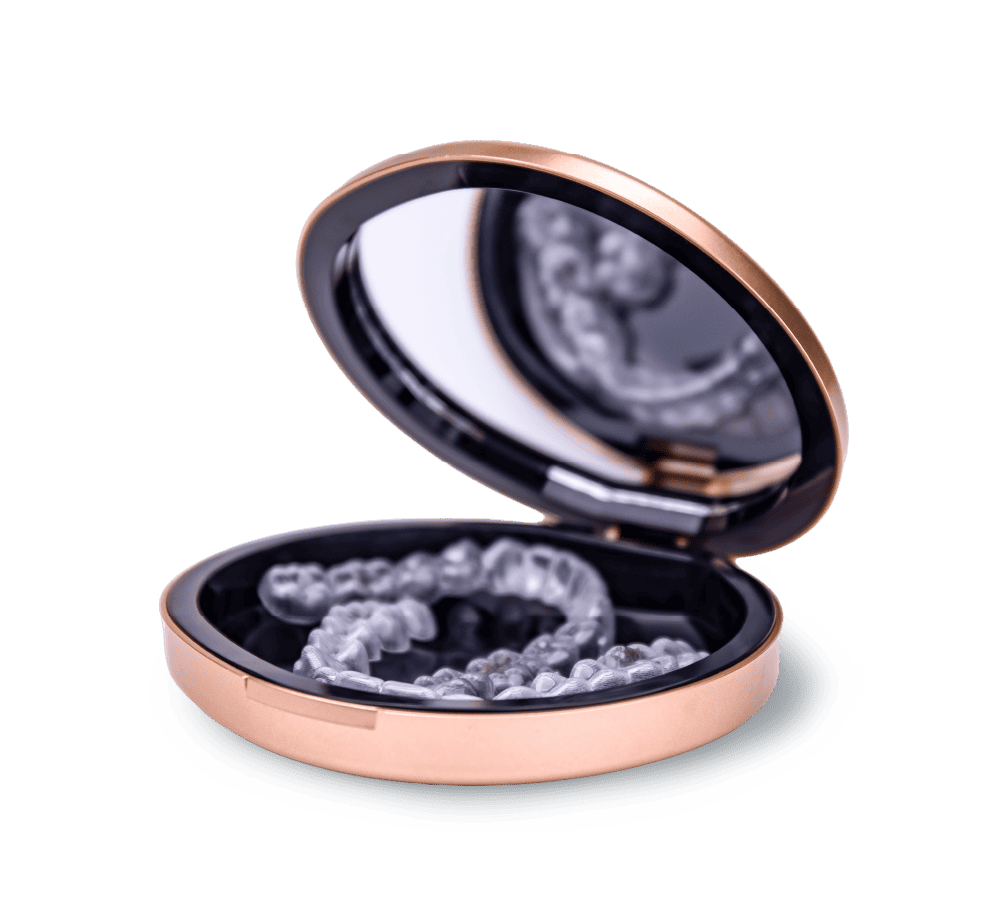
The expertise sits across several disciplines: polymer materials, biomechanics, software and production. Angel has also worked with universities; a Zhejiang University institute described a joint research center in 2021. A useful treatment plan has to survive all those handoffs. The material must express the planned force, manufacturing must reproduce the design, and the clinician must be able to evaluate what arrives.
Seven days. Then three.
A clear aligner must reconcile competing demands. It needs enough flexibility to fit and enough stiffness to express the intended force. Angel Aligner Pro makes those properties part of a sequence. In its “7+3” approach, a patient uses a masterControl S aligner for seven days, followed by a more rigid masterControl aligner for three. Each stage therefore has two appliances with different mechanical jobs.
masterControl S
masterControl
Two materials. One prescribed sequence.
This is a design rationale, rather than a promise that every case finishes faster. Teeth do not read product brochures. But it gives the clinician another variable to manage. Select covers a broad range of everyday aligner cases. KiD adds features for developing dentition, including growth guidance and oral function. The A6 solution combines mandibular advancement with alignment in appropriate cases. Retainers address the less glamorous business of keeping the result.
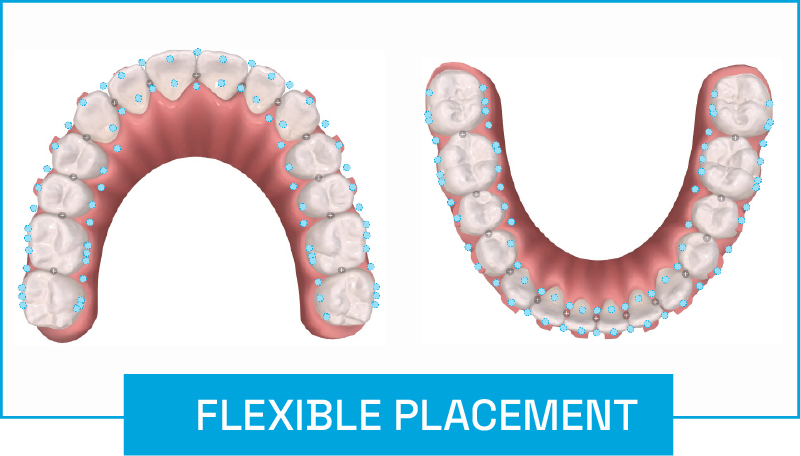
The molded anchor, called angelButton, follows the same logic. Elastic placement becomes something that can be designed into the appliance. Angel describes a smoother workflow and fewer problems associated with separate bonded buttons. Whether that matters in a particular mouth remains a clinical question. As a product decision, though, it is wonderfully specific.
The software has to see below the smile
The visible crown is only part of a tooth. Its root, surrounding bone and relationship to its neighbors complicate the cheerful animation of a future smile. Angel’s cloud platform, iOrtho, lets practitioners review, adjust and approve digital plans. Its Intelligent Root System integrates CBCT-derived root and jaw data with crown information. Other root representations are available when those scans are absent.
The platform also handles case submissions, collaboration and mobile approvals. Angel names 3Shape, Medit and DentalMonitoring among its workflow partners. Those connections matter because a dental practice already has equipment, habits and staff to train. A new tray system must find a place in that working day.
“Listen to doctors, design for doctors.”
Angel Aligner’s stated product philosophy
The company earns revenue from customized aligners, treatment solutions and related products and services. Dental professionals prescribe and supervise care. Patients receive a course of treatment from their practice, whose fee reflects the case and services included. That arrangement places Angel alongside professional systems such as Invisalign. Switching suppliers consequently involves more than choosing a different box of trays. It involves learning another planning environment and deciding whether its clinical support fits the practice. It also makes clinician confidence a commercial necessity.
For a prospective patient, the starting point is a consultation with a dental professional. The useful discussion concerns the diagnosis, proposed movements, wear schedule and supervision. For a practice considering Angel, the equivalent exercise is to examine a representative case in the planning software. An attractive animation is easy to appreciate. Understanding how to revise it, approve it and manage the actual patient takes more attention.
The bill for going global
In 2025, Angelalign shipped approximately 532,400 cases, up 48.1%. Revenue reached $370.3 million, up 37.8%. Outside mainland China, revenue rose from $80.5 million to $163 million. An international operation was becoming a substantial business.
+102.5% in a year. Revenue measures sales, not profit.
The bill was substantial, too. The 2025 accounts recorded $27.6 million in research and development expenses and $121.5 million in selling and marketing. The international segment still lost about $14.8 million, although that loss narrowed from roughly $31.2 million in 2024. These are different measures, and the spending figures cover the group. Together they show why a shipment chart cannot tell the whole story.
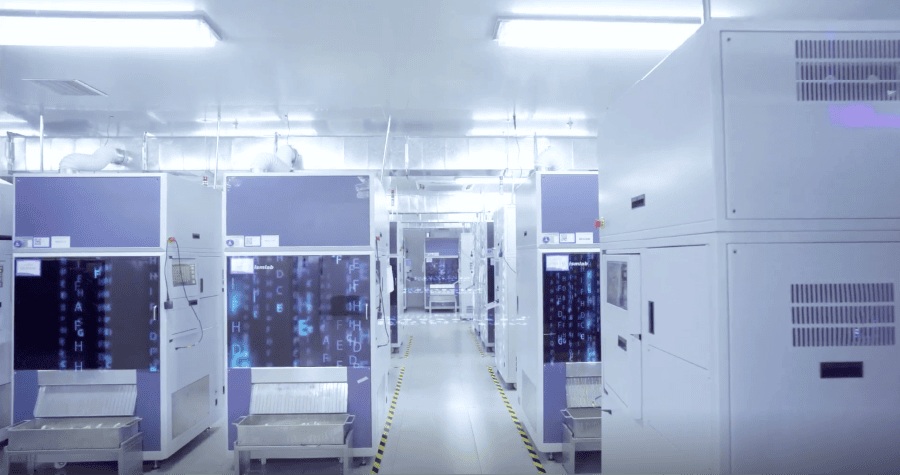
By the first half of 2026, revenue had reached $230.7 million. Management said Europe and North America had become profitable ahead of plan, pointing to investment in education, sales service and local clinical support. The implied lesson extends beyond dentistry: adoption needs people who can help a customer use the thing you manufacture.
A ridge meets a courtroom
Growth brought another test. On October 16, 2026, the Paris division of the Unified Patent Court found that Angel’s Torque Ridges infringed an Align Technology patent. The ruling included an injunction and damages, with appeal available. Angel disagreed and said it would comply. It also said it had already replaced Torque Ridges in Europe with Pressure Points. Align disputed the suggestion that the replacement was an equivalent upgrade.
The distinction matters. Selling a useful appliance, proving a clinical benefit and establishing freedom to operate are separate jobs. So is selecting the right patient. A removable tray depends on prescribed wear, suitable treatment planning and follow-up. A manufacturer’s case gallery cannot decide whether a particular child or adult should receive aligners.
There is still a practical idea to borrow here. Watch the task your customer repeats. Find the troublesome handoff between a digital plan and a physical action. Angel’s button makes that idea tangible: a small anchor, designed in advance, waiting exactly where the practitioner needs it.