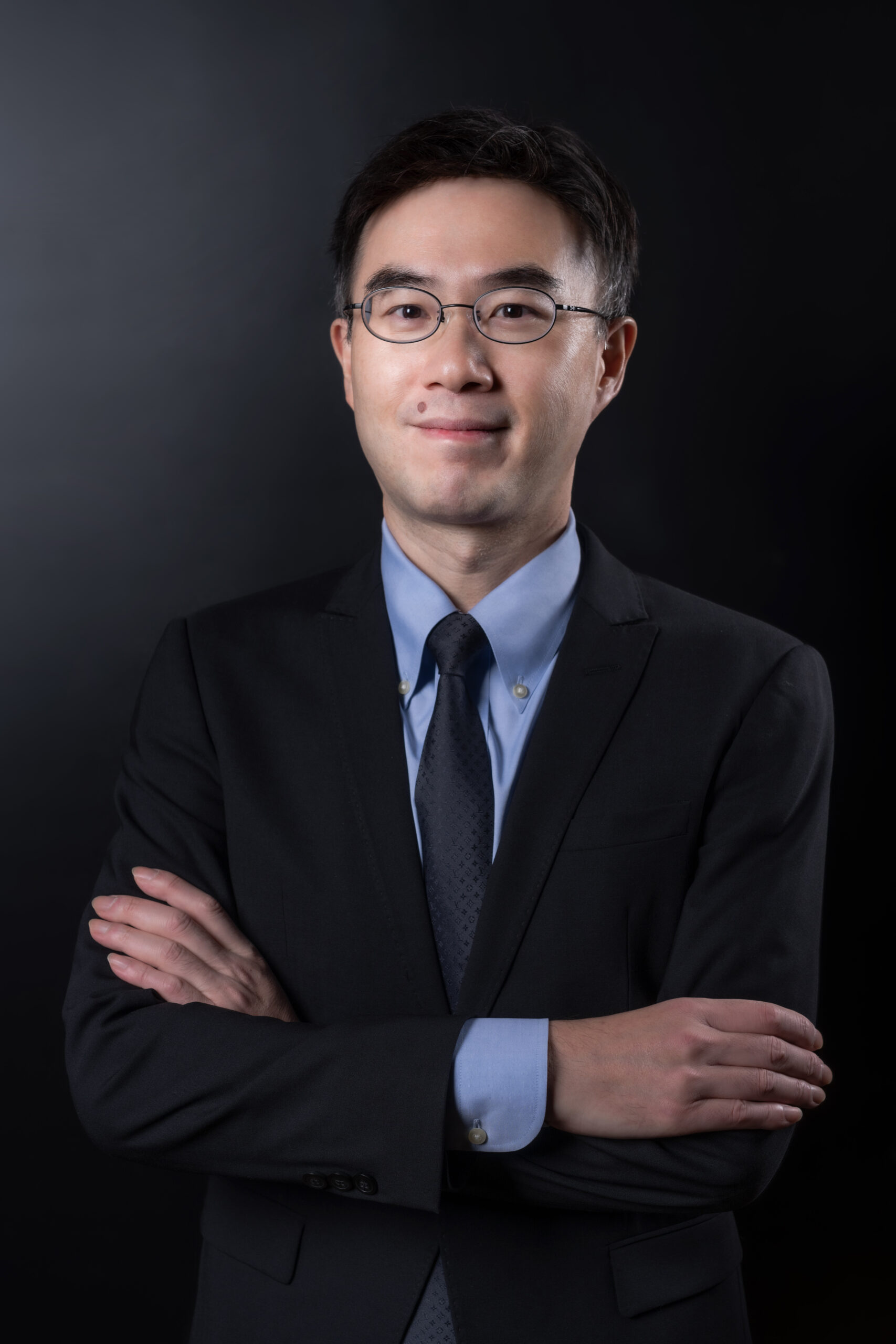
There is a moment in most careers where the thing you've spent years building either absorbs you completely or throws you into something no one could have predicted. For Mike Yang, that moment came somewhere between managing global materials strategy at a $1B+ green energy company and wondering why dentists were still pressing plastic sheets over plaster casts like it was 1960.
Yang joined LuxCreo in August 2019, not as CEO, but as Chief Commercial Officer and President of North America. He was the operational architect before he was the figurehead. By January 2023, he had the title to match the role he had been playing. The sequencing matters: Yang didn't walk in claiming a vision. He earned the chair by building the machine.
What LuxCreo actually does sits at the intersection of materials science, photopolymerization, and clinical workflow design. The company's iLux Pro Dental printer uses a process called Light-Based Additive Manufacturing (LBAM) - proprietary photopolymerization technology that produces aligner trays with 96% dimensional accuracy at the 200-micron threshold. Thermoformed aligners, the industry standard, manage 81%. The difference sounds small. The clinical implications are not.
That phrase - "shape memory" - is where the story gets interesting. LuxCreo's ActiveMemory Polymer, the material behind the 4D Aligner, behaves unlike anything previously used in orthodontics. Place a tray in hot water and it returns to its prescribed geometry. Yang describes it simply: "You know where home is." Every step in the treatment sequence is, in his word, self-correcting. The aligner doesn't just move teeth. It keeps trying to move them correctly.
The 4D Aligner received FDA Class II 510(k) clearance in May 2022 - the first direct-printed aligner in the world to clear that bar. The distinction matters because Class II devices require demonstrated substantial equivalence to a predicate device while meeting specific performance benchmarks. Getting there required Yang's cross-disciplinary background: computational biology (his Harvard PhD research area), materials chemistry, and the kind of FDA regulatory navigation that most startups outsource. LuxCreo did not outsource it.
In Europe, the 4D Aligner received MDR CE Class IIa certification in early 2025, cleared in time for the IDS dental trade show in Cologne. The launch included the 4D Bright Aligner - a variant combining orthodontic correction with whitening chemistry. The competitive dental market has a long tradition of product stacking. LuxCreo did it with one print run.
Yang's career before LuxCreo reads like someone who collected credentials as a habit and experience as a strategy. AT&T Bell Labs came first - serious technical work in digital transmission and protocols. Then Akamai as Regional Manager, where he managed internet caching infrastructure before "cloud" was a word anyone used at sales meetings. McKinsey followed, three years leading APAC high-tech and semiconductor strategy as Engagement Manager. Then Danoo, where as Founding CFO and CTO he raised $20M+ from top-tier VCs and built what he describes as the "Focus Media of the US" in out-of-home digital media.
Bloom Energy was the long stretch - December 2008 to August 2019, Managing Director of Global Strategic Materials. Fuel cell technology. Green infrastructure. Over $1B raised during his tenure. It is unusual career capital for someone who would eventually spend his days discussing polymer crosslink density and intraoral scan interoperability. But that's precisely the point: Yang's value to LuxCreo is not that he knows dentistry. It is that he knows how to build companies that build things no one has built before.
The Wharton connection runs through the company itself. LuxCreo co-founder Michael Strohecker (Chief Revenue Officer) was also in the Wharton MBA Class of 2004 - the same cohort as Yang. They reconnected more than 15 years after graduation to build something in an industry neither had worked in before. The dental 3D printing market, in 2017 when LuxCreo was founded, was a landscape of technical possibility and commercial incoherence. They chose to make it coherent.
In October 2025, Angelalign Technology - the world's largest clear aligner company, based in China - made a strategic investment in LuxCreo. The stated purpose: co-development of next-generation 3D printing materials for aligner therapy. The subtext: the biggest player in the global aligner industry decided that Yang's material science platform was worth owning a piece of. Kleiner Perkins led the Series B in the same period. The validation arrived from both ends of the industry simultaneously.
Beyond LuxCreo, Yang serves as Board Director at the 1990 Institute, a US-China non-profit think tank. He is a mentor at Orbit Ventures, where his chosen guiding quote comes from Morris Chang, TSMC's founder: "Beyond every formidable obstacle is a brighter future." It is a sentence that reads differently when you know Yang spent eleven years in green energy before pivoting to dental manufacturing. The obstacles were not metaphorical.
The production economics are worth noting. A direct-printed LuxCreo aligner tray costs $12.47. An outsourced thermoformed equivalent costs $15.87. The 19% cost reduction, combined with same-day in-clinic production and half-day staff training requirements, makes the business case legible to any dental practice manager with a spreadsheet. Yang has been careful to frame adoption pragmatically: "Allocate about 20 to 30 percent of your cases to try it out." He is not asking for religious conversion. He is asking for a controlled experiment.
LuxCreo has also expanded beyond teeth. In October 2024, the company entered the sleep apnea device market with its EMA 3D devices. A partnership with ASICS for personalized 3D-printed athletic shoes was announced in July 2024. The common thread is not dentistry. It is the platform: high-precision, high-speed, light-based additive manufacturing for personalized devices at clinical and commercial scale. Dentistry was the proof of concept. The addressable market is considerably larger.
 San Francisco, CA