Four hundred unfinished smiles make an awkward business plan. In 2006, Houston dentist Willis Pumphrey had more than 400 patients partway through clear aligner treatment when their supplier, OrthoClear, stopped operating. Teeth do not pause politely while a purchasing department looks for another vendor. The people in his chair still needed their next appliances.
- The beginning: a dentist made aligners to keep interrupted treatment moving.
- The customer: dental professionals buy the system; patients receive care through them.
- The distinction: proprietary material, trimline choices and editable digital treatment plans.
- The transaction: Straumann announced an approximately $150 million acquisition in 2017.
A back room becomes an aligner lab
Pumphrey’s response was unusually literal: make the missing product. An early company account describes him working with Paul Dinh in the back of his practice, cutting and repositioning stone models and making aligners by hand. It is a pleasingly unglamorous opening for a company now surrounded by digital dentistry. Before there was a platform, there was work on a model.
Other local dentists began placing orders. The solution to one practice’s interruption became a supplier for other practices. That change matters. Pumphrey had started with people already waiting for something specific. He could discover whether his solution helped without first persuading the world that the problem existed.
By 2011, Inc. had named ClearCorrect America’s fastest-growing health company. Its reporting described a lower-priced alternative to Invisalign and an approach that shipped aligners in phases, allowing adjustments along the way. Those were historical prices and practices, rather than a promise about today’s bill. But they establish the early proposition: dentists wanted another workable option.
The buyer holds the prescription
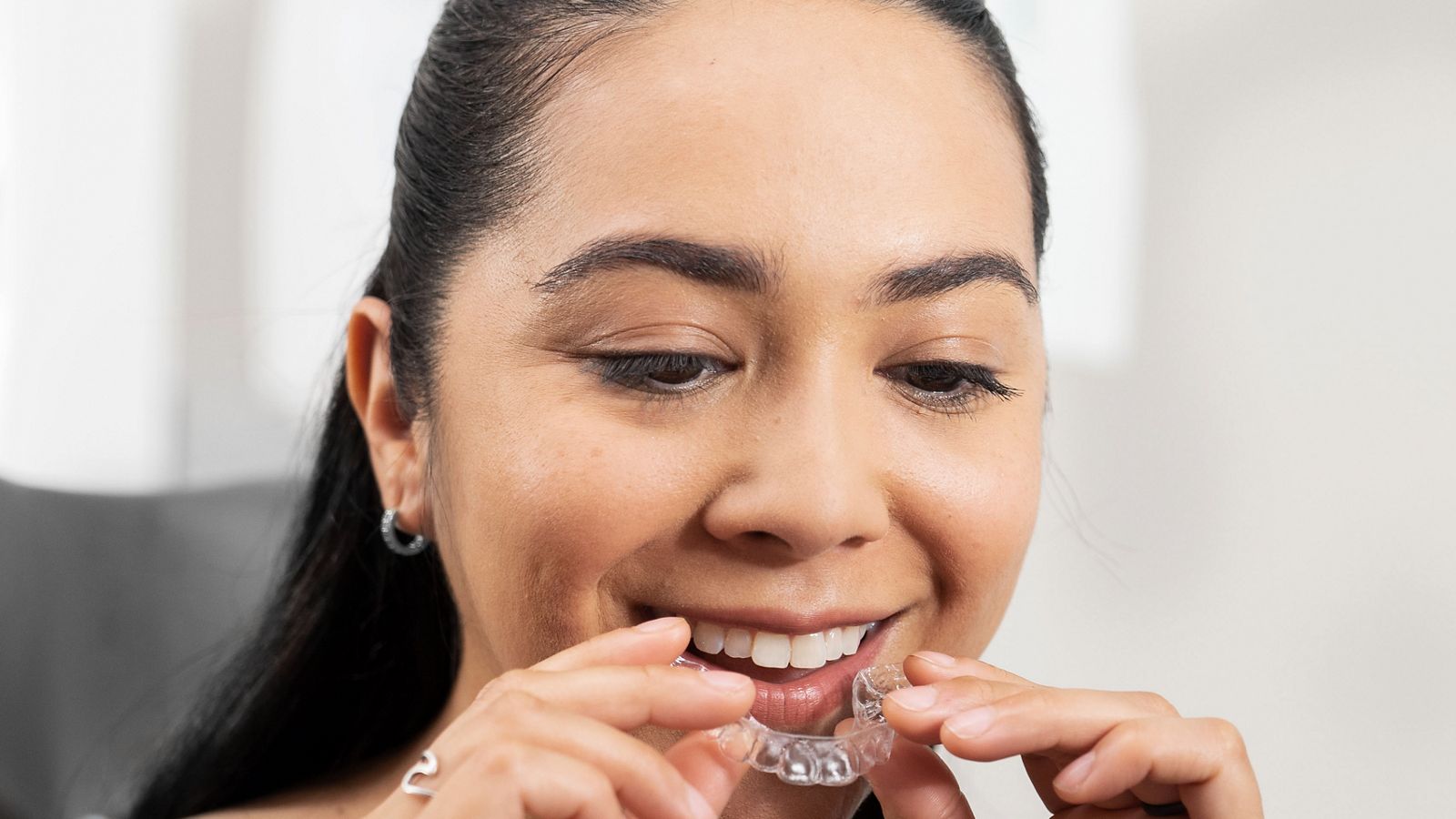
ClearCorrect makes custom clear aligners: removable appliances that move teeth through a prescribed sequence. It also supplies retainers to help preserve the result. The visible object is modest enough to disappear into a palm. The surrounding service includes treatment planning, case management, clinical collaboration and education.
Its paying customers are orthodontists and general dentists. Their teams handle records, submissions and patient communication; patients wear the appliances. ClearCorrect says it has collaborated with tens of thousands of clinicians worldwide. That describes reach, without telling us how many practices are actively buying cases this month.
For a patient, the route begins with a dental professional examining oral health and gathering records. The doctor decides whether aligners suit the case. ClearCorrect’s patient materials describe applications including crowding, spacing and several bite problems. A list of conditions establishes possibilities; it does not make every person with that condition an appropriate candidate.
This places the company in the market for professionally managed orthodontics, alongside Invisalign and other prescribed aligner systems. Fixed braces remain another route. A meaningful comparison asks about the particular case, the clinician’s experience and the complete treatment plan. Brand recognition is a rather expensive substitute for those questions.
An argument conducted in plastic
ClearCorrect’s engineering pitch begins with ClearQuartz, its proprietary three-layer material. Two resilient outer polymer layers surround an elastomeric inner layer. The layers have different mechanical jobs: the outer structure supplies durability, while the inner layer is designed to sustain force. The material looks transparent; its construction is quite deliberate.
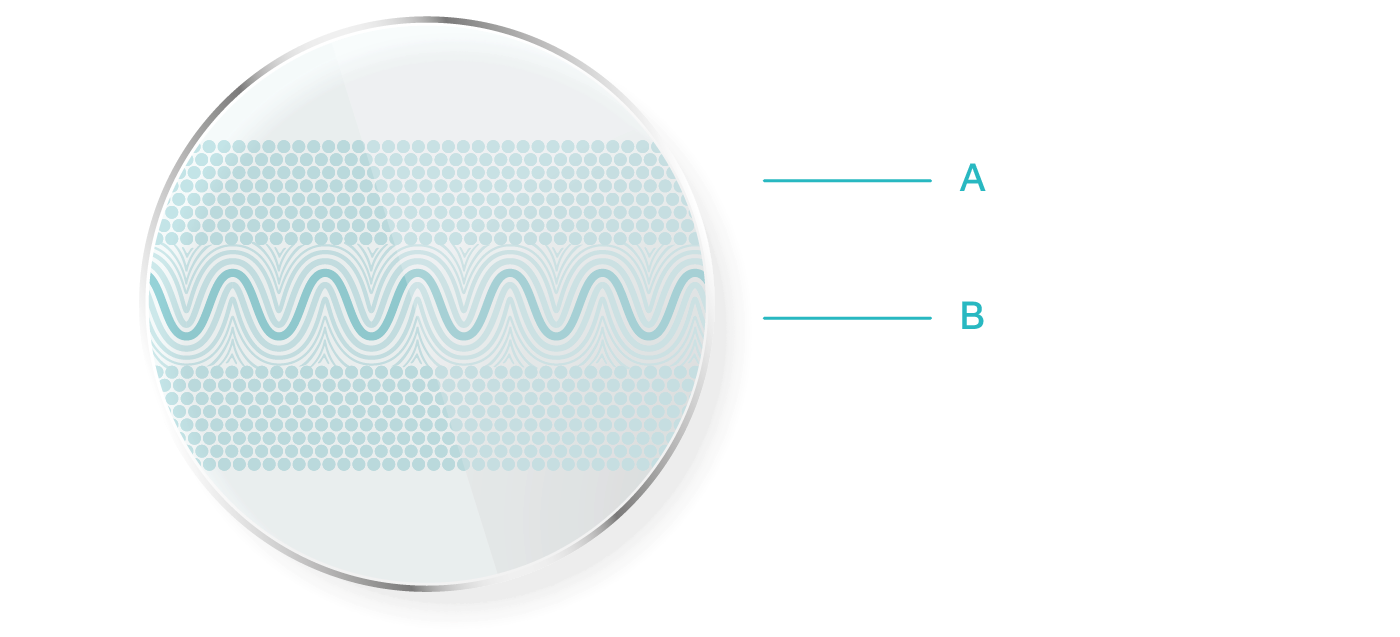
The edge is another part of the argument. ClearCorrect has emphasized a high, flat trimline extending beyond the gum margin. Its product literature connects that geometry with retention and force transmission. Some comparisons draw on laboratory research, and others on company-held data. Those findings should be read within their test conditions; they do not establish that every patient will finish faster.
In October 2025, a regional launch introduced a low trimline alongside the existing high option. The stated aim included cases where reduced retention would help insertion and removal. The useful detail is the choice: the clinician can weigh comfort and retention for a particular mouth. An appliance that grips more firmly is not automatically the best answer to every anatomy.
The software is where the decisions live
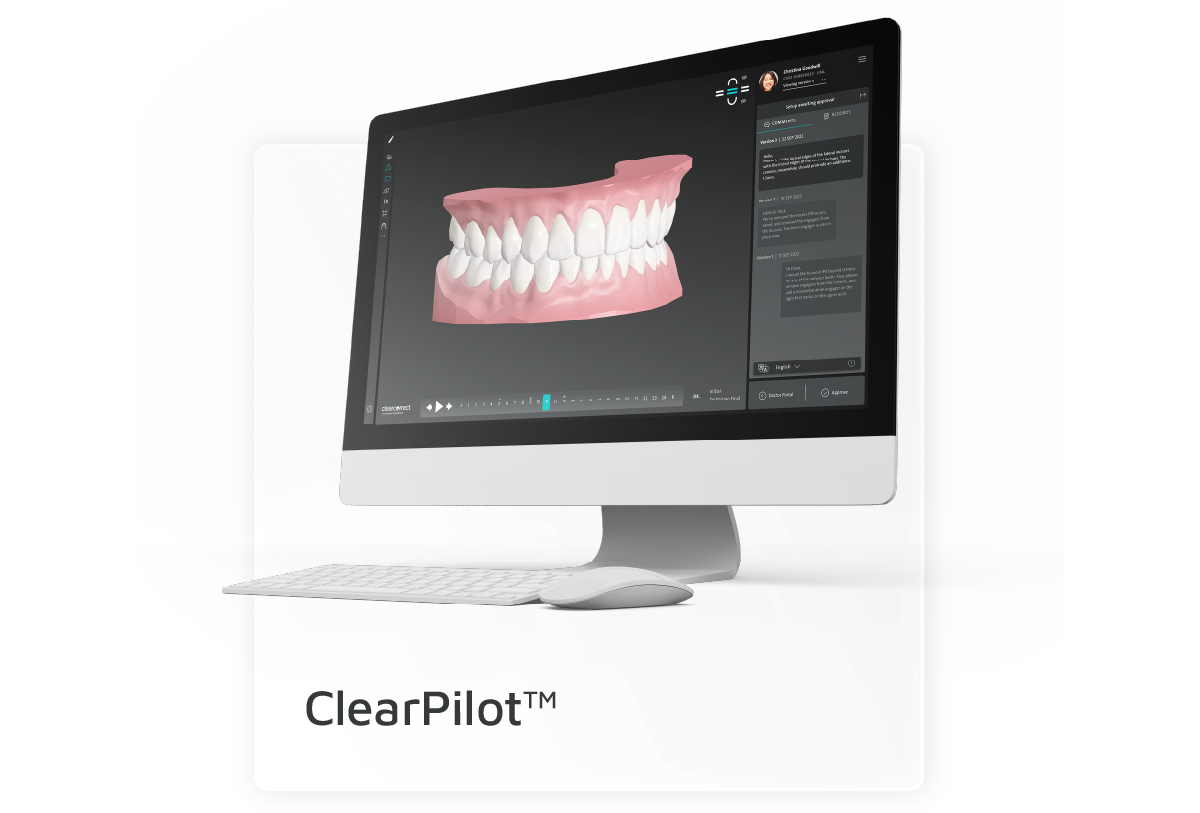
An aligner company must translate a prescription into a succession of manufactured shapes. ClearPilot is ClearCorrect’s browser-based interface for reviewing that proposed journey. Clinicians can examine the setup, analyze movements and make edits before approval. Its controls cover tooth positioning and clinical features; its analysis tools include measurements, Bolton analysis and collision monitoring.
ClearPilot sits within a larger workflow. Records can arrive through scanner integrations or uploaded STL files. The Doctor Portal handles cases and collaboration. Sync brings photo capture and case management to mobile devices. External treatment-planning services can participate through the Collaborator Suite. The practical attraction is fewer awkward handoffs between a record, a question and an approval.
The 2026 anniversary expansion reaches further. ClearCorrect presents Case Assessment for complexity guidance, an Outcome Simulator for chairside previews, CBCT visualization in planning, and RemoteCare powered by Dental Monitoring. These additions address different moments: choosing a case, discussing it, planning it and following progress. Availability depends on the market.
A preview is useful because people can see a possible result. It is also easy to ask an attractive picture to do more work than it can. A simulation supports a conversation; clinical judgment establishes the treatment. Remote monitoring likewise supplies information for follow-up, while the professional remains responsible for care.
- 01RecordScans + photos
- 02ReviewClinician approval
- 03TreatCustom aligners
- 04FollowMonitoring + retainers
Who pays for uncertainty?
Orthodontic treatment takes place over time, and time leaves room for changes. ClearCorrect’s case packages make that variability part of the purchase. FLEX charges for the required steps, with additional charges for items such as new setups and retainers. Other packages bundle defined allowances or treatment periods.
The 2026 brochure lists MINI, ONE and TWO alongside UNLIMITED 3 and UNLIMITED 5. The names describe different commercial boundaries, including step counts, revision allowances and years of coverage. They are not a timetable for an individual patient’s teeth. A clinician chooses coverage around the anticipated work; a longer allowance does not mean everyone needs longer treatment.
The patient’s price is a separate calculation. A practice’s bill pays for professional care as well as appliances, and the contents of that bill matter. Ask whether reviews, revisions and retainers are included. The useful comparison is an itemized treatment quotation, with the same assumptions on both sides. A low starting number can be very charming until it acquires companions.
A global network, bought for $150 million
In August 2017, Straumann announced the acquisition of ClearCorrect for approximately $150 million. That figure was the consideration for a company purchase. It should not be recast as a venture funding round. Straumann was entering orthodontics; ClearCorrect offered manufacturing knowledge, technology and an established foothold.
“ClearCorrect provides us with technology, expertise and a strong footing in this field.”
Marco Gadola, then Straumann Group CEO, 2017
The other half of the exchange was distribution and resources. In the announcement, ClearCorrect’s then-CEO Jarrett Pumphrey described the opportunity to improve and expand. Straumann’s international dental network offered a way to reach professionals beyond the company’s original footprint. The acquisition changed what expansion could draw on.
That relationship also helps explain the present combination of appliances, scanners and software. ClearCorrect participates in Straumann’s dental ecosystem while supporting direct integrations with systems such as 3Shape TRIOS and Alliedstar. For a practice, compatibility matters because an existing scanner is already an investment, a training habit and part of the working day.
Twenty-two hours, and a lesson worth borrowing
ClearCorrect’s own clinical checklist calls for consistent wear: 22 hours a day, every day. It also tells doctors to start with manageable cases and makes clear that outcomes cannot be guaranteed. The limitation is wonderfully concrete. Removability helps with meals and cleaning; it also gives a patient repeated opportunities to leave the appliance out.
Consistency is part of the treatment.
ClearCorrect’s clinical checklist; follow the treating clinician’s instructions.Training addresses another constraint. Ortho Campus offers courses and webinars, while the clinical case gallery lets professionals examine examples of treated conditions. The company’s public identity emphasizes listening to clinicians. These resources give that positioning a practical form: help the customer use the product with appropriate judgment.
The transferable business lesson begins in Pumphrey’s practice. Find an interrupted job that people already need finished. Solve the immediate problem, then create the manufacturing, tools and support that make the solution useful to others. In dentistry, the approach still depends on suitable cases, competent supervision and patients who follow the plan. ClearCorrect’s origin is memorable because the first measure of success was so plain: could those waiting patients receive their next aligners?
Take a closer look
Explore the system, inspect clinical examples or watch the planning tools in action.