The Dispatch
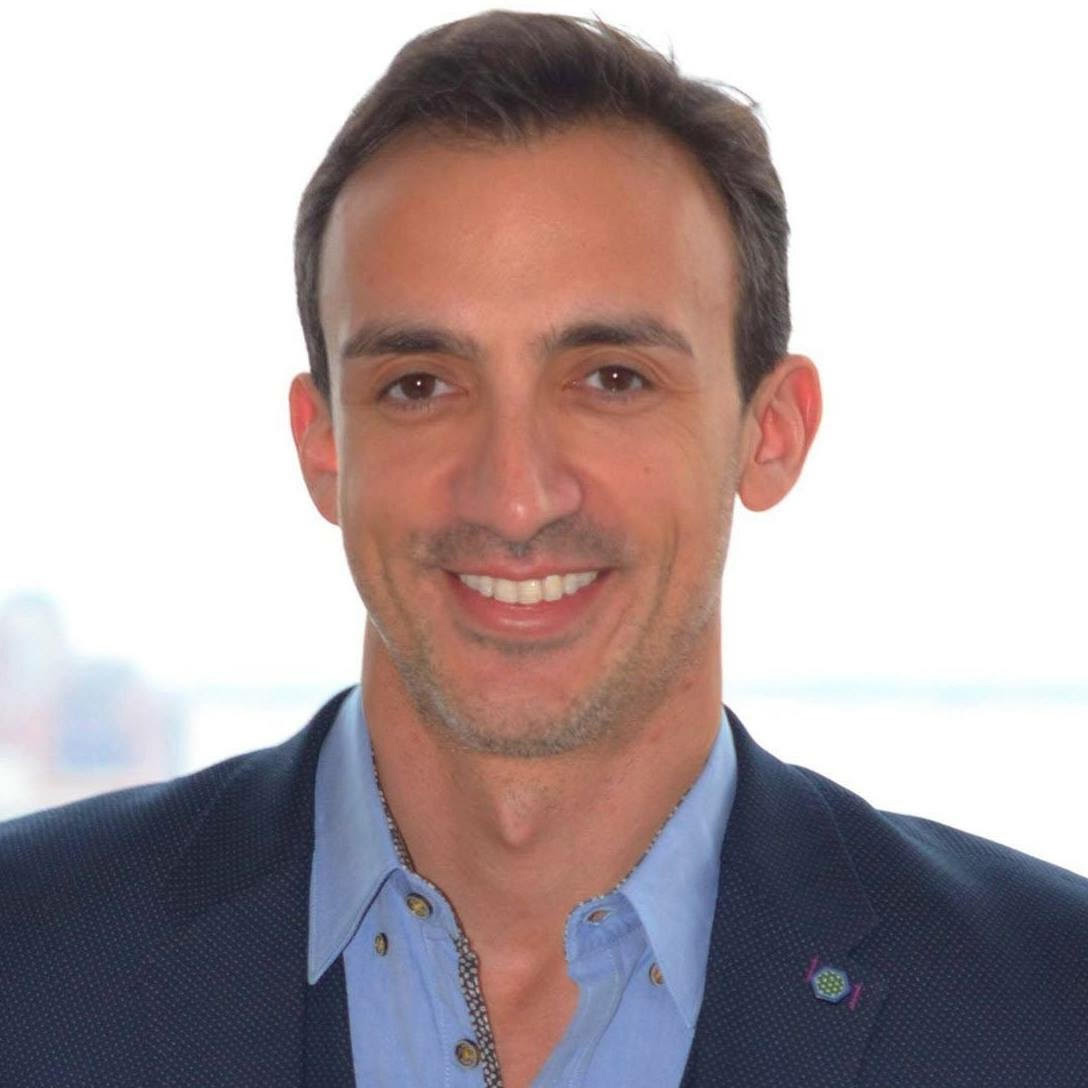
A conference ends. A few hundred physicians fly home. The talks that mattered get compressed into a 400-page PDF, a few slide decks, and a folder no one opens again. Bozidar Jovicevic looked at that graveyard of expensive knowledge and saw a streaming service waiting to be built.
That is the wager behind Evermed, the New York company he co-founded and runs as CEO. The pitch is almost suspiciously simple: give a medical society or a healthcare organization its own Netflix-style video library, fully searchable, accredited for continuing education, and live in about 90 days - no new IT department, no engineers to hire, no platform to babysit. Conference recordings, expert lectures, panel debates - the stuff that usually evaporates - become a binge-worthy library physicians actually return to.
Evermed is small and young. Forty-six people, a $3.6 million seed round raised in 2022, an office at the western edge of Manhattan's Meatpacking District. But the thesis is large. Jovicevic is betting that the way doctors learn is shifting from the lecture hall to on-demand video, the same way the rest of us stopped scheduling our evenings around the television grid. If he is right, every medical association sitting on a vault of recorded expertise is sitting on an unbuilt streaming product.
From sixty-four squares to a global launch
Before he was a founder, before he was an executive, Jovicevic was a teenager who was very good at chess. Not good in the way most people mean it. He was Serbia's national champion under twenty, twice, in 1995 and 1996. By the time he was twenty, FIDE had awarded him the International Master title. He played semi-professionally. He still keeps a chessboard in his head: ask him to relax and he will fire up a game of bullet chess, the format where each player gets a single minute for the entire game and the whole thing is decided in a blur of pre-calculated patterns.
Chess is the quiet key to the rest of the story. It is a game about seeing several moves ahead, about reading a position before the consequences arrive, about committing to a plan when the payoff is still abstract. That is more or less the description of every job he has held since.
He trained as a doctor at Belgrade University School of Medicine, then went looking for the language of business and found it at AUEB's international MBA program in Athens, finishing in 2006. He has said the entrepreneurship coursework there lodged something in him - a conviction that he would one day start things rather than only run them. He filed that away and went to work.
Seventeen years learning where the bodies are buried
The next chapter reads like a careful endgame. Jovicevic spent roughly 17 years in the life sciences industry, much of it inside two Fortune 500 pharmaceutical giants. At Novartis he moved through commercial and product roles, eventually becoming Global Digital Head of Medical Affairs. At Sanofi he became Vice President and Global Head of Digital Medicines, running what the industry calls "beyond-the-drug" work.
That phrase is worth slowing down on. His argument, made repeatedly during those years, was that for a lot of patients a pill simply is not enough. The real outcomes hinge on behavior, on coaching, on education, on the boring daily decisions a prescription cannot reach. He liked to point out that five preventable lifestyle diseases account for something like 86% of US healthcare spending - and that the hardest barrier to fixing that is not science but human habit. Drugs, he came to believe, needed a "plus." Technology was the plus.
For many patients, a pill or drug is not enough.
— Bozidar Jovicevic, on the logic behind "beyond-the-drug" medicine
Working under chief digital and chief medical officers, he launched products globally and led digital initiatives across multiple countries. It was, in retrospect, a long apprenticeship in the exact problem he would later quit to solve full-time: how do you get the right knowledge into the right human's head at the moment it changes what they do?
The 90-day library
In 2021 he stopped advising the giants and built his own thing. Evermed grew out of a frustration anyone who has attended a medical congress will recognize. The content is gold. The distribution is medieval. A society spends a fortune flying world experts to a stage, records every word, and then lets it gather dust because turning recordings into an accredited, searchable, monetizable library is genuinely hard.
Evermed's answer is to do that hard part as a service. Societies bring the content and the audience; Evermed brings the platform, the search, the thumbnails, the analytics, the AI-driven recommendations, the CME accreditation plumbing, and a path to revenue through subscriptions and industry sponsorship. The reference point Jovicevic reaches for is deliberately consumer: Netflix. Not because medicine should be entertainment, but because the bar for "watchable" has been permanently reset by the apps in every physician's pocket.
He has not gone quiet about it, either. Jovicevic hosts two podcasts that double as a public notebook for his thinking. Pharma Launch Secrets digs into how products actually succeed when they hit the market, interviewing the people who have launched them. Digital Innovators Circle - released in 2025 and packaged as an Audible series - widens the lens to the broader collision of AI, technology, and healthcare. Both are extensions of the same instinct that built Evermed: take expertise that usually stays locked in a few heads and make it travel.
The long game, on purpose
Ask him for career advice and he does not hand you a five-year plan. He tells you to try a lot of things and move toward whatever feels good, to optimize the early years for learning rather than for the symbols other people use to measure success. It is the opposite of how you would expect a chess player to talk - until you remember that good players do not memorize the whole game, they develop a feel for good positions and trust it.
He is candid about mentorship, too, including its failure mode: people collect mentors and then never close the loop, never report back what happened when they took the advice. The follow-through, he argues, is where the value actually lives.
What unites the doctor, the chess master, the pharma executive, and the founder is a refusal to accept the status quo as the final position. He keeps quoting Einstein - that problems cannot be solved by the same level of thinking that created them - and then keeps acting on it. Boring continuing education? Build a streaming service. A pill that is not enough? Add the technology. A career that feels safe? Trade it for a seed round and forty-six people in the Meatpacking District.
Problems cannot be solved by the same level of thinking that created them.
— a line he borrows from Einstein, and keeps proving
Evermed may or may not become the streaming layer for the whole of medical education. Seed-stage companies rarely announce their own endings. But the man building it has spent his entire life turning dense, expensive knowledge into something other people can actually use - first across a chessboard, then across a global drug portfolio, and now across a video library that loads in your browser. The opening has been consistent for thirty years. He is just playing it on a bigger board.