At eight o’clock in the evening, the air conditioning stopped. EcoFlow’s first office was a little over a hundred square metres, and the building’s cooling schedule had no interest in the ambitions of its young engineers. In summer, some worked without shirts. Years later, Bruce Wang Lei still had a question for prospective landlords: could the air conditioning run for twenty-four hours?
It is a pleasingly unglamorous detail in the career of someone trying to change how households obtain electricity. Before the home energy systems, before the crowdfunding millions, there was a room that got too hot. A company devoted to giving people more control over power began with an unusually tangible reminder of what happens when somebody else controls the switch.
Wang, EcoFlow’s founder and CEO, has spent his career working on batteries. The scale of the assignment has changed considerably. At DJI, the problem travelled inside a drone. At EcoFlow, it has grown from a portable box into an interconnected household. Through each version runs a recognisable interest: taking energy research out of the laboratory and giving it something useful to do.
A childhood with sand in it
Wang was born in Yulin, in China’s Shaanxi province, near the Mu Us Desert. It is a place with abundant energy resources and an intimate acquaintance with sandstorms. His childhood put two kinds of power in the same frame: the extractive economy around him, and the force of a landscape that could turn the sky yellow.
He remembers teachers taking pupils out to plant trees to hold the soil and shelter it from the wind. There is a straightforward connection between that experience and his later interest in renewable energy. Environmental improvement was something people could work on, with their hands, in a particular place. A tree was a small intervention with a practical purpose.
That background lends his career a different starting point from the usual tale of an entrepreneur discovering a market. The market came later. First came a sustained interest in how energy and the environment affect ordinary life. His eventual customers would be buying equipment, of course. The motivation behind the equipment had roots considerably older than the company.
- 2010Mechanical engineering degree, Hong Kong Polytechnic University
- 2014PhD, University of Hong Kong; joins DJI
- 2017Founds EcoFlow with fellow engineers
- 2026Expands the work into connected home energy
The battery gets a job
In 2006, Wang enrolled at Hong Kong Polytechnic University. He graduated in 2010 with a mechanical engineering degree and a minor in applied mathematics, then completed a doctorate in new energy storage technologies at the University of Hong Kong in 2014. Engineering supplied a way to turn the interest into a discipline.
His next move was to DJI, where he established its battery research and development department. A drone makes the consequences of battery performance rather difficult to overlook. Energy has weight; flight has a deadline. Improving the battery changes how long a machine can remain useful before it must come home.
The experience placed him inside a company turning engineering into products people actually used. It also gave his later venture a technical ancestry. EcoFlow emerged in 2017 from a group of battery engineers. The early team’s work concerned an object you could carry, charge and plug things into. For a founder interested in everyday applications, a socket offered a remarkably direct conversation with the customer.
Early EcoFlow material listed Wang as chief technical officer, alongside fellow founders including Eli Harris, Hannah Sieber and Frankie Zheng. Today he is the CEO. That earlier title matters: his route into running the company passed through responsibility for the technology. The battery came before the executive job.
Time is part of the product
The first product family was RIVER, a portable power station. Then came DELTA in 2019. Wang identifies that year as a difficult stretch for the business and a turning point for its products. The improvement he singles out is easy to understand without an engineering degree: a charging time cut from more than ten hours to 1.6.
Waiting is an unusual product feature. Nobody orders extra. A battery might have enough capacity for the job and still be inconvenient if getting it ready takes most of the day. Faster charging changes the period before use, the part of the experience that happens while the customer is trying to do something else.
Capacity answers one question: how much energy can you take with you? Charging time answers another: how soon can you use it again? The difference matters when equipment is meant to accompany a person whose plans extend beyond looking after the equipment.
For Wang, this is where a large environmental ambition meets an exacting consumer requirement. A household does not buy the ambition separately. It encounters a handle, a display, an outlet, a charging routine. Every ordinary irritation between the idea and its use is part of the engineer’s assignment.
Less time tied to the socket
Historical figures described by Wang. Bars use 10 hours as the comparison baseline; actual charging depends on the product and conditions.
Three thousand people place a bet
In July 2021, EcoFlow took DELTA Pro to Kickstarter. The campaign ended in September with 3,199 backers pledging $12,179,651 against a $100,000 goal. The company announced that the project had reached a million dollars in its first ten minutes. A battery had become an object people would pay to help bring into production.
The numbers have a useful specificity. Crowdfunding converts enthusiasm into an amount, a deadline and a group of people expecting delivery. For a hardware business, the applause comes attached to obligations. Those backers were supporting a proposed piece of equipment, with all the manufacturing and practical performance that implies.
Later that year, TIME included DELTA Pro among its best inventions. The product held 3,600 watt-hours of energy and could charge from a household outlet, solar panels or an electric vehicle charging station. Its appeal lay in making stored electricity available in a form that could move between settings.
Recognition followed Wang himself. In 2022, he received PolyU’s young alumni award for entrepreneurial achievement and appeared on Fortune China’s 40 Under 40 list. By then, the company had already reached a valuation above $1 billion in 2021. The industrial problem he had chosen at university was now also a substantial commercial undertaking.
A house has more opinions than a battery
A portable power station is a relatively contained proposition. A home introduces other manufacturers, appliances with different demands, electricity prices and the question of when to save or spend stored energy. Wang’s expanding project therefore asks his company to handle relationships between devices, as well as the devices themselves.
At CES in January 2026, EcoFlow announced a partnership with Homey, part of LG Electronics. The proposed integration connects its home energy management system with Homey’s platform and Energy Dongle. The intended uses include scheduling large appliances around solar production and adjusting consumption to prices, available battery charge and solar output.
EcoFlow also introduced an ecosystem alliance involving more than fifteen smart-home and appliance brands. For Wang, it is an extension of the household ambition: equipment from different companies needs to cooperate. The glamorous part is the connected home. The less glamorous part is persuading everything inside it to speak intelligibly to everything else.
“Energy should not be something that just happens to you.”
Bruce Wang, August 2026
By September 2026, the range on show at IFA in Berlin stretched from RIVER Gen4 portable stations to PowerRock 4000 for professional applications, alongside OCEAN 2 and STREAM home systems. Camping, a building site and a household are different customers. The common proposition is that useful electricity should be available where the work or the living happens.
The same practical test applies when a familiar supply disappears. Following the 2024 Noto Peninsula earthquake in Japan, EcoFlow donated seventy-six portable power stations and seventeen solar panels, along with other supplies, to organisations and companies in Ishikawa prefecture. Its subsequent Power for Rescues programme connected the business more explicitly with disaster preparedness and emergency power.
That work gives the phrase reliable electricity a concrete setting. Stored power has to reach a place, connect to the equipment there and remain useful while the usual arrangements are interrupted. Portable equipment has a role because it can be taken to the problem. Wang’s ambition for ordinary access to energy is tested in such ordinary actions as carrying a unit and finding the correct outlet.
The engineer has to change, too
Wang describes his own job as a progression from completing tasks and solving individual problems to managing teams and building systems. That is a particularly consequential adjustment for a technical founder. Being able to fix something personally can become a habit; a growing company needs many people able to act without waiting for the founder.
His reading offers a glimpse of how he approaches that adjustment. He returns to Kazuo Inamori’s The Way of Living and Stephen Covey’s The 7 Habits of Highly Effective People. The pairing spans Japanese and American approaches to conduct and leadership. The engineer is making room for questions that a better circuit cannot answer.
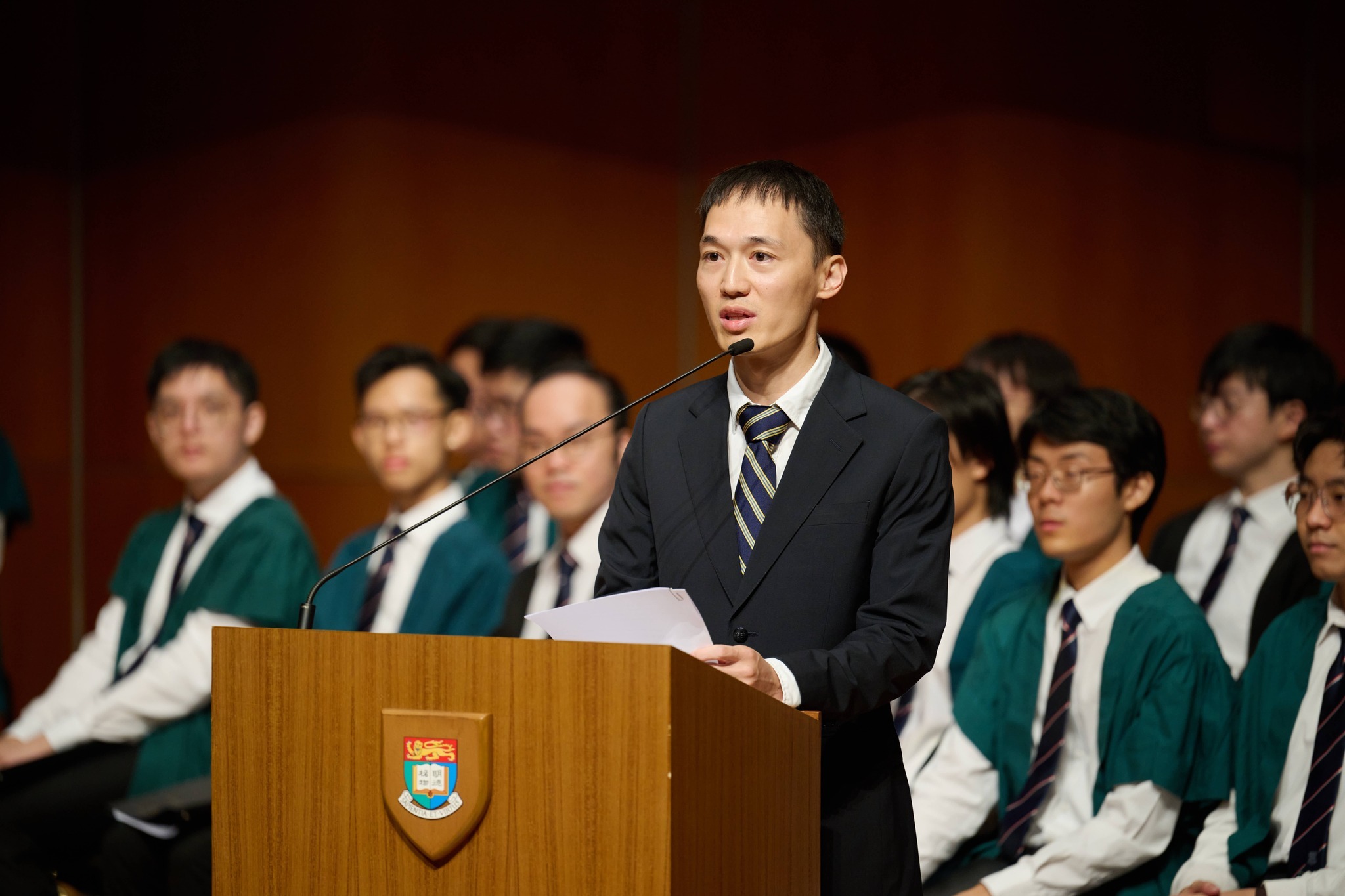
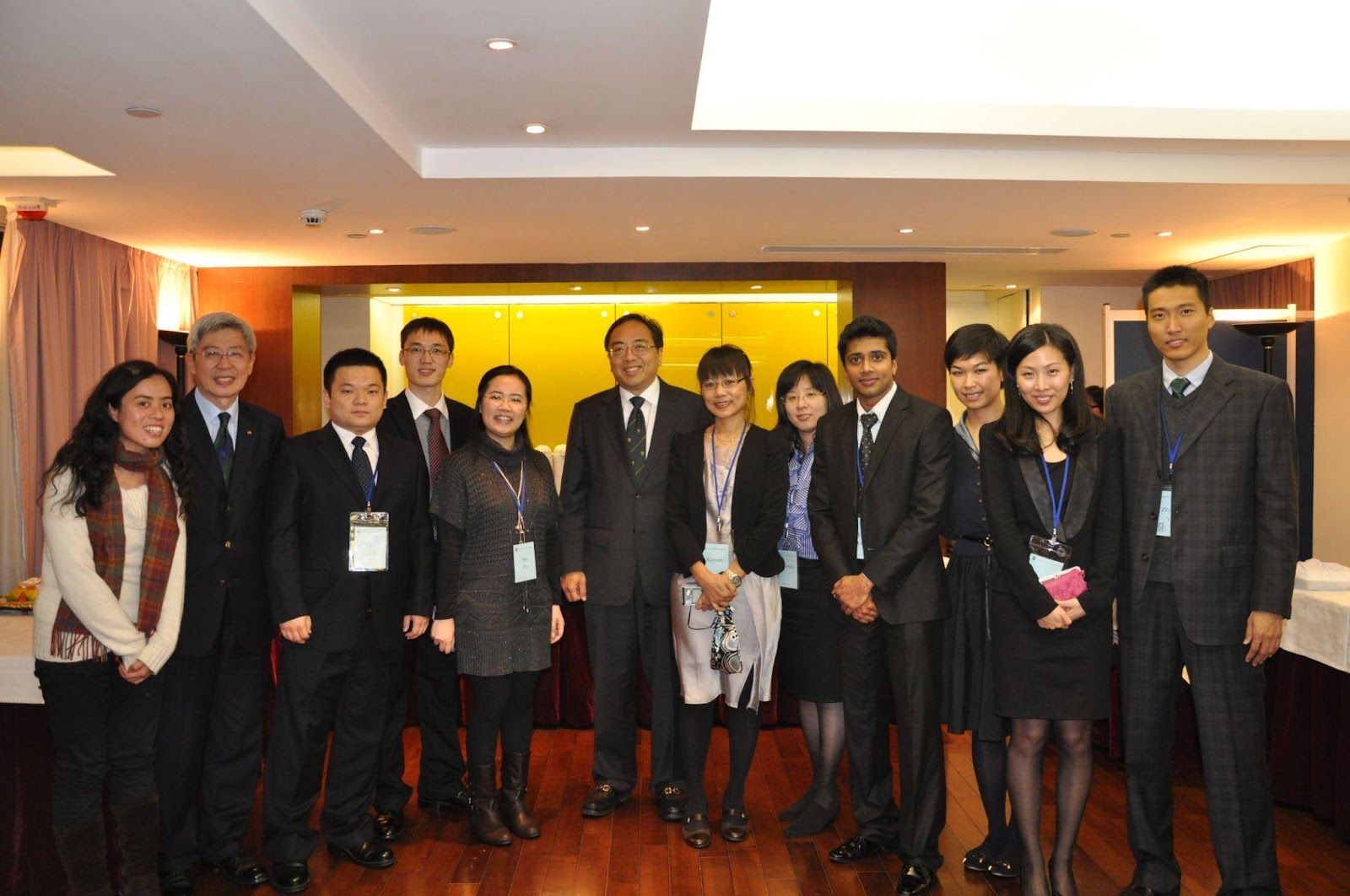
His university connections continue, too. He has returned to speak with students and helped mechanical engineering graduates begin careers in research and development. The line from education to application is being extended to another cohort. A founder who benefited from teachers and mentors can now become one of the people a young engineer consults.
There is still something instructive about that early office and its inconvenient cooling schedule. Energy independence is a large phrase. A room growing hot after eight is a small, comprehensible problem. Wang’s career keeps moving between those scales: the future he wants to build, and the practical detail that decides whether anyone will enjoy living in it.
Follow the current
Interviews, company news and a return to campus.
EcoFlow · products and company website ↗EcoFlow · company profile ↗The founder conversation · HSG, May 2025 ↗Campus, career and the early office · HKU ↗Watch · PolyU’s alumni video with Wang ↗Watch · PolyU alumni feature on Instagram ↗EcoFlow on LinkedIn · company updates ↗The Homey partnership · January 2026 ↗Wang on home energy · EcoFlow partner feature, August 2026 ↗