The awkward thing about selling a solar panel is that someone has to install it. For Erco Energía’s early team, those two activities competed for the same hours. Juan Esteban Hincapié recalled the problem with admirable economy: when they were selling, they were not installing; when they were installing, they were not selling. Sunshine was available. Their calendars were full.
- Erco connects solar construction, generation, storage and electricity retail.
- Its $129 million Series C is equity, distinct from earlier loans.
- Customers can own equipment or pay for the energy it produces.
That small scheduling problem is a useful way into the company. Erco has spent the years since its 2012 founding taking on more of the work surrounding electricity. It designs and builds systems, operates assets, installs batteries and charging infrastructure, and sells power. The attraction is coordination: a customer can bring several related energy decisions to one business.
The founders ran out of hours
In Revista Comfama’s account, Hincapié and Juan Camilo López spent three difficult years getting their solar venture established. The feature recalls delays and uncertainty about meeting payroll. Those details explain something a growth chart cannot. A business can have a useful product and still struggle because its founders are doing too many jobs at once.
“Cuando vendíamos, no instalábamos; cuando instalábamos, no vendíamos.”
Juan Esteban Hincapié · Revista Comfama
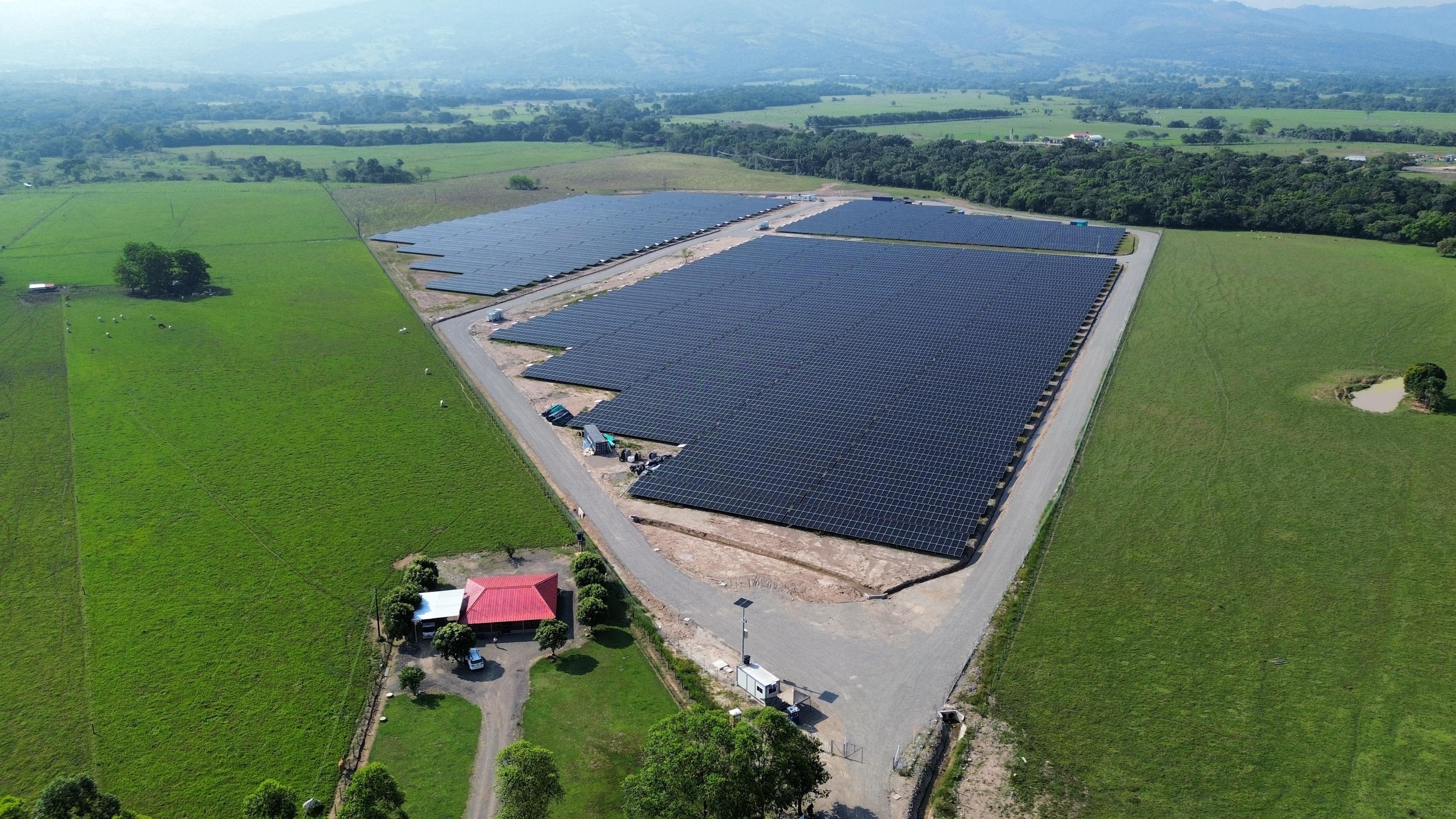
EPM’s arrival brought capital, administrative experience and backing to expand. The utility says its Ventures EPM program has supported Erco since 2016. Norfund’s 2024 annual report describes another important change: a move from rooftops and small ground-mounted systems toward medium-sized solar plants supplying Colombia’s electricity market. The company’s responsibilities were getting longer-lived.
The money has different jobs
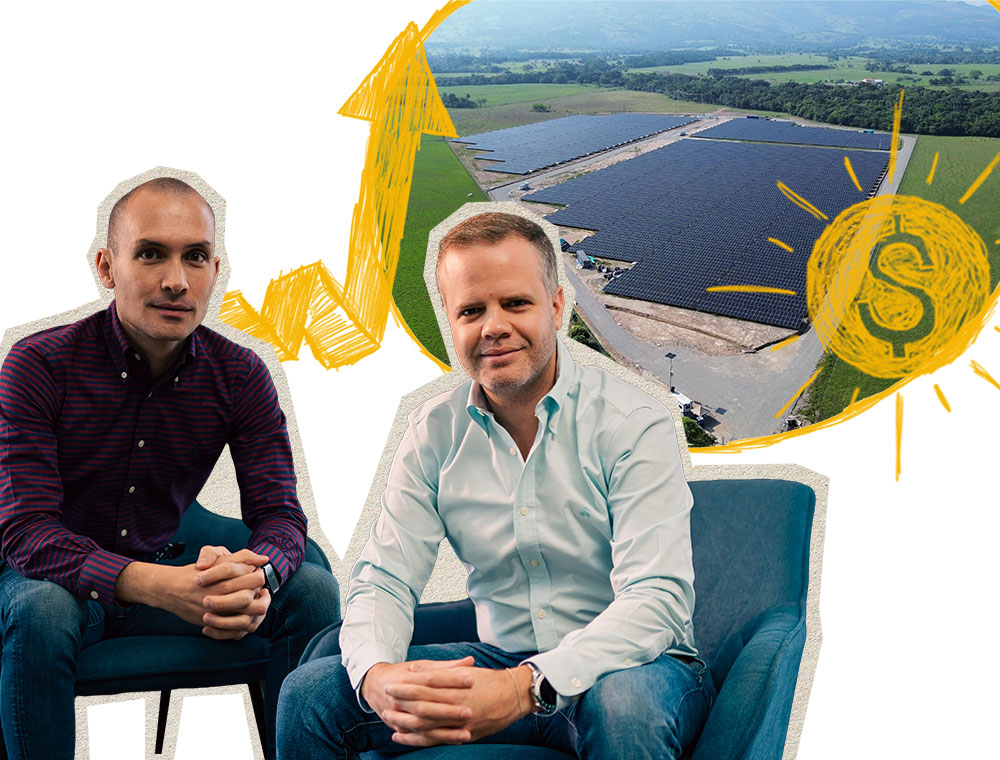
By August 2026, the scale of that undertaking appeared in a financing announcement: $129 million in Series C equity. An Augment Infrastructure-managed consortium contributed $50 million of the round, with Allianz Global Investors, Proparco and Finnfund participating through that consortium. Next Utility Ventures, Norfund and Endeavor Catalyst were also named among the round’s investors.
Earlier money had a different form. In March 2025, Norfund announced a $20 million subordinated loan, taking its total investment in Erco to $50 million at that point. Norfund said its participation helped attract senior debt from a Colombian financial institution. Equity and loans belong in separate columns. Neither number is a published price for installing panels on a customer’s roof.
The EPM relationship also became a project partnership. A December 2025 agreement proposed roughly 400 MWp of solar capacity with construction investment of up to $400 million. EPM committed to long-term power purchases and conditional future majority ownership. Technical, regulatory and financial milestones still mattered. An announced plant has work ahead before it becomes dependable electricity.
Pick the bill you want to pay
For customers, Erco’s most useful distinction may be who owns the equipment. Its financing page offers direct purchase, bank leasing, rental and a power purchase agreement, or PPA. Under the PPA arrangement, an investor owns the system and the business pays for generated electricity. Contracts can run for up to 20 years. Avoiding an equipment purchase creates a different, continuing obligation.
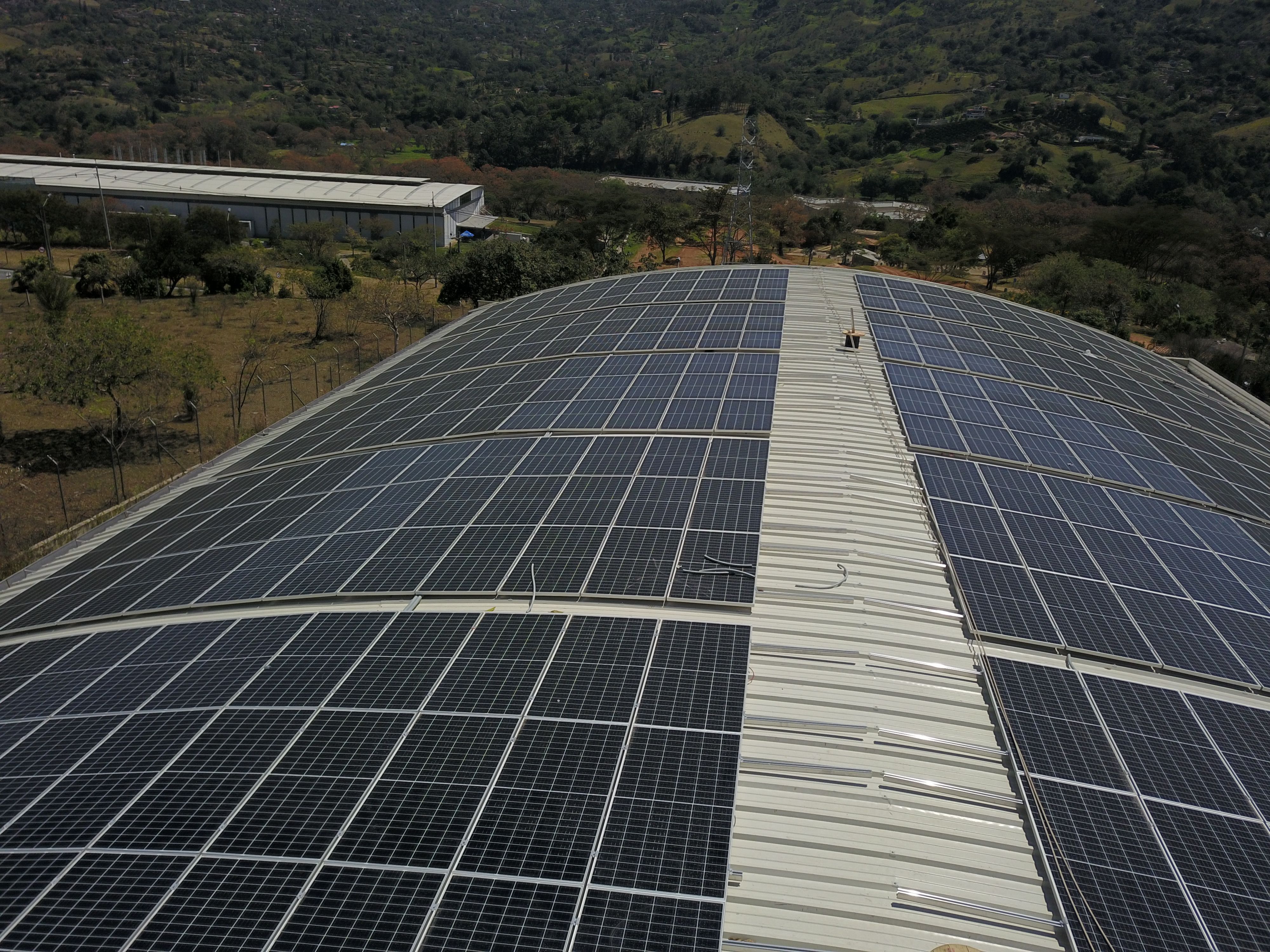
The engineering serves different sizes of customer. Erco’s project gallery includes a 126.9 kWp system for Plásticos Correa and a 44 kWp installation at Pascual Bravo. Residential projects sit alongside business rooftops. These are concrete uses for an otherwise broad promise: a household wants a workable installation; a manufacturer wants generation that fits its building and electricity consumption.
The digital electricity retail offer addresses another buyer entirely. Its landing page targets businesses spending more than COP15 million monthly on electricity and displays customers including Scotiabank, McDonald’s and Dollarcity. The offer combines supply with consumption monitoring, alerts, consolidated payments across locations and renewable energy certificates. Switching retailer is advertised as free; tariffs are tailored to the business.
- 01 / BuildDesign and install the system.
- 02 / OperateMaintain and monitor the asset.
- 03 / SupplySell power and track consumption.
Erco therefore competes across several markets. Celsia and Enel Colombia are alternatives in solar generation and corporate energy services; specialist developers and digital retailers address narrower purchases. Erco’s positioning is the combination of construction, generation, operations and retail. A buyer should compare the part they actually need, rather than assume a longer service list automatically produces a better result.
Sunlight needs a second shift
Storage makes the coordination problem visible. In July 2026, the Chenche project in Purificación, Tolima, entered testing and commissioning with 14.96 MWp of solar capacity and 4.5 MWh of batteries. The first figure describes peak generation capacity; the second describes stored energy. They cannot be added. The battery gives the project another way to manage the timing of electricity delivery.
That distinction matters in Colombia, where Norfund’s March 2025 account put hydropower at 64% of electricity supply and pointed to drought risk as a reason to diversify. It matters at home, too. Erco’s own solar FAQ says an ordinary grid-connected installation does not provide backup during a grid outage. A customer seeking outage protection needs a system designed for that purpose.
Copy the questions before the equipment
The practical lesson is to ask about the whole arrangement. Who pays upfront? Who owns the system? What does the contract charge for? Who maintains it? Does the design match when the customer uses electricity? Erco’s evolution suggests why those questions belong together. Each unanswered question can become someone else’s delay, expense or disappointing electricity bill.
There is also work beyond the meter. Norfund describes training local people for construction and maintenance, and community initiatives including livestock for vegetation control. A solar plant occupies a place where people already live and work. Erco’s business has grown by taking on more of those surrounding obligations. The panel remains the visible object. The arrangement around it determines whether it earns its keep.