At eight years old, Brian Lee ran Halloween like a logistics company. He mapped the neighborhood, started knocking early and kept going until midnight. Then he sorted the candy into Ziploc bags, four pieces at a time, and sold each bag at school for a quarter. His cost of goods was zero. His father caught him packing inventory and, amused by the hustle, sat down to help. There is a complete little business in that scene: acquire scattered value, package it neatly, give the buyer an easy choice. The boy from Huntington Beach would spend adulthood making the package more sophisticated.
LegalZoom packaged routine legal work for the web. ShoeDazzle packaged the attention of a boutique stylist. The Honest Company packaged a clear consumer promise. Arena Club packages authenticated trading cards inside a digital showroom. The industries appear to have been selected by a roulette wheel. Lee’s method is much more consistent. He enters a transaction fogged by uncertainty, then asks what would make an ordinary buyer comfortable enough to proceed.
01 · The opening argumentTwo minutes at 10 p.m.
Lee was born in Seoul in 1971 and moved to Southern California with his family when he was one. He studied business economics at UCLA, graduated in 1993, and stayed for law school. By 1996 he had a J.D. and the approved version of a professional life: tax attorney at Skadden, one of the firms young lawyers mention in sentences designed to reassure their parents.
The work did not feel personally fulfilling. Lee wanted to build. With UCLA Law friend Brian Liu and Edward Hartman, he began developing what became LegalZoom from his apartment. Selling legal documents online at the turn of the century presented an awkward problem. Customers were being asked to trust a website with paperwork carrying real consequences. The young company needed a signal stronger than a handsome homepage.
Lee chose Robert Shapiro. He found the famous attorney’s number through directory assistance and called at 10 p.m., expecting a gatekeeper or an answering machine. Shapiro picked up. Lee introduced himself and offered a business opportunity. The answer was essentially no. Lee pushed back: how could Shapiro know without hearing the idea? He was granted two minutes. The pitch earned a later meeting, and Shapiro became a co-founder and public face of LegalZoom.
“People call it an overnight success, but that ‘overnight’ took 20 years.”Brian Lee, on LegalZoom’s long arc
The call became a template, although its cleverness is easy to misread. A recognizable partner can shorten the distance between a strange proposition and a customer’s first attempt. Fame supplies attention; relevant credibility supplies reassurance. The business still has to justify the loan. LegalZoom launched in 2001. Two decades later, in 2021, it entered the public markets.
The Lee trust loop
02 · Category hoppingShoes, diapers and the serious business of listening
ShoeDazzle began with a domestic observation. Lee’s wife returned from shopping on Los Angeles’s Robertson Boulevard with expensive designer shoes. He asked why she had not gone to a discount chain. She explained that boutiques offered personalized attention the chains could not. Lee wondered if that intimacy could be translated online. The resulting service gave members customized selections based on a style quiz and a monthly subscription. Kim Kardashian joined as a co-founder, bringing fashion fluency and a direct relationship with the audience.
The Honest Company grew from another conversation at home. As Lee’s family became more attentive to the household products around their children, he recognized the force of Jessica Alba’s vision for a consumer company built around clear standards. Lee, Alba, Christopher Gavigan and Sean Kane co-founded the business in 2011. It reached the public markets in 2021, four years after Lee stepped down as chief executive and moved into an advisory role.
Lee is candid about the breadth of those leaps. “I went from legal documents to fashion to diapers,” he has said, “and I didn’t know how to make any of those things.” The durable capability was learning quickly, surrounding himself with people who knew what he did not, and staying close to the customer. For anyone collecting tactics, this is more useful than the fantasy that a founder must arrive as the complete authority. Care can precede expertise. Curiosity can become an operating system.
The useful contradiction: Lee advises believing in an idea with complete conviction while remaining willing to change it quickly. Confidence keeps the work moving. Flexibility keeps the original plan from becoming a shrine.
03 · Complementary companyThe other Brian
Lee describes LegalZoom co-founder Brian Liu as his opposite. Lee was aggressive and fast-moving; Liu was thoughtful and detail-oriented. He calls the balance crucial. Startup mythology prefers one dazzling protagonist, but durable companies often begin with a productive mismatch. Speed notices openings. Deliberation notices cliffs. Put both at the table and disagreement becomes a form of instrumentation.
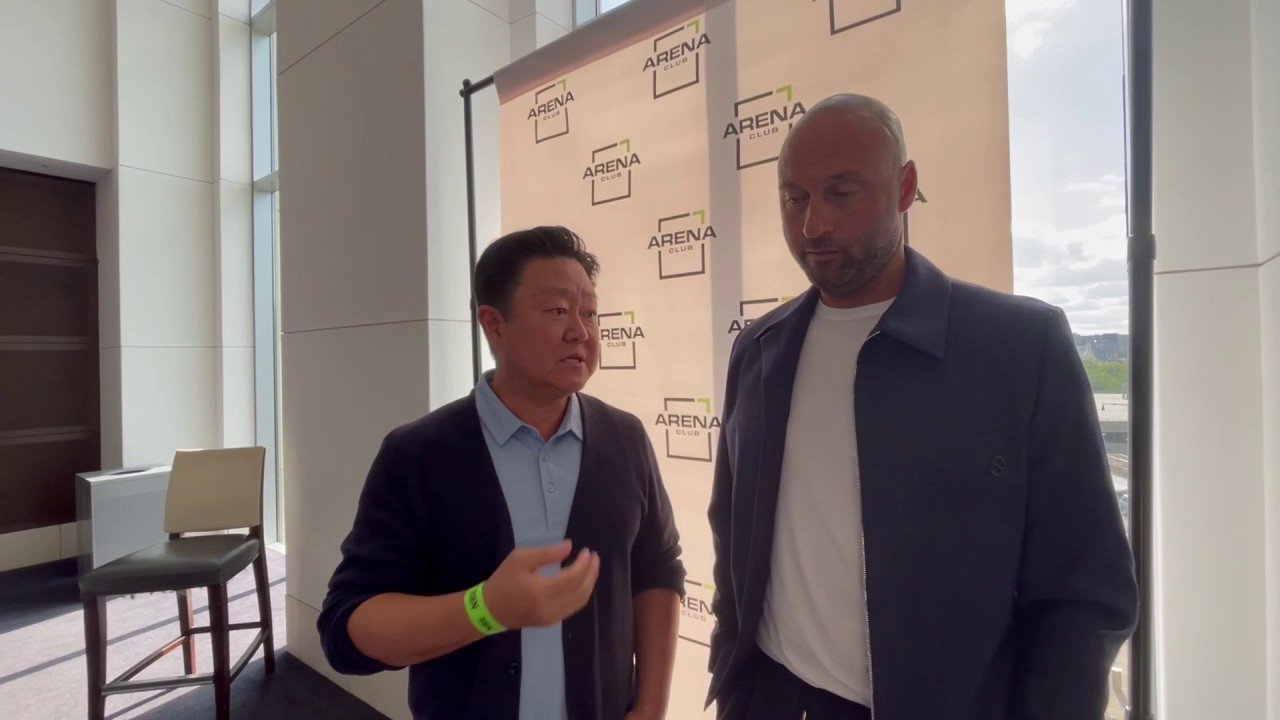
The pairing also reveals Lee’s taste in partners. Shapiro brought legal recognition. Kardashian understood fashion culture and audience. Alba supplied the original consumer vision. Derek Jeter arrived with a collector’s relationship to sports and the composure of someone accustomed to guarding a reputation. Each partnership filled a different blank. The selection criterion was more precise than fame: what does this person understand, embody or reach that the company cannot manufacture on its own?
04 · The investor intermissionA vibe, a browser extension and a very large outcome
After operating companies, Lee and Richard Jun formalized their early-stage investing through BAM Ventures in 2014. The firm wrote small checks early, often when the entrepreneur and the idea were the main available evidence. A widely cited example arrived after a talk at MuckerLab. Honey co-founders George Ruan and Ryan Hudson approached him as he left the stage. Lee liked their “vibe.” Other investors were wary that a browser extension could become a large standalone business. BAM was among the first money in.
PayPal agreed to acquire Honey for approximately $4 billion in 2019. The outcome sounds like a hymn to instinct, but Lee’s version of instinct is social and operational. He looks for how deeply founders know the consumer, whether they can attract good people, and whether their attachment to the problem will survive the tedious middle. A deck can describe a market. A founder’s behavior reveals how they might move through it.
“Know what you’re great at, and be brutally honest about what you’re not great at.”Brian Lee, on building the team
05 · Back to the binderA digital card show
Sports cards brought Lee’s career back to childhood, only this time his son joined him. The pair collected together before pausing during the pandemic, when shows closed and prices became volatile. Lee still loved the hobby and disliked parts of its machinery. Cards returned from grading with scores that could feel mysterious. Online deals carried worries about authenticity and delivery. The card show had human energy, negotiation and discovery; online commerce often flattened that experience into listings and auctions.
Arena Club, launched in 2022 with Jeter as founding partner and Jesse Glass as a co-founder, was Lee’s attempt to put the card show on a screen. Users can grade, vault, display, buy, sell and trade cards. Computer vision contributes to condition reports. Once a physical card is authenticated and stored, its digital representation can change hands without another postal journey. The company raised a $10 million Series A led by M13 in its launch year.
Its Slab Packs add the old pleasure of the reveal. Each digital pack corresponds to an authenticated physical card, and collectors can keep, sell or request delivery of what they open. The idea sharpened after Lee encountered repack products with vague checklists and invisible odds at the 2022 National Sports Collectors Convention. Arena Club leaned into published possibilities and digital delivery. In 2025 it added physical Slab Packs through an exclusive online marketplace partnership with eBay.
06 · What survives the pivotThe promise beneath the product
Lee has spoken warmly about the fun of building Arena Club. The enthusiasm is not incidental. Founder-problem fit, in his account, is the closeness that sharpens instincts and sustains obsession after the honeymoon ends. He wants other collectors to experience the enjoyment he has found in the hobby and wants that hobby to stay strong into the future.
The platform has already widened beyond the original sports-card frame. It includes trading card games, coins, wine and, in 2026, Time Box packs containing authenticated luxury watches. The objects change while the system remains recognizable: verification, secure custody, transparent choices and an entertaining reveal. Lee has been rehearsing this structure for twenty-five years.
His recent CEO advice is almost comically plain: do not run out of money. Treat money like gold. Decline the hire until the team is drowning. He jokes that a chief executive is a “CE-No,” because focus requires refusing attractive distractions. The remark fits a builder whose public story is crowded with categories but whose private logic is narrow. Go deep before going wide. Pair conviction with the willingness to pivot. Find people whose strengths expose your weaknesses. Guard the brand promise because trust accumulates slowly and leaves at speed.
The Halloween candy is still the cleanest illustration. The goods were familiar. The arrangement was new. A child made the value visible, bundled it into an easy decision and found a customer. Today the bags are digital, the inventory may sit in a vault, and a Hall of Fame shortstop is involved. The little act of commerce remains unchanged: here is something you want, presented in a way you can understand, from someone asking to be believed.