At West Point in May 2014, Dustin Castillo had finished four demanding years and was about to begin a military career. Family and friends were there. President Barack Obama delivered the commencement address. Castillo acknowledged how much work the academy had required, then found time for a selfie with his girlfriend. The scene holds two things together rather nicely: a formal entrance into a life of responsibility, and the ordinary pleasure of having people beside you when you get there.
Twelve years later, Castillo’s career includes Army service, software company leadership and a partnership at Dream Ventures. Those titles invite a familiar story about discipline travelling from the military into business. His career offers a more particular question: what happens when someone trained to work within a chain of command begins helping other people build their own organizations?
One answer comes from a founder he backed. Another comes from a company’s approach to helping veterans find civilian work. Together, they suggest that the interesting part of Castillo’s business life is the work around the investment: hiring, introductions, practical experience and the slow business of earning a team’s trust.
A graduation, before the business cards
Castillo studied management at the United States Military Academy from 2010 to 2014. His graduation came at a moment when Obama was explaining a changing American role abroad. The new officers would enter a world whose demands were still taking shape. Asked about what lay ahead, Castillo’s response, translated from the Spanish-language account, was straightforward: “We are ready to receive the orders of our leaders.”
There is no venture capital vocabulary in that sentence. No personal brand, no promise to reinvent an industry. It belongs to someone at the beginning of a profession, expressing readiness to do the job he had trained for. The selfie belongs to the same day. Both details deserve space in the picture.
Graduations are often treated as evidence that a life was already on its inevitable course. In the moment, they are closer to a departure gate. You have completed the requirements, collected your belongings and gathered with people who hope things will go well. The destination may be printed clearly. The experience is still ahead.
- 2014West Point
Management studies completed - 2019Coreware Group
CEO and partnerships leadership - 2023Dream Ventures
Operations partnership begins
Selected milestones, not a scale of investment performance.
The work behind the rank
His Army career included service with the 82nd Airborne Division, with an executive officer role beginning in 2017. His professional biography records responsibility for more than 120 soldiers, planning for more than 30 airborne missions and an Army Commendation Medal for service in Kosovo. These are responsibilities involving people, timing and coordination.
It would be convenient to turn those numbers into a formula for commercial success. People enjoy formulas, especially ones that fit beneath a headshot. But coordinating military work and running a software business involve different obligations. A client can choose another supplier. An employee can leave. A founder can hear advice and decline it. Experience has to be translated before it becomes useful.
The distinction helps explain why the later episodes matter. Castillo’s civilian record includes people thanking him for opportunities, a founder recalling his advice and a program designed to let veterans try several kinds of work. Those examples show what translation can look like. The title changes; the practical question remains who needs to do what, and what will help them do it.
First, he saw the team at work
Castillo came to Coreware through an unusually useful introduction: a previous company of his had hired its team. Before becoming part of the leadership, he had experienced the company from the customer’s side. That is a different vantage point from arriving armed only with a job description. A supplier’s work has already become part of your own responsibilities.
By May 2019, he was serving as CEO and director of partnerships. Coreware’s founder, Filip Vukelic, had started the company in 2015. The distinction matters to the story: Castillo joined an existing business whose work he had seen, bringing leadership to an organization someone else had begun.
For a software company, partnerships sit at the point where a customer’s intention becomes a team’s assignment. Someone has an idea, a deadline or a problem that existing tools will not solve. Someone else has to understand it well enough to build something useful. The conversation can become expensive long before the first line of code is written.
Coreware works in custom software, web and mobile applications, design and AI solutions. Its present-day offices span Los Angeles, Riyadh and Novi Sad. That gives context to Castillo’s operating experience: technology services involve the coordination of people whose skills and locations differ, for clients who want an outcome they can actually use.
Loyalty, explained to a bubble entrepreneur
In June 2022, Bubble Universe founder Jason Tiger described Castillo as a major investor in his company and a mentor. Asked about advice that had helped him, Tiger recalled Castillo’s lesson about building loyalty within a team. Tiger connected that advice to choosing hardworking people who could solve problems and share his approach to the business.
It is a pleasingly unexpected pairing: an Army captain’s experience entering the world of a bubble company. The product may be playful; the organization still has to function. People need to agree on the work, handle difficulties and trust that their effort belongs to a shared undertaking.
“He explained this type of loyalty to me.”
Jason Tiger, founder of Bubble Universe, on Dustin Castillo
Tiger’s recollection makes the relationship concrete. He remembered advice about people. In an investment relationship, a founder can receive money and still face the problem of assembling a team that works together. The account offers one example of the additional contribution Castillo made: an idea from his earlier career, passed on to someone building a business.
A civilian career needs a place to begin
Coreware’s Hiring Our Heroes program gives another view of the territory Castillo crossed. It offers transitioning service members three to six months of work experience, commercial skills and professional connections. The company describes a commitment to help participants join its own team or find a role elsewhere.
The structure is worth pausing over. A career change can sound simple when reduced to two entries on a résumé. Between them sits a period when familiar abilities have unfamiliar names. Planning, managing a project and coordinating a team may all travel well, but a person still needs a chance to learn how a new workplace uses those skills.
Robert Sincero, a former Army captain and West Point graduate, described the freedom to interview with other companies as his favorite part of the experience. Coreware’s program page lists his subsequent company as Microsoft. His account makes the program’s value specific: the opportunity extended beyond a single employer’s hiring needs.
In welcoming Sincero in 2020, Coreware described a planned rotation through partnerships, account work and project management. Castillo shared the announcement with a brief endorsement. The rotation is a practical answer to a practical uncertainty. Rather than asking someone to choose a civilian specialty entirely in advance, it lets that person see the work from several desks.
Money is also something people must learn
Castillo’s business activity has also intersected with financial education. He publicly supported Kevin Ruth and Give-Get, and described Coreware as taking part in the organization’s work for high school students. In 2022, he shared an announcement naming Coreware and Finance411 alongside new Give-Get partners Zaire Franklin and Gerry Spitzer.
This places a different kind of financial work beside his investment activity. Startup finance concerns businesses seeking capital. Financial education concerns people learning how to understand money in the first place. Both involve access, although the conversations begin at quite different points.
Castillo’s support for that work broadens the profile beyond a sequence of executive positions. Software, education and investment can meet around a project without becoming the same activity. Here, the connection is a named organization, a named collaborator and a public expression of support. It is a small episode with a clear subject: helping people acquire knowledge they can use.
Operations, in a firm named for dreams
Castillo became an operations partner at Dream Ventures in January 2023. The firm’s founder and CEO is Richard Blankenship. Its public positioning centers on early-stage investment, while its website presents the phrase “Investing In Extraordinary Dreamers.” Castillo’s role places the vocabulary of ambition beside the vocabulary of getting things done.
Operations is an unromantic word with useful consequences. It suggests attention to how an organization works: the arrangements that allow people to keep their promises to one another. In Castillo’s career, it follows a software leadership role in which partnerships were already central.
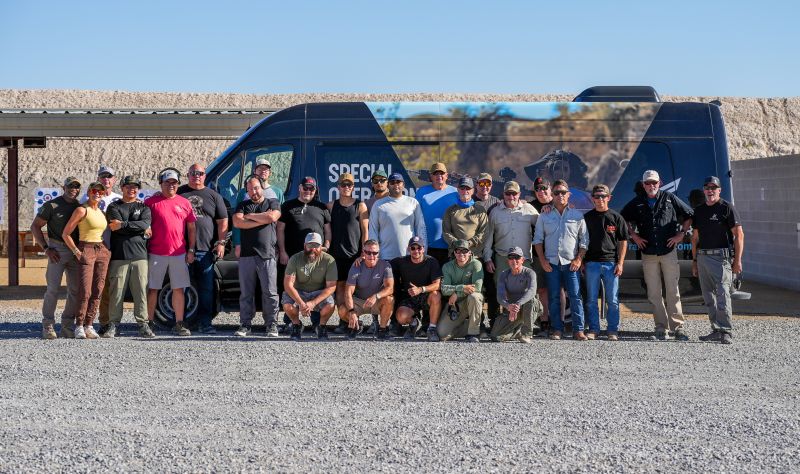
His military connections continued alongside the business ones. In 2024, he thanked Carlos Canino for a West Point Society of Miami event. Donavan Lynch also credited Castillo with connecting him to an April gathering at PrairieFire Nevada. The thread running through these episodes is visible and modest: introductions, shared institutions and people bringing other people into a room.
The team trip makes the résumé
For all the serious job titles, one of the most human details comes from Coreware’s 2021 leadership introduction. Castillo’s favorite early memory was a team visit to Disneyland and the themed food. Francina Ables, a colleague featured in the same introduction, remembered organizing the outing and seeing everyone enjoy it.
There is something reassuring about a leadership profile making room for lunch. Organizations spend considerable time describing their culture in abstract terms. A remembered day out is easier to picture. It leaves colleagues with an experience they can share after the meetings and assignments have been forgotten.
The graduation selfie and the team outing are separated by years and a change of profession. Each puts other people inside a milestone that could otherwise be told as a solitary achievement. Castillo’s career becomes more interesting when they stay in the frame: a founder receiving advice, a veteran trying new work, a colleague arranging a day everyone remembers. The business cards tell us the roles. Those people give the roles their substance.