An investor says it backs people. Then one of those people comes back with a different company. What happens next is a better test than the slogan. B Heroes faced that test with Andrea Zorzetto. In a public account of its investment in Cato, the firm said it had backed his first company too. It returned for the second.
Cato builds AI software for public tenders, a world of requirements, attachments and deadlines that can make even an ambitious business reach for the kettle. In September 2026, it announced a €6 million seed round led by Keen Venture Partners. B Heroes joined as a returning investor. The change of company had not erased the relationship.
- Early money for Italian entrepreneurs, wherever they build.
- A founders’ club that contributes to investment decisions.
- A history of making entrepreneurship visible, from television to face-to-face encounters.
That episode offers a useful way into B Heroes. The firm’s declared focus is pre-seed and seed investing, across sectors. Its distinctive bet is that experienced entrepreneurs can improve the judgment of investors and the decisions of founders. Capital starts the conversation. A working relationship gives it somewhere to go.
First, put the founders on television
Fabio Cannavale, the entrepreneur behind businesses including Volagratis, promoted the first B Heroes accelerator with Intesa Sanpaolo in 2017. By January 2018, roughly 540 startups had applied. Twelve events across nine cities helped narrow the field; 32 companies reached the next selection stage, with 12 places in the accelerator. The hunt travelled before the cameras rolled.
The programme made a rather unfashionable subject watchable: people trying to build companies. Discovery’s NOVE aired the first television episodes in March 2018. Entrepreneurs and executives questioned the startups, while coaches helped them prepare. Television supplied an audience; the accelerator supplied work to do. Combining the two gave entrepreneurial education a public stage.
The winner was Wash Out, an on-demand car-cleaning startup. It secured an €800,000 investment. There is something pleasingly practical about that result. A programme concerned with Italy’s innovative future ended up rewarding a business dealing with dirty cars. Innovation has always had an excellent relationship with chores.
The format continued to develop. In 2021, the fourth edition finished with 16 finalists and a combined €1 million investment allocation for five startups. These were investments into selected companies, with ownership or convertible instruments involved in the historical programme. An award figure should never be mistaken for a standard cheque available to every applicant.
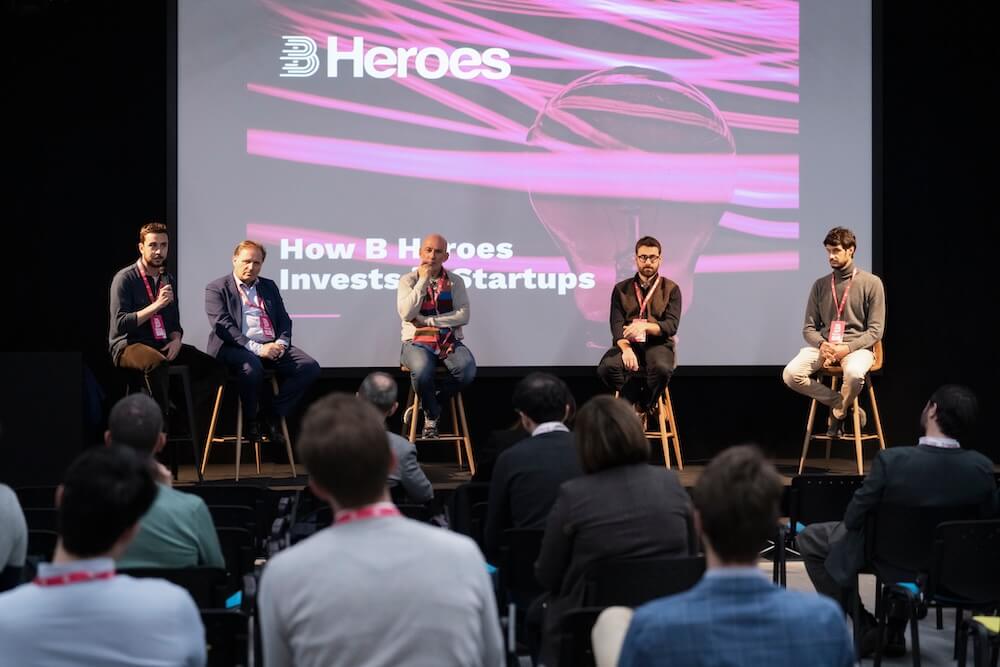
The club enters the investment room
In 2022, B Heroes established its Founders Club. Members have experience of successful exits or scaling companies, and contribute to evaluating investments. This detail matters more than the word “community”. A network can be decorative. Giving its members a role in assessment makes their experience part of the machinery.
Consider the difference between admiring a pitch and interrogating it. Someone who has hired a sales team can ask whether a growth plan accounts for recruitment time. Someone who has raised money can recognise an optimistic financing timetable. Those are examples of the practical value such a club could offer, rather than a claim about any particular B Heroes meeting.
“Entrepreneurs investing in entrepreneurs.”B Heroes’ manifesto
The portfolio makes the generalist brief tangible. Its published list includes Conio in fintech, Flying Basket in deep tech, and Casavo in property technology. The connective tissue is the entrepreneurial problem, rather than a single industry. Different companies may need different technical advice, yet encounter familiar difficulties in hiring, selling and financing growth.
Capital comes with a calendar
B Heroes describes itself as an evergreen investor. In general, an evergreen structure lacks the fixed termination date associated with a conventional closed-end fund. That can make room for a longer relationship. It does not make a business immune to pressure, or guarantee that investors will keep supplying cash.
The firm’s homepage reports €23.3 million invested, 18 exits and more than 350 founders supported. These are its own published, undated totals. Its portfolio contains roughly 165 companies. The figures convey breadth; they cannot tell a reader the investment return, how much each company received, or how evenly attention was distributed.
For a founder, the practical proposition is access to early capital and people with operating experience. For a mature company, the historical ecosystem offered contact with new businesses and technologies. B Heroes sits between those worlds. A specialist fund may bring deeper knowledge of one technical field; this model emphasises connections across fields and generations.
The useful bit is wonderfully dull
In November 2022, Viceversa announced a partnership with B Heroes offering revenue-based finance for marketing. That creates another route to growth capital: financing linked to revenue rather than selling another slice of ownership. The terms and the business’s ability to repay still matter. Calling money non-dilutive does not make it free.
In the accompanying interview, Carolina Montagna warned about weak cash management and urged startups to establish accounting processes early. It is advice with little television appeal and considerable practical value. Before buying more growth, a founder needs a reliable picture of the cash already moving through the business.
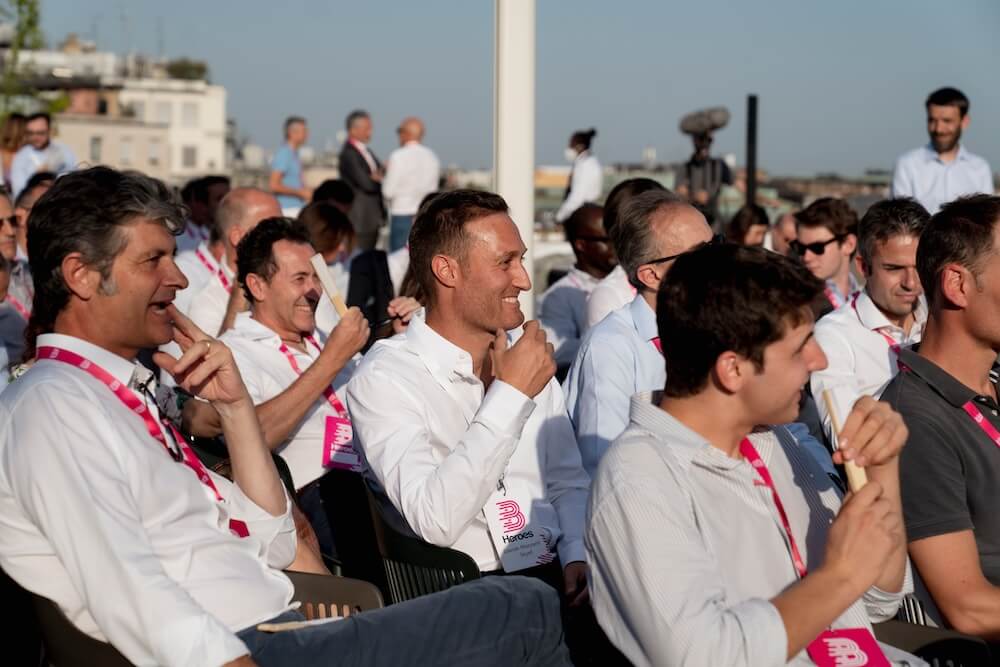
The next pitch starts with a person
There are several things to borrow here without obtaining an investment. Bring an experienced operator into a consequential decision. Ask a mentor about a particular hiring problem or sales bottleneck. Keep the relationship alive after the event. Build accounting routines while the numbers are still small enough to understand.
These practices suit founders willing to hear awkward answers. They will do less for someone seeking applause, or for a business whose ambitions do not fit venture investment. B Heroes’ manifesto even includes the privilege of changing one’s mind. The important discipline is knowing what new evidence warrants a change. With Cato, the company changed. The investor’s interest in the entrepreneur survived.