In Kuala Lumpur, a creative team gave a grieving woman a house full of crochet. Marie, the Peranakan protagonist of Still Here, remembers her dog, Shadow, inside a Nyonya home rendered with intricate textile detail. This was an AI film, but its distinguishing feature was a recognisable human attachment. According to team member Poh Kee Wong, Brandtech Plus colleagues made it in just 14 days, alongside their everyday responsibilities.
The film won the Agents Jury Prize in The Brandtech Group’s internal generative AI competition, which attracted more than 400 entries. That is a modest distinction, properly understood: an internal prize, rather than an independent industry award. Still, the little crocheted world offers a useful introduction to an agency whose business is making things for other businesses.
- Film, CGI, motion, digital and print production, with AI and automation in the mix.
- A distributed talent network serving over 300 clients in 40-plus countries, according to its recruitment materials.
- The central bet: faster production increases the value of people who can choose, coordinate and refine.
A production engine, with the doors open
Brandtech Plus, also styled Brandtech+, was previously OLIVER+. It supplies creative talent and marketing production to The Brandtech Group’s companies and beyond. Think of the work between a promising idea and the finished assets a brand can actually publish: animation, filmed content, visual effects, digital design and print. Its service mix spans traditional craft and newer tools, rather than requiring every brief to become an AI experiment.
That makes it useful to marketing departments juggling formats, markets and deadlines. A single concept may need moving images, static executions and adaptations for different channels. The agency’s proposition is access to a coordinated production network instead of assembling each specialist relationship from scratch. Its job descriptions describe more than 300 client relationships across over 40 countries; those are company-reported reach figures, not a count of offices.
It operates as a business-to-business service agency. Buyers purchase expertise and delivery capacity. Pencil, the group’s generative AI marketing platform, supplies part of the technology behind the work. Calling Brandtech Plus a software subscription business would miss where its people earn their keep: turning tools, briefs and feedback into usable content.

The talent travels less than the work
The distribution of that labour is unusually central to the story. In May 2026, India general manager Sanjil Zaveri described India-based teams delivering AI-enabled marketing globally. He discussed follow-the-sun delivery, with work moving between time zones, and argued that international careers increasingly depend on capability rather than relocation.
That arrangement has an economic logic. Talent lead Tanya Lilley describes permanent distributed teams as a way to expand without rebuilding expensive office structures. In January 2026, Brandtech Plus had opened more than 100 full-time positions across creative, strategy, production, account management and technical disciplines. Remote work here is part of how the organisation supplies capacity, rather than merely an employee perk.
The model also imposes obligations. A handover needs context, an owner and a decision that the next person can understand. Moving an unresolved brief across a time zone can simply give the confusion a longer working day. Zaveri’s argument explicitly includes stronger coordination systems and continuous learning. Those are the less photogenic ingredients in a global creative career.
Geography supplies capacity. Coordination makes it usable.
The bottleneck moves to the people choosing
AI changes the arithmetic again. Producing more options makes selection, adaptation and delivery more demanding. In an April 2026 company release, Lilley argued that the emerging shortage was of people able to manage what AI produces. This is the agency’s explanation of its opportunity, and a sensible question for buyers: how much of the saved production time survives the approval process?
Global COO Candice Siege makes the competitive claim explicit. As tools become widely available, she argues, culture, skills and the operating model determine how effectively agencies use them. Brandtech Plus therefore competes on organising production, as well as making individual assets. Alternatives include a brand’s own studio, independent production specialists and global agency production networks. The right comparison is the complete delivery system.
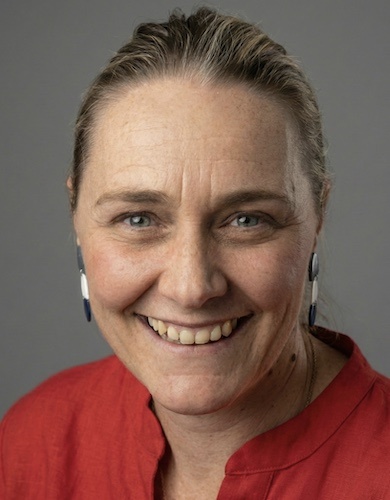
There are concrete organisational choices behind that pitch. Its learning programmes include Insiders Academy, expert-led HIIT sessions, group webinars and a Management Acceleration Program. In August 2026, the company described Vicky Moodley’s work developing a Gen AI Centre of Excellence and training global teams on Pencil. Training is part of the production infrastructure.
“AI can give you hundreds of lines in seconds, but that doesn’t mean any of them deserve to become the line.”Yolisa Mjamba, gen AI senior copywriter · Brandtech Plus, August 2026
Borrow the sequence before buying the tools
For a reader, the most portable idea comes from Shashank Sharma, its global head of intelligent operations, AI and automation: map, clean, automate. His July 2026 interview discusses poor data, unclear processes, budget constraints and staff resistance as obstacles to scaling AI. Human oversight remains necessary for consequential decisions. A faster tool cannot repair a process nobody understands.
A practical application would be to choose one repeatable content task, document the handoffs, remove avoidable rework and assign a reviewer before automating. Measure accepted, usable output and elapsed approval time. Counting generated options alone rewards the easiest part of the exercise. This is an editorial recommendation drawn from the operating approach, rather than a published Brandtech Plus case result.
The approach depends on enough recurring work to justify coordination and training. A tiny one-off assignment may suit a single specialist; unclear approvals and unreliable inputs can defeat a large distributed team. The crocheted house offers a better final test than sheer volume. Fourteen days matters because a team used them to make something specific. The valuable question is what reached the audience, and whether it deserved to.