At seven in the morning, Roger Ting would come to Bob Venero’s house. The workplace was the basement. Years later, when Venero celebrated his first team member’s 25-year anniversary, he remembered those arrivals, the risk Ting had taken, and the stretches when the business required more than either of them could have put neatly on a timesheet.
His tribute was unusually affectionate for a business anniversary. He thanked Ting for standing beside him through prosperous and lean periods, for protecting customers while supporting the company, and for the family time the work had consumed. He called him a friend and a partner. The message ended by looking ahead to another 25 years.
It is a useful place to begin with Venero. Future Tech Enterprise has the familiar entrepreneurial origin: a home, a modest work surface, a founder with more ambition than available capital. But the memory he chose to preserve was somebody else walking through the door. Before there was a global operation, there was a colleague who kept turning up.
A folding table, and a considerable wager
Venero founded Future Tech in 1996 on Long Island. The early furniture included a folding table; the financing included exhausted savings and maxed-out credit cards. The arrangements had none of the polish of a corporate origin film. A folding table is admirably versatile, but it does little to reassure a nervous creditor.
He began by reselling hardware. First-year sales were $100,000. Future Tech subsequently expanded into maintenance, software, support and managed services, finding ways to keep working with customers after the initial purchase. The sale of a computer could open a relationship that lasted much longer than the computer itself.
The business acquired some unexpected scenery along the way. By the time of his 2004 Long Island Business News recognition, Venero was working with Computer Associates founder and New York Islanders owner Charles Wang on Future Suite, a technology project for arena luxury boxes. He also joined Suffolk County’s economic development team. The basement business was developing a public life.
Those episodes suggest an appetite for opportunities beyond a narrow product catalogue. They also make the later company easier to understand. Venero built around the work customers needed done, with hardware as one entry point. The enterprise grew to include a 60,000-square-foot campus in Holbrook. The folding table had served its purpose.
- 1996A Long Island basement
Hardware sales begin - 2021Fort Lauderdale
Executive headquarters - 2022United AI Alliance
Funding & distribution - 2025Dell recognition
Federal Partner of the Year
The customer who kept coming back
A sales commission plan offers a less sentimental view of the same founder. Venero proposed recruiting independent sales agents with commissions reaching 60 percent of gross profit, compared with the 15 to 25 percent described as conventional at the time. He was putting a substantial price on the relationships experienced salespeople brought with them.
The logic was straightforward: people who had earned a customer’s trust should participate meaningfully in its value. It was an ambitious recruitment proposal, rather than a declaration that the hiring targets had already been met. Still, the design reveals what Venero considered scarce and worth paying for: someone a customer would call again.
Customer Marc Hamer supplied a concrete example of that loyalty. He described working with Future Tech for 12 years across three companies. When flooding struck a Florida IT facility during his time at Northrop Grumman Information Technology, Future Tech responded on Friday and had the operation running for Monday morning. In that account, the weekend was where the relationship earned its keep.
There is a practical intimacy to this kind of business. A client may enjoy a presentation, but a failed facility imposes a different standard of judgment. Venero’s company was being evaluated against the start of the working week. Monday has a way of editing the adjectives out of a sales pitch.
An alumnus returns with a different school supply
In January 2015, Future Tech announced a five-year commitment valued at $250,000 to Bayport-Blue Point’s classrooms and STEAM initiatives. Venero was an alumnus of the district. His connection to the schools gave the announcement a personal geography: the company could put its accumulated knowledge to work near the place he had been a student.
The commitment covered consulting, design, implementation support and services. Future Tech would also help bring potential supporters into discussions with the district. That distinction matters. The pledge was a package of expertise and assistance, with a stated value over five years. It brought the skills of a technology business into the task of improving learning spaces.
Venero tied the effort to the jobs he could see emerging in his own industry. Students interested in science, technology, engineering, arts and mathematics needed resources that would let them explore those possibilities. His interest extended to esports, which he has discussed as a route toward skills young people could use at work.
The community work had earlier precedents. After September 11, he helped provide virtual offices for displaced workers and funded school security greeters in the district. Future Tech’s Coins from Kids campaign later raised more than $30,000 for Hurricane Katrina victims and appeared in Bill Clinton’s book Giving. A business network could be useful well beyond its customer list.
Value of a five-year commitment in technology consulting, design, implementation support and services for Bayport-Blue Point.
The same problem, ten countries away
In August 2022, Future Tech became the inaugural funding and global distribution partner of the United AI Alliance. The initiative brought together NVIDIA, the United Nations Economic Commission for Africa and the Global Partnership for Sustainable Development Data. Its announced scope was ten African nations, with technology and training intended to strengthen public-sector data science.
Future Tech’s assigned work was concrete: cover procurement costs and oversee distribution and deployment of the systems and workstations. The initial countries named were Ghana, Kenya, Rwanda, Senegal and Sierra Leone, followed by plans for Guinea, Mali, Nigeria, Somalia and Togo. The announcement described a programme and its intended sequence, rather than certifying every deployment complete.
For Venero, the issue was the gap between the value public institutions could draw from data and the infrastructure and expertise available to them. Census information, agricultural data and climate trends need people who can work with them, as well as equipment. The alliance paired access to computing with education and support for local developers.
There is a family resemblance to the school commitment. In each case, access required several parties to do their part: a provider, an institution, technical specialists, people learning new skills. The distance had changed dramatically. The practical task of getting equipment, knowledge and users into the same working arrangement remained recognizable.
Technology + training
Distribution & deployment
Local data-science support
A text message in a very large industry
Future Tech established its executive headquarters in Fort Lauderdale in 2021, moving that base from New York. Venero pointed to the arrival of technology businesses in South Florida and cooperation among business leaders, government and the Greater Fort Lauderdale Alliance. He was choosing another place where relationships might help the company grow.
Inside the technology industry, some of those relationships have lasted for years. When Dell’s Jeff Clarke took charge of its PC business again in 2025, Venero sent him an enthusiastic text. The gesture was small; the context was substantial. Future Tech was a Dell Global Titanium partner, doing business in 37 countries at the time of that account.
That year, Future Tech received Dell Technologies’ Federal Partner of the Year award, its third consecutive year receiving a Partner of the Year recognition. The award belongs to the company and its team. For a founder whose early recollections center on colleagues, that distinction deserves to stay attached to the people doing the work.
He has also used the Forbes Technology Council as a place to test thinking with other business leaders. His description of its value is reciprocal: sharing experience, listening, and taking useful ideas back to employees and customers. Even a founder accustomed to giving advice appears to appreciate having someone else to ask.
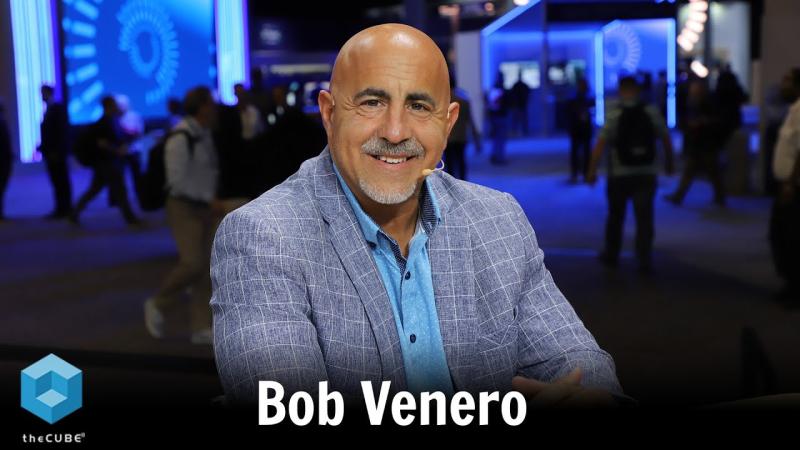
Five years is a long time to sound certain
In a conversation with analyst Patrick Moorhead, Venero recalled being asked at a company town hall about his next five-year plan. His answer began with an admission that he did not know precisely what the organization would do to reach its goals. He could discuss growth, but the technological route was changing too quickly to pretend it was settled.
“Five years is an eternity.”
Bob Venero, in conversation with Patrick Moorhead
“Five years is an eternity,” he said. For someone whose company is called Future Tech, that is a pleasingly candid answer. The name does not come with a crystal ball. His concern was how customers could adopt the developments that mattered while artificial intelligence, infrastructure and computing at the edge continued to converge.
The familiar PC still figures in that thinking. In 2025, Venero challenged executives to consider how employees actually reached the enterprise systems they valued. His argument gave the ordinary computer a role in an industry conversation preoccupied with larger AI installations. Technology has to meet the person trying to use it.
By May 2026, his practical advice included forecasting purchases six to twelve months ahead as AI demand strained supplies. In September, he published a Forbes Technology Council article titled The Most Important AI Decision Has Nothing To Do With Technology. The subject matter keeps changing; the emphasis on decisions and execution remains visible.
The basement is a long way behind him now. Yet that seven o’clock memory still offers a persuasive measure of what he values. Ting arrived, took the risk with him and stayed through the difficult stretches. Across classrooms, customer sites and international partnerships, Venero’s career keeps returning to the work that begins once people agree to show up.