Before the executive titles came a rather crowded working day. Philip Moyer would write code at night, then drive around selling it to educators. His startup, Orion Systems, made software for individualized education programs. The person building the product also had to explain why a school should buy it. A promising demonstration still had to survive a conversation with the people who would actually use it.
Decades later, after jobs at Microsoft, Amazon Web Services, Google Cloud and Vimeo, Moyer returned to that same doorstep. On February 9, 2026, he became president and chief executive of McGraw Hill. The route had acquired considerable mileage. The original question had survived: how could technology help education respond to an individual student?
For a technology executive, the classroom is a useful place to have grand ideas brought down to size. A product can work beautifully in a demonstration and still arrive at the wrong moment in a lesson. Moyer’s career has repeatedly put him near that gap between a machine’s capabilities and a customer’s day. He calls it the last mile.
A Pennsylvania education
Moyer grew up in Reading, studied computer science at the University of Pittsburgh and built a career while keeping his ties to the Philadelphia region. In a 2024 interview, he described living in Berwyn and staying involved through technology meetups, hackathons and conversations with startups. The local connection lasted through jobs at companies with rather larger maps.
His working life began at GE Aerospace, writing software for nuclear submarines. Then came the school software business, followed by Microsoft, where he spent about 15 years managing customer teams, industry teams and service organizations. Engineering and selling appear together early in this history. He had experience making software run and getting people to adopt it.
That combination matters to the story. A developer can ask whether the system functions; a customer can ask whether it solves a problem worth paying to remove. Moyer has spent much of his working life answering both. His subsequent roles moved through financial data, commercial banking software, venture investing and cloud services, where trust and implementation carry their own weight.
Different technologies. A recurring customer question.
- Early careerGE Aerospace → Orion Systems
Submarine software, then school software - 1991 onwardMicrosoft → financial technology
Engineering, customers and leadership - 2017 / 2019AWS → Google Cloud
Enterprise cloud and applied AI - 2024 / 2026Vimeo → McGraw Hill
Video, then back to education
When the customers disappeared
At EDGAR Online, where he became chief executive in 2007, the customer problem became unusually stark. Moyer later recalled seeing as many as half the company’s customers go out of business during the financial crisis. He called that turnaround the hardest role of his career. Developing products while the market beneath the business was collapsing offered a stern education in executive decision-making.
His advice afterward was brief: “Be decisive as a leader.” There is little ceremony in that instruction. It leaves room for mistakes, provided the person making them can choose a direction and keep improving. It also supplies a less glamorous counterweight to the familiar technology biography, in which each job appears to lead neatly to the next.
Moyer also led Cassiopae, a French commercial banking software business, and managed a venture portfolio at Safeguard Scientifics. He later ran financial services work at AWS and joined Google Cloud in 2019. At Google, his responsibilities included strategic industries and applied AI engineering and business development. By the time generative AI became an everyday boardroom topic, he was working on bringing it into business use.
A video platform draws a line
Vimeo appointed Moyer chief executive effective April 8, 2024. He arrived from Google with a background suited to the company’s enterprise ambitions. Video was a different medium from school records or financial data, but the commercial questions were recognizable. Who owns the material? Who controls where it goes? What should a platform be allowed to do with someone else’s work?
In his first note to Vimeo’s community, Moyer placed AI in a longer history of filmmaking technology, reaching back to Georges Méliès. He invited feedback. The following month brought a specific policy: hosted videos would require explicit consent before being used to train generative AI models. Free accounts were included. Vimeo also prohibited unauthorized scraping by model companies.
This was a boundary with a business purpose. A filmmaker’s finished work and a company’s internal presentation may both be video files, but the people uploading them have reasons to care about their destination. Moyer’s position gave those customers a clear promise. Enthusiasm for AI could coexist with a refusal to treat every upload as available training material.
The useful part of the machine
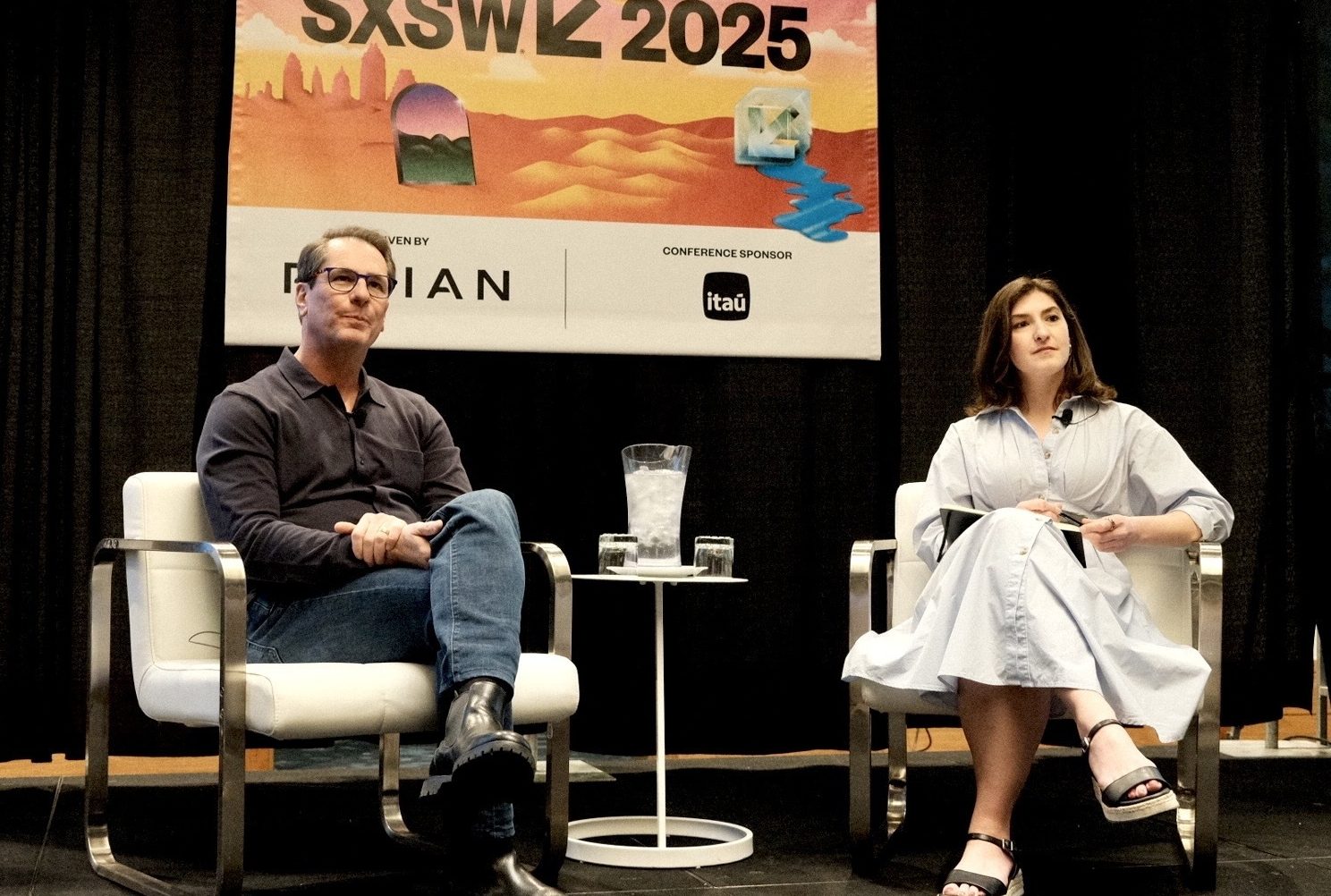
At SXSW in March 2025, Moyer discussed a video business built around professional creators and protection of their work. The company had declined lucrative AI training deals. Its own AI features pursued tasks such as translation and finding relevant moments inside a video. He also imagined video becoming more interactive, with viewers able to shape their experience.
Those uses are easier to appreciate from the editing desk than from a prediction about the future of civilization. A translated video can reach a new audience. Search can make a long recording useful to someone who needs a particular answer. The value depends on what the person can accomplish after the feature is switched on.
The numbers offered a separate test. For calendar 2024, Vimeo reported $27 million in net earnings and $55 million in adjusted EBITDA, a non-GAAP profitability measure. The latter improved by more than $21 million from 2023. Its annual report also described AI features including captions, transcription, social clips and translation into more than 28 languages. These were company results from a year in which Moyer took over in April, rather than a personal scorecard.
His tenure ended around Vimeo’s acquisition by Bending Spoons in November 2025, as recorded in McGraw Hill’s proxy. The next appointment brought him back to a business whose customers include the educators he had once visited as a startup operator.
The old ambition gets a larger address
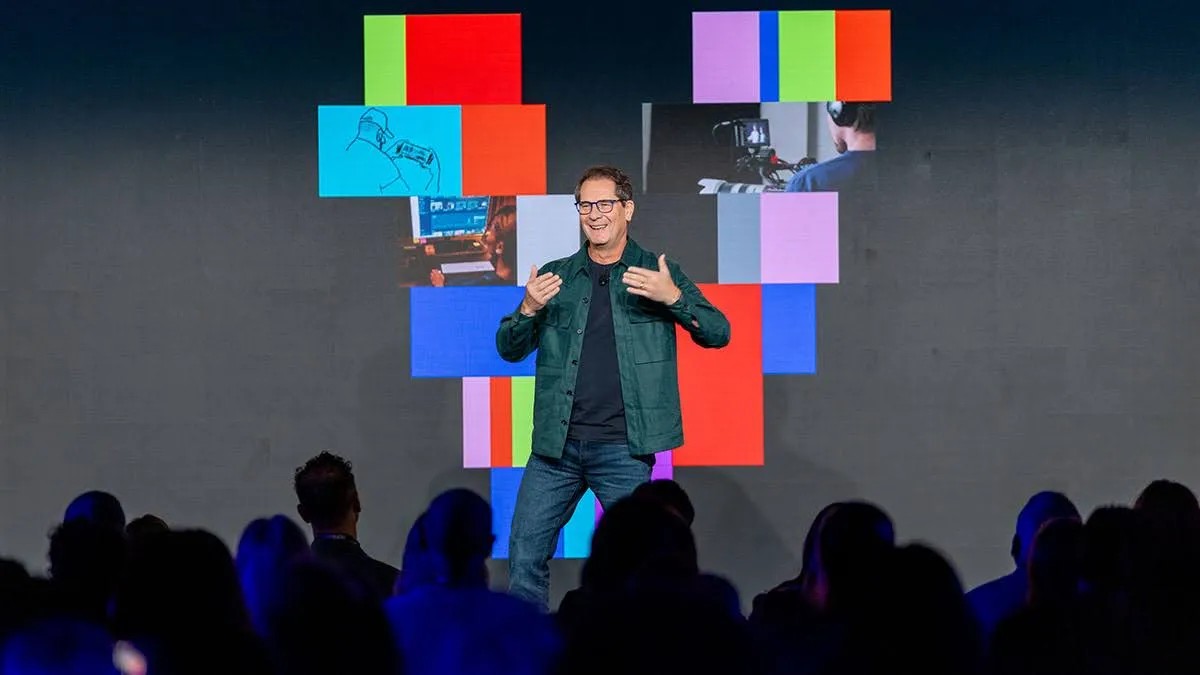
At McGraw Hill, Moyer succeeded Simon Allen, who remained chair. The company had gone public on the New York Stock Exchange in July 2025. Moyer joined an established education business with existing digital platforms, content relationships and years of work in adaptive learning. He inherited a running operation, with all the advantages and obligations that entails.
In May 2026, he explained the appeal by recalling Orion Systems. “I dreamt that one day, every child would have their own individualized education program.” The ambition was older than the current AI boom. He saw a chance to bring together content, teaching knowledge and data to understand each learner’s proficiency more precisely.
There is an appealing continuity here, though the scale has changed. The early business dealt with individualized plans. The later one has curriculum in use around the world. Both require an answer to the same practical question: what does this student understand, and what should happen next? Personalization becomes meaningful when it helps an educator make that decision.
The job also requires listening before prescribing. During his first roughly 100 days, Moyer said he visited classrooms and met students, principals, provosts and administrators. He spent more than 40 hours watching demonstrations of the company’s products. For someone recruited partly for his knowledge of new technology, that is a revealing way to spend time: learning what is already there.
Watching McGraw Hill product demonstrations in his first roughly 100 days.
Moyer’s account · May 2026An AI executive with a stopping point
By August, his public argument had turned to the purpose of screen time. Moyer distinguished digital experiences built to hold attention from tools built to help someone learn. He argued that educational software should help identify gaps and support instruction, while preserving the effort through which a student develops understanding. A system that hands over the answer too quickly can spoil its own lesson.
He offered specific examples. ALEKS Adventure uses short math sessions for younger students. Sharpen offers study formats such as flashcards, quizzes and videos. Learning Coach in Connect is intended to support independent study when an instructor makes it available. His account described technology fitted around teaching and studying, including the hours when a professor is unavailable.
The distinction gives his AI optimism a practical limit. A learning product should be judged by what the learner can do, rather than by how successfully it keeps a screen occupied. That is an awkward standard for any technology business accustomed to counting activity. A student finishing sooner because a concept finally makes sense may be an excellent result.
Where AI fits in Moyer’s education argument
Understand proficiencyFind the concepts a student needs to work on.
Adapt the materialGive educators tools to tailor instruction.
Support the next lessonBring useful insight back to the teacher.
An editorial diagram of his stated approach, not a measured outcome.
Back to the teacher’s working day
In September 2026, McGraw Hill acquired Teachally, whose founders are Daniel Bernstein and Rushil Makkar. The acquisition added AI capabilities for creating, adapting, localizing and translating curriculum. It also promised teachers tools for customizing instructional material within the systems they already use. The announced transaction terms were undisclosed.
Teachally’s product describes a working sequence: start with standards, build or adapt a lesson, then create assignments and activities for particular learning needs. That is a concrete expression of Moyer’s larger argument. The technology has work to do before a student ever touches it, helping the educator prepare material for a particular classroom.
None of this makes the outcome automatic. A stated ambition, a purchased platform and a useful demonstration each mark a different stage of the work. For Moyer, the challenge is to carry the first through the other two and into lessons that teachers want to teach. His experience gives him plenty of ways to discuss the technology; the classroom supplies the examination.
The early routine remains a good way to understand the assignment. Write the software. Meet the educator. Hear what needs changing. At McGraw Hill, the journey from those conversations to a working product involves a much larger organization. Yet the last mile still ends in the same place: with somebody trying to help another person understand.
“I dreamt that one day, every child would have their own individualized education program.”Philip Moyer · May 2026