Building at the Edge of What's Possible
By the time most people have finished their MBA, Max Ventilla had already co-founded a company. Yale's Silver Scholars Program let him skip the years of required work experience most applicants clock before applying. He graduated in 2006. By 2007, Aardvark was live.
Aardvark was a deceptively simple idea: when you have a question, you don't want a search engine's ten blue links. You want the one person in your network who actually knows the answer. Ventilla and his co-founders - Damon Horowitz, Nathan Stoll, and Rob Spiro - built software to find that person. The product routed questions through social graphs via IM, email, and Twitter, connecting users directly to subject-matter friends-of-friends. Google noticed. In February 2010, they paid $50 million for it.
The Google Chapter: Building at Scale
Back at Google post-acquisition, Ventilla didn't slow down. He became one of the founding members of Google+ and took on the role of Head of Cross-Google Personalization - the person responsible for making Google's sprawling ecosystem feel like it actually knew who you were. The challenge was enormous: unifying personalization logic across Search, Gmail, Maps, YouTube, and a dozen other products used by hundreds of millions of people.
He left in 2013. Not because Google failed him - but because he'd spent months reading books on education, and something clicked. His mother worked in education. His sister worked in education. The family had always believed in its power. And Silicon Valley had barely touched it.
AltSchool: When a Startup Runs a School
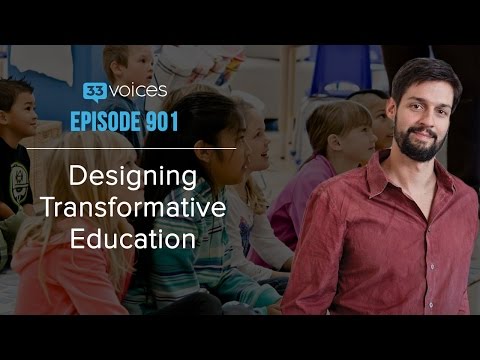
AltSchool was the kind of bet that sounds insane in a pitch deck and inevitable in retrospect. Ventilla founded the company in 2013 with a deceptively radical premise: replace the one-size-fits-all curriculum with a software-driven, student-centered approach. Each child got a learning "playlist" - a personalized sequence of activities calibrated to their specific pace, style, and gaps.
The company didn't just build software. It opened its own schools in San Francisco and New York to test and iterate the platform in real classrooms. Cameras, microphones, and sensors tracked student engagement. Teachers used dashboards instead of lesson plans. The model attracted attention from both education reformers and Silicon Valley's elite - Founders Fund, Andreessen Horowitz, and Zuckerberg Education Ventures all backed the $33M Series A. Eventually AltSchool raised over $170M total.
By 2016, AltSchool had grown to 200 employees and operated several schools. Then came the hard pivot. Running private schools at scale is brutally expensive - and the real leverage was in the software, not the buildings. In 2019, Ventilla stepped back from the CEO role, handing leadership to Ben Kornell and Devin Vodicka as the company refocused on licensing its technology to existing public and private schools. He became Chairman. It was the right call, even if it was a painful one.
Dropbox and the Acquisition Machine
In March 2020 - a week after the world locked down - Ventilla joined Dropbox as VP of New Frontiers. The role was broad by design: strategic planning, machine learning, internal product incubation. His signature move during that tenure was co-leading the $165 million acquisition of DocSend, a document analytics platform, which closed in 2021. DocSend had built something genuinely useful: a way for founders to track exactly who opened their pitch deck, and for how long. Dropbox wanted it. Ventilla helped make it happen.
He left Dropbox in December 2021. The next move was different from everything that came before.
Offline Ventures: A Studio That Thinks Like a Founder
Offline Ventures was already running when Ventilla joined as General Partner in October 2022. Founded in 2020 by Brit Morin, Dave Morin, Nate Bosshard, and James Higa, the Mill Valley-based firm operates as something between a venture fund and a venture studio - it invests, yes, but it also co-founds. The portfolio spans 27+ companies with a deliberate focus on health technology, AI applications, and enterprise data.
The name is interesting. "Offline" doesn't mean low-tech. It means something closer to human - the belief that the best companies are built by people who are well, grounded, and thinking clearly. Offline Ventures runs "Offline Studio," an AI-focused product incubator that brings in experienced staff engineers for part-time innovative project work. It's a model that treats the founding process itself as a product to be optimized.
Ventilla's investment thesis at Offline is consistent with everything he has built: personalization at scale, technology that respects human needs, and founders who think in systems. The most recent portfolio investment - Anchr, a Pre-Seed round in March 2026 - fits the pattern exactly.
The Thread Running Through Everything
Look at the Aardvark pitch, the AltSchool pitch, and the Offline Ventures pitch back to back, and something clicks. All three are fundamentally about the same problem: connecting the right information or resource to the right person at the right moment. Aardvark did it for questions. AltSchool did it for learning content. Offline Ventures does it for capital and operational support. Ventilla doesn't seem to have interests so much as a single obsession wearing different hats.
His background explains some of it. The son of Hungarian immigrants, he grew up aware that access - to good schools, good networks, good information - was neither equal nor accidental. A scholarship to Buckley School, then to Phillips Academy (Andover), then to Yale. The path was built on merit but opened by opportunity. He has spent his career building systems that try to replicate that kind of precise, personalized access at scale.
What He Believes
Ventilla is publicly convinced that AI is reshaping the software business as fundamentally as the internet did. "AI is the new UI" isn't a tweet - it's a framework. He sees the traditional software interface giving way to AI-mediated interaction, which changes everything about how products get built and how companies get valued. His work at Offline Studio, running an AI-focused incubator, is a direct bet on that thesis.
He is also, notably, skeptical of overconfidence. "You want to avoid thinking you know more than you do," he has said - which, in the context of a career spent betting large on unconventional ideas, reads less like humility and more like intellectual discipline. The man who helped build Google's social layer and then opened elementary schools in San Francisco has earned the right to say that.
In His Own Words
"AI is the new UI."
On AI's role in software"Personalization is key - not just to make the most use of the time kids have in school, but also to prepare them for the world they'll live in."
On AltSchool's mission"You need to have a network effect where people are flocking to a new ecosystem - not because they're altruistic, but because it's the best."
On building sticky products"You want to avoid thinking you know more than you do."
On intellectual humility